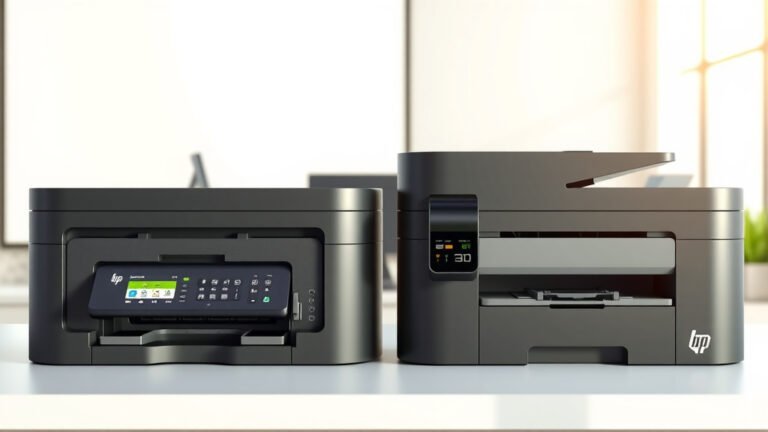
What’s The Difference Between An Inkjet And Laser Printer?

Inkjet printers use liquid ink sprayed through tiny nozzles, while laser printers use toner powder fused to paper with heat and pressure.
The main difference between inkjet and laser printers lies in their printing technology, cost structure, and ideal use cases for your specific needs.
How Inkjet Printers Work
Think of inkjet printers like tiny paint sprayers. They shoot microscopic droplets of liquid ink onto paper through hundreds of small nozzles. The print head moves back and forth across the page, building your document or photo line by line.
Your inkjet printer stores liquid ink in cartridges. These cartridges connect to the print head, which contains the nozzles. When you hit print, the printer sends electrical signals that force ink droplets through these nozzles at precise moments.
Inkjet Print Head Technology
Most inkjet printers use one of two methods to push ink through the nozzles. Thermal inkjets heat the ink to create bubbles that force droplets out. Piezoelectric inkjets use tiny crystals that vibrate when electricity hits them.
Both methods work well. The key difference is speed and precision. Piezoelectric systems often produce slightly better photo quality.
How Laser Printers Work
Laser printers work more like photocopiers than traditional printers. They use a laser beam to create an electrical pattern on a rotating drum. This drum picks up toner powder and transfers it to paper.
Here’s what happens inside your laser printer: The laser draws your document on a charged drum. Toner sticks to the charged areas. The drum rolls over paper and transfers the toner. Hot rollers melt the toner into the paper permanently.
Toner vs Ink Cartridges
Toner cartridges contain fine plastic powder, not liquid ink. This powder melts when heated, creating permanent marks on paper. Toner cartridges typically print many more pages than ink cartridges before running out.
Many laser printers combine the toner and drum into one replaceable unit. Others separate these parts, which can save money long-term.
Print Quality Comparison
Photo printing clearly favors inkjet technology. The liquid ink blends smoothly and produces rich colors with subtle gradations. Professional photo inkjets can match or beat traditional photo lab quality.
For text documents, laser printers usually win. They create sharp, crisp letters with clean edges. Black text looks professional and consistent across thousands of pages.
Color Reproduction Differences
Inkjet printers excel at color photos because liquid ink can create smooth color transitions. You get natural skin tones and realistic landscapes. Many photo inkjets use 6-8 different ink colors instead of just 4.
Color laser printers work fine for business graphics and charts. They produce consistent colors for logos and presentations. But they struggle with photo-quality gradients and subtle color shifts.
Paper Compatibility
Inkjet printers handle various paper types better. You can print on photo paper, canvas, fabric, and specialty media. The liquid ink adapts to different surfaces well.
Laser printers work best with standard office paper. Heavy cardstock might jam the machine. Photo paper often doesn’t work because the coating interferes with toner adhesion.
Speed and Volume Differences
Laser printers print much faster than inkjets for most documents. A typical laser printer outputs 20-40 pages per minute. Inkjets usually manage 5-15 pages per minute for text documents.
High-volume printing strongly favors laser technology. If you print hundreds of pages weekly, laser printers save significant time. They also handle large print jobs without overheating.
Warm-up Time Considerations
Laser printers need warm-up time before printing. The fusing system must heat up to melt toner properly. This takes 30-60 seconds from standby mode.
Inkjet printers start printing almost immediately. No heating required. For single-page documents, inkjets often finish before laser printers warm up.
Operating Cost Analysis
Cost per page varies dramatically between printer types. I researched typical costs and found laser printers usually cost 2-4 cents per black page. Inkjet printers often cost 5-15 cents per page with standard cartridges.
Photo printing flips this equation. Laser printers can’t match inkjet photo quality, making cost comparison pointless for photo work.
Cartridge Replacement Frequency
Toner cartridges last much longer than ink cartridges. A standard toner cartridge prints 1,500-3,000 pages. Most ink cartridges print 200-500 pages before replacement.
Ink cartridges also dry out if unused for months. Toner powder stays fresh indefinitely. If you print occasionally, laser printers avoid waste from dried ink.
Energy Consumption
Laser printers use more electricity because of their heating elements. They consume 300-600 watts while printing. Inkjet printers typically use 10-50 watts during operation.
For occasional printing, this difference doesn’t matter. High-volume users should consider electricity costs when calculating total ownership expenses.
Purchase Price Comparison
Basic inkjet printers cost $30-100 for home models. Entry-level laser printers start around $100-200. The upfront cost difference isn’t huge for basic models.
Professional-grade printers show bigger price gaps. High-quality photo inkjets cost $200-500. Business laser printers range from $300-1,000+ depending on features.
| Printer Type | Entry Price | Cost Per Page | Best For |
|---|---|---|---|
| Basic Inkjet | $30-100 | 5-15 cents | Photos, low volume |
| Photo Inkjet | $200-500 | 15-50 cents | Professional photos |
| Laser Printer | $100-300 | 2-4 cents | Text, high volume |
| Color Laser | $200-600 | 8-15 cents | Business documents |
Maintenance Requirements
Inkjet printers need regular maintenance to prevent nozzle clogs. Running cleaning cycles weekly keeps ink flowing smoothly. Long periods without printing often cause problems.
Laser printers require less frequent maintenance. Occasional cleaning of paper paths and replacing worn parts keeps them running. They handle irregular use better than inkjets.
Common Repair Issues
Inkjet problems usually involve clogged nozzles or dried ink. These issues often resolve with cleaning cycles or cartridge replacement. Paper jams happen but aren’t common.
Laser printer problems typically involve worn drums, depleted toner, or paper feed issues. Parts last longer but cost more to replace when they fail.
Environmental Considerations
Both printer types create environmental impacts through cartridge waste and energy use. Toner cartridges contain more plastic but last much longer. Ink cartridges are smaller but replaced more frequently.
Many manufacturers offer cartridge recycling programs. Refillable ink systems for inkjets reduce cartridge waste significantly. Some users save money and help the environment with third-party refill options.
Which Should You Choose?
Your printing habits determine the best choice. Do you print mostly text documents? Laser printers save money and time. Do you print photos regularly? Inkjet quality can’t be matched.
Consider your monthly page count too. Printing over 500 pages monthly usually favors laser technology. Light users might prefer inkjet simplicity and lower upfront costs.
Home User Recommendations
Most home users print photos, homework, and occasional documents. An inkjet printer handles this variety well. Look for models with separate color cartridges to reduce waste.
If you never print photos and create lots of text documents, consider a basic laser printer. You’ll save money on consumables and get professional-looking output.
Business User Guidelines
Small businesses usually benefit from laser printers. They produce professional documents quickly and cheaply. Color laser printers work well for presentations and marketing materials.
Creative businesses might need both types. Use laser printers for contracts and correspondence. Keep a photo inkjet for marketing materials and client presentations.
Office Space Considerations
Laser printers are typically larger and heavier than inkjets. Make sure you have adequate desk or floor space. They also generate heat and may need ventilation in small offices.
Inkjet printers fit almost anywhere. Their compact size works well in home offices or tight spaces. Most models operate quietly too.
Future Technology Trends
Printer technology continues advancing. Tank-based inkjet systems reduce cartridge costs dramatically. You refill tanks instead of replacing cartridges, cutting per-page costs significantly.
Laser printers are becoming faster and more energy-efficient. Some new models print immediately without warm-up time. Color laser quality improves each year too.
Wireless and Smart Features
Both printer types now offer wireless connectivity and smartphone printing. Cloud printing lets you send documents from anywhere. Voice-activated printing works with smart home systems.
These features don’t depend on printing technology. You’ll find similar smart capabilities in both inkjet and laser models at comparable price points.
Conclusion
Choosing between inkjet and laser printers depends on your specific needs and printing habits. Inkjet printers excel at photo printing and handle various media types well, making them perfect for home users who value versatility. Laser printers dominate in text quality, speed, and cost-effectiveness for high-volume printing, making them ideal for offices and heavy document users.
Consider your monthly page count, document types, and budget when making your decision. Photo enthusiasts and light users often prefer inkjets, while business users and heavy text printers usually choose laser technology. Either choice can serve you well when matched to your actual printing needs.
Can I use third-party cartridges safely in my printer?
Yes, most third-party cartridges work fine and cost much less than original cartridges. Quality varies between brands, so read reviews before buying. Some printer warranties may not cover damage from third-party cartridges, but actual damage is rare with reputable aftermarket suppliers.
How long do printers typically last before needing replacement?
Inkjet printers usually last 3-5 years with regular use, while laser printers often work well for 5-10 years. Print volume affects lifespan more than time. Heavy users might replace printers sooner due to wear, while light users often keep printers until they become obsolete.
Do laser printers work well for printing envelopes and labels?
Laser printers handle standard envelopes fine, but thick envelopes or labels can cause problems. The heat from laser printing may melt adhesive on some labels, causing jams. Inkjet printers typically handle specialty materials like labels and thick envelopes more reliably.
Why do ink cartridges seem to run out so quickly?
Starter cartridges included with new printers contain less ink than replacement cartridges. Printers also use ink for cleaning cycles and maintenance, not just printing. Color printing uses much more ink than black text, and high-quality photo printing consumes ink rapidly.
Can laser printers print on photo paper?
Most photo papers don’t work with laser printers because their coatings can’t handle the high heat. Special laser photo papers exist but produce results that can’t match inkjet photo quality. Stick with inkjet printers for any serious photo printing needs.