Which Is Better Inkjet Or Laser Printer?
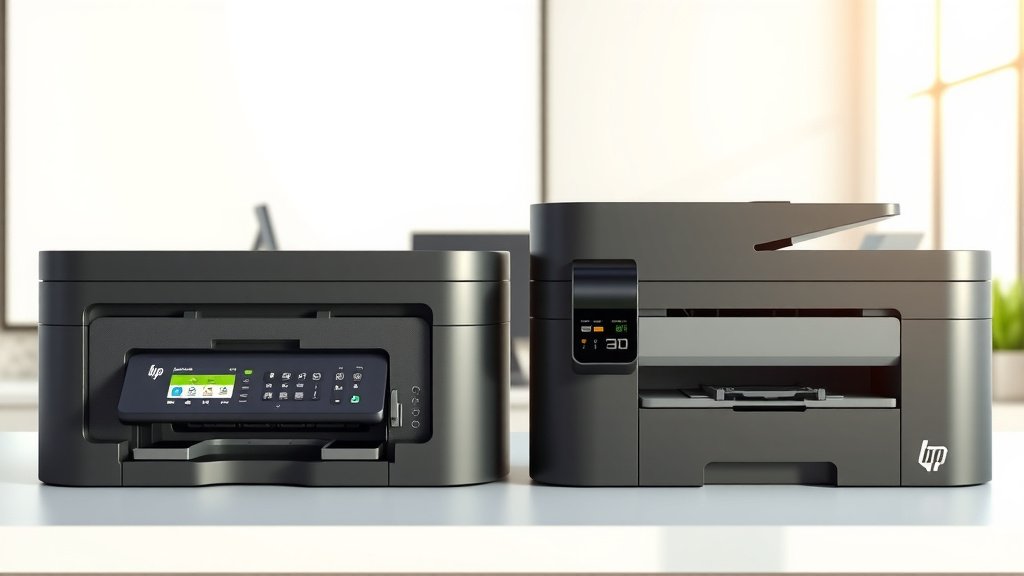
Laser printers are better for high-volume black and white printing, while inkjet printers excel at photo printing and color documents with lower upfront costs.
Your choice between inkjet or laser printer depends on what you print most – photos and colorful documents favor inkjet, while text-heavy office work suits laser printers better.
What Makes These Two Printer Types So Different?
Think of inkjet and laser printers like two completely different kitchen appliances. They both make prints, but they work in totally opposite ways.
Inkjet printers spray tiny droplets of liquid ink onto paper. Picture a microscopic paint sprayer that creates images dot by dot. These printers heat up ink cartridges and push liquid through tiny nozzles.
Laser printers use a completely different method. They work more like a photocopier, using heat to fuse powdered toner onto paper. A laser beam draws your image on a drum, which picks up toner powder and transfers it to paper.
Speed: Which One Prints Faster?
Laser Printer Speed Advantages
Laser printers win the speed race hands down. Most home laser printers print 20-30 pages per minute for black text. Office models can hit 40+ pages per minute.
Why are they so fast? The laser printing process happens all at once for each page. Your printer doesn’t have to move a print head back and forth like inkjets do.
Inkjet Printing Speeds
Inkjet printers typically print 8-15 pages per minute for black text. Color printing slows things down even more – you might get 5-10 color pages per minute.
But here’s the thing: if you only print a few pages at a time, you won’t notice much difference. The speed gap matters most when you’re printing 20+ pages regularly.
Print Quality: Where Each Type Shines
Text Quality Comparison
For crisp, sharp text, laser printers take the crown. The toner creates clean edges that look professional on every document. You’ll get consistent results whether it’s your first page or your thousandth.
Inkjet text quality has improved a lot over the years. On good paper, inkjet text looks perfectly fine for most uses. But laser text still has that extra sharpness that makes documents look more polished.
Photo and Image Quality
Here’s where inkjet printers absolutely dominate. Photo inkjet printers can create prints that rival professional photo labs. The liquid ink blends smoothly and creates gradients that look natural.
Can laser printers print photos? Yes, but they’re not great at it. Color laser photos often look grainy or have visible dots. They’re fine for basic graphics but not for family photos you want to frame.
Color Reproduction Differences
Inkjet printers typically use 4-8 different ink colors. This gives them a wider range of colors to work with. Some photo inkjets even have special gray inks for better black and white photos.
Color laser printers use just four toner colors: cyan, magenta, yellow, and black. They mix these to create other colors, but the range isn’t as wide as what inkjets can produce.
Cost Analysis: Upfront vs Long-Term Expenses
Initial Purchase Prices
Basic inkjet printers start around $30-50. You can get a decent home inkjet for $100-200. Even photo-quality inkjets rarely cost more than $300-400.
Laser printers cost more upfront. Basic black and white models start around $100-150. Color laser printers typically run $200-500 for home models. Office-grade lasers can cost $1000+.
Ink and Toner Costs
This is where things get interesting. Inkjet cartridges seem cheaper at first glance, but they don’t last long. A typical black ink cartridge might print 200-400 pages.
Laser toner cartridges cost more initially but print many more pages. A standard black toner cartridge often prints 1500-3000 pages.
| Printer Type | Cartridge Cost | Page Yield | Cost Per Page |
|---|---|---|---|
| Inkjet (Black) | $15-25 | 200-400 pages | $0.05-0.12 |
| Inkjet (Color) | $40-60 (set) | 150-300 pages | $0.15-0.40 |
| Laser (Black) | $50-80 | 1500-3000 pages | $0.02-0.05 |
| Laser (Color) | $200-300 (set) | 1000-2000 pages | $0.08-0.20 |
When Inkjet Becomes Expensive
I found that many people get shocked by inkjet costs over time. If you print 100+ pages monthly, those cheap ink cartridges add up fast.
Color printing on inkjets gets expensive quickly. Each color page might cost 15-40 cents. Printing family photos? That’s often $1-2 per photo when you factor in paper costs.
Maintenance and Reliability Issues
Inkjet Maintenance Challenges
Inkjet printers need regular use to stay healthy. The liquid ink can dry up in the nozzles if you don’t print for weeks. This causes clogged print heads and streaky prints.
Most inkjets run automatic cleaning cycles to prevent clogs. But guess what? These cleaning cycles use up your expensive ink cartridges even when you’re not printing anything.
Laser Printer Reliability
Laser printers are like the reliable old car in your garage. They sit unused for months and still work perfectly when you need them. Toner powder doesn’t dry out like liquid ink does.
Research shows laser printers generally last longer than inkjets. The simpler mechanism with fewer moving parts means less can break down.
Best Use Cases for Each Printer Type
Choose Inkjet Printers When You:
- Print lots of photos and want professional quality results
- Need excellent color reproduction for graphics or marketing materials
- Print infrequently (less than 50 pages per month)
- Want the lowest upfront cost
- Have limited desk space (inkjets are usually smaller)
- Print on different paper types and sizes regularly
Choose Laser Printers When You:
- Print mostly text documents
- Need fast printing speeds for office work
- Print high volumes (100+ pages monthly)
- Want the lowest cost per page
- Need prints to look sharp and professional
- Often go weeks without printing anything
Environmental and Space Considerations
Size and Noise Differences
Most inkjet printers are compact and quiet. They whisper while they work, making them perfect for home offices or bedrooms.
Laser printers tend to be bulkier and louder. They make whirring and clicking sounds during printing. The good news? They print so fast that the noise doesn’t last long.
Power Usage
Inkjet printers use very little power – typically 10-15 watts while printing. They’re energy efficient but slow.
Laser printers use more power (300-600 watts) during printing because they need to heat up the fuser. But since they print faster, total energy per page often comes out similar.
Special Features and Modern Capabilities
Wireless and Smart Features
Both printer types now come with WiFi, mobile printing, and cloud printing features. You’ll find these capabilities on models in both categories.
Many experts say inkjet all-in-one units offer better scanning and copying features for the price. Color laser all-in-ones cost significantly more.
Duplex Printing and Paper Handling
Automatic duplex (double-sided) printing comes standard on most laser printers. It’s less common on budget inkjet models.
Laser printers typically handle different paper weights better. They can print on cardstock and labels without jamming as often as inkjets do.
Making Your Final Decision
For Home Users
If you print photos and color documents occasionally, inkjet makes sense. The low upfront cost and excellent photo quality win out.
But if you print school reports, work documents, and tax forms regularly, consider a laser printer. You’ll save money long-term and get better text quality.
For Small Businesses
Most small businesses benefit from laser printers. The faster speeds and lower per-page costs make sense when printing invoices, contracts, and presentations daily.
Keep an inkjet around if you need occasional photo-quality color prints for marketing materials or presentations.
Conclusion
Your printing habits should drive your printer choice. Inkjet printers excel at photos and color graphics while keeping upfront costs low. Laser printers deliver faster speeds, sharper text, and lower long-term costs for high-volume printing.
Don’t get caught up in the technology debate. Think about what you actually print each month. Count those pages, consider your color needs, and add up the real costs over two years. The right choice becomes clear when you match the printer to your actual usage patterns.
Which printer type lasts longer, inkjet or laser?
Laser printers typically last 3-5 years longer than inkjet printers. The simpler mechanical design and lack of liquid ink systems make laser printers more reliable over time. Inkjet print heads often clog or fail after 2-3 years of regular use.
Can I use generic ink cartridges to save money on inkjet printing?
Yes, generic ink cartridges can cut your printing costs by 50-70%. Quality varies between brands, but many generic cartridges work well for everyday printing. Just avoid them for important photos or documents where color accuracy matters most.
Do laser printers work well in humid climates?
Laser printers handle humidity better than inkjet printers. High humidity can cause inkjet ink to smear and paper to jam more frequently. Laser toner powder isn’t affected by moisture in the air, making laser printers more reliable in humid environments.
Which printer type is better for printing shipping labels?
Laser printers are better for shipping labels because they create waterproof, smudge-proof text that won’t run if the package gets wet. The sharp text also scans more reliably at shipping facilities. Inkjet labels can smear during handling.
How often should I print to keep an inkjet printer working properly?
Print at least one page every week to keep inkjet nozzles from clogging. If you go longer than two weeks without printing, run a nozzle cleaning cycle before your next print job. Regular use prevents expensive print head repairs or replacements.