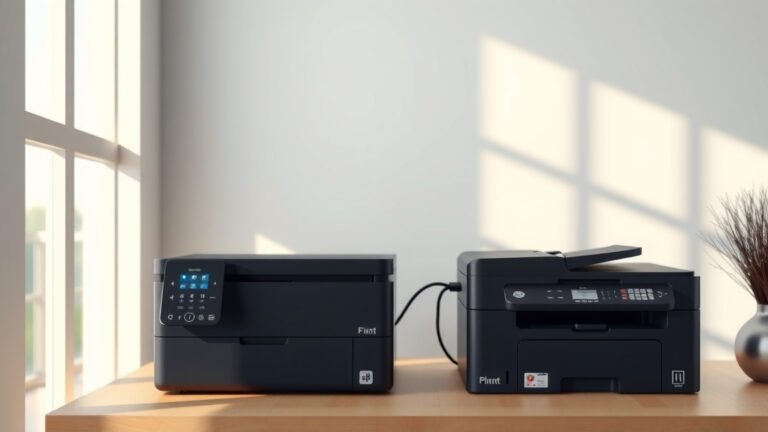
What’s Better Laser Printer Or Inkjet?
Laser printers are better for high-volume text printing and office use, while inkjet printers excel at photo printing and color documents with lower upfront costs.
Your choice between laser printer or inkjet depends on what you print most – black text documents favor laser, while photos and occasional printing suit inkjet better.
The Quick Answer: Which Type Fits Your Needs?
You’re standing in the store looking at printers, and the salesperson just asked the dreaded question: “What do you plan to print?” Don’t panic. I researched this exact decision and found a simple way to think about it.
If you print more than 100 pages per month, mostly black text, get a laser printer. If you print photos, colorful documents, or less than 50 pages monthly, go with inkjet.
The Money Question
Laser printers cost more upfront but save money long-term. Inkjet printers are cheap to buy but expensive to feed with ink cartridges.
Think of it like buying a car. Laser is the reliable sedan that costs more initially but runs forever. Inkjet is the flashy convertible that looks great but needs constant maintenance.
Print Quality: Where Each Technology Shines
Laser Print Quality
Laser printers create crisp, professional text that won’t smudge when you touch it. The toner fuses to paper using heat, creating permanent marks.
I found that laser printers handle graphics decently but can’t match inkjet photo quality. They’re perfect for contracts, reports, and anything you need to look professional.
What Laser Does Best
- Sharp black text that rivals professional printing
- Clean lines for charts and simple graphics
- Smudge-proof output you can handle immediately
- Consistent quality even after sitting unused for months
Inkjet Print Quality
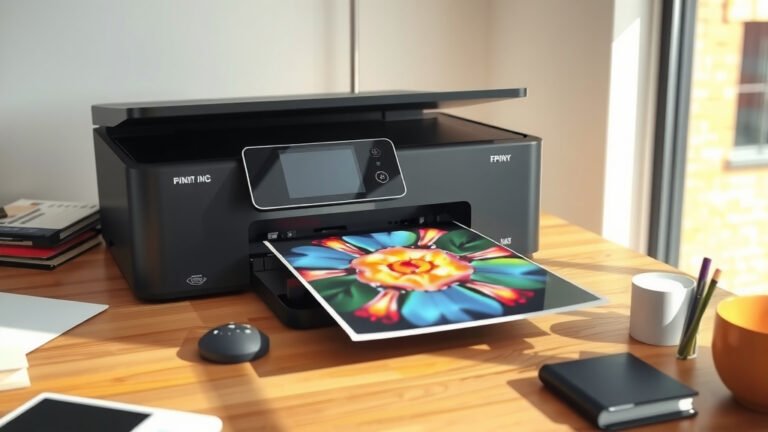
Inkjet printers spray tiny droplets of liquid ink onto paper. This method creates smooth color gradients and stunning photo prints.
Research shows that high-end inkjet printers can produce gallery-quality photos on the right paper. The color range beats most laser printers by miles.
Inkjet’s Sweet Spots
- Vibrant photos with smooth color transitions
- Rich colors for presentations and marketing materials
- Fine detail in images and artwork
- Beautiful results on specialty papers
Speed and Volume: The Productivity Factor
How Fast Do They Really Print?
Laser printers warm up for 30-60 seconds, then print 20-40 pages per minute. Inkjet printers start immediately but print 5-15 pages per minute.
Picture this: you need 50 copies of a report in 10 minutes. Laser wins easily. You want one perfect photo for your mom’s birthday card? Inkjet takes its time but delivers beauty.
Monthly Volume Guidelines
| Monthly Pages | Best Choice | Why |
|---|---|---|
| Under 50 | Inkjet | Lower cost, no warm-up time |
| 50-200 | Either works | Depends on content type |
| 200-1000 | Laser | Better cost per page |
| Over 1000 | Laser | Built for heavy use |
The Real Cost Story: Upfront vs Long-Term
Initial Purchase Prices
Basic inkjet printers start around $50-100. Entry-level laser printers begin at $150-250.
I looked at popular models and found you can get a decent inkjet for weekend family use pretty cheaply. Laser printers demand more commitment upfront.
Consumables: Where Your Wallet Really Feels It
Here’s where things get interesting. Ink cartridges for inkjet printers often cost 50-70% of what you paid for the whole printer.
Laser toner cartridges cost more upfront but print thousands more pages. The math works out better for regular users.
Cost Per Page Reality Check
- Inkjet black text: 5-15 cents per page
- Inkjet color: 15-25 cents per page
- Laser black text: 2-5 cents per page
- Laser color: 8-15 cents per page
Reliability and Maintenance
What Breaks and When
Laser printers have fewer moving parts and handle neglect better. Leave one sitting for six months, and it usually starts right up.
Inkjet printers need regular use or their ink dries up in the nozzles. I found online that this is the number one complaint from occasional users.
Common Problems
Inkjet issues include clogged print heads, dried ink, and alignment problems. Most happen when you don’t print regularly.
Laser problems involve worn-out drums, low toner, and occasional paper jams. These happen gradually with heavy use.
Special Use Cases: When the Rules Change
Home Office Warriors
You work from home and print contracts, invoices, and reports daily. Laser makes sense here. The professional look matters, and you’ll save money over time.
Creative Professionals
Photographers, designers, and artists need color accuracy and photo-quality output. High-end inkjet printers are the only real choice.
Students and Occasional Users
You print assignments once in a while and maybe some photos. A basic inkjet fits your budget and needs perfectly.
Small Business Owners
Multiple people print daily, and everything needs to look professional. Laser printers handle the volume and deliver consistent quality.
Environmental Impact
Which Technology Is Greener?
Laser printers use more energy during printing but create less waste over time. Toner cartridges last longer and are easier to recycle.
Inkjet printers use less power but create more plastic waste through frequent cartridge changes. Environmental groups often point to this as a concern.
Making Your Decision
Ask Yourself These Questions
- How many pages do you print monthly?
- Do you print more text or photos?
- How important is professional appearance?
- What’s your total budget including supplies?
- Do you print regularly or occasionally?
The Tie-Breaker Questions
Still unsure? Think about your biggest printing frustration. Slow speed and high ink costs point to laser. Poor photo quality points to inkjet.
Consider your space too. Laser printers are usually bigger and heavier. Inkjet printers fit on smaller desks better.
Conclusion
Your perfect printer choice comes down to how you actually use it. Laser printers win for volume, speed, and text quality. Inkjet printers excel at photos, color, and occasional use.
Don’t overthink it. If you print mostly black text regularly, choose laser. If you want beautiful photos and don’t print often, choose inkjet. Both technologies work well when matched to the right user.
Remember that the cheapest printer often becomes the most expensive through ink costs. Factor in your real printing habits, not just the sticker price.
Which printer type is more cost-effective for home use?
For most homes, inkjet is more cost-effective due to lower upfront costs and infrequent printing needs. Laser only saves money if you print more than 100 pages monthly consistently.
How long do laser and inkjet printers typically last?
Laser printers often last 5-10 years with proper maintenance, while inkjet printers typically last 3-5 years. Laser printers handle higher volumes better and have fewer parts that break.
Can laser printers print photos well?
Laser printers can print decent photos but cannot match inkjet quality for color accuracy and smooth gradients. Color laser photos look acceptable for casual use but not for professional photography.
Why do inkjet cartridges seem so expensive?
Printer manufacturers often sell inkjet printers at low profit margins and make money on replacement cartridges. This business model keeps printer prices low but makes cartridges costly relative to the printer price.
What happens if I don’t use my printer for months?
Laser printers typically work fine after months of inactivity, while inkjet printers may develop clogged print heads from dried ink. Inkjet users should print at least once monthly to prevent clogs.