
Is Inkjet or Laser Printer Cheaper to Run?
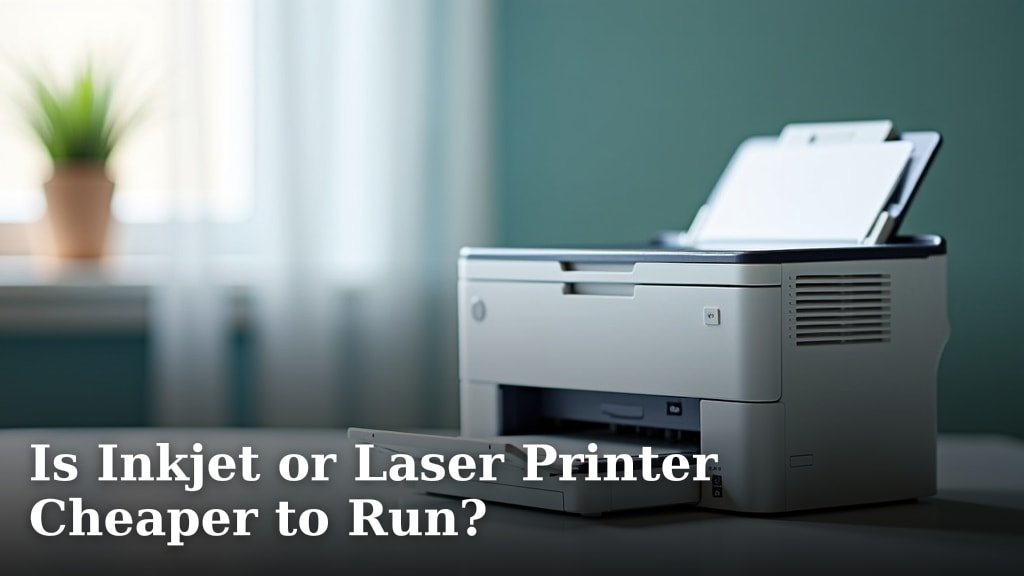
When comparing if an inkjet or laser printer is cheaper to run, generally, laser printers offer lower running costs in the long term for high-volume printing. Inkjet printers often have a lower initial purchase price, but their ink cartridges can be expensive over time.
We found that understanding your typical printing volume is key to saving money. For example, if you print hundreds of pages each month, a laser printer’s toner cartridges are usually more economical. On the other hand, for occasional printing, an inkjet might seem cheaper upfront but could cost you more for ink refills.
- Laser printers generally cost less per page.
- Inkjet printers have lower upfront costs.
- High-volume printing favors laser printers.
- Occasional printing might still make an inkjet appealing.
- Toner cartridges last longer than ink cartridges.
Let’s walk through everything you need to know about comparing these two printer types, helping you pick the best option for your budget.
Unpacking Printer Running Costs: Inkjet vs. Laser
Deciding between an inkjet and a laser printer often comes down to their running costs, which means looking beyond the initial price tag. Let’s explore what truly makes one cheaper to run than the other for your specific needs.
Understanding the Core Technologies
Before we dive into the numbers, it helps to know how these printers work. Their internal mechanics directly impact their long-term expenses.
How Inkjet Printers Operate
Inkjet printers use tiny nozzles to spray microscopic droplets of liquid ink onto paper. They can mix colors to create a wide range of hues, making them excellent for photos and vibrant graphics. We found that this spraying method often means cartridges contain less ink than you might expect.
How Laser Printers Operate
Laser printers use a laser beam to project an image onto a rotating drum. This drum then picks up a fine powder, called toner, which is fused onto the paper with heat. This process is generally faster and produces very sharp text. The powdered toner lasts a long time.
The True Cost of Consumables
The biggest factor in running costs is how much you pay for ink or toner. This is where the biggest differences lie between the two printer types.
Inkjet Cartridge Costs
Inkjet cartridges often seem affordable individually, but their yield (how many pages they print) can be quite low. You might find yourself replacing them frequently, especially if you print in color. We found that a single color cartridge might only last for a few hundred pages (PC Magazine).
Many inkjet cartridges also use a “tri-color” design, meaning all three colors (cyan, magenta, yellow) are in one cartridge. If you run out of just one color, you often have to replace the entire cartridge. This can feel wasteful and expensive.
Laser Toner Costs
Toner cartridges, while more expensive upfront, usually offer a significantly higher page yield. A single toner cartridge can often print thousands of pages. This means fewer replacements over time, translating to lower cost per page.
We found that toner also doesn’t dry out like liquid ink, which is a big advantage if you don’t print very often. You won’t waste money on dried-up cartridges.
Here’s a quick comparison of what you might expect for typical cartridge yields:
| Consumable Type | Average Page Yield | Cost per Page (Estimated) |
|---|---|---|
| Inkjet Cartridge (Standard) | ~150-300 pages | ~$0.10 – $0.20 |
| Inkjet Cartridge (XL/High-Yield) | ~400-800 pages | ~$0.05 – $0.15 |
| Laser Toner Cartridge (Standard) | ~1,000-2,000 pages | ~$0.03 – $0.07 |
| Laser Toner Cartridge (High-Yield) | ~2,500-5,000+ pages | ~$0.01 – $0.04 |
Please note these are estimates. Actual costs vary widely by printer model and brand. Your mileage may vary, as they say!
Considering Your Printing Habits
Your personal or office printing volume is the most important factor in determining which printer type will save you money.
High-Volume Printing Scenarios
If you print hundreds of pages every month, whether for school, a home business, or daily office tasks, a laser printer is almost always the more economical choice. Its lower cost per page for toner will quickly offset any higher initial purchase price. Think of it like buying in bulk; the unit cost goes down.
Imagine printing a 50-page report every week. With an inkjet, you’d be replacing cartridges constantly. With a laser printer, one toner cartridge could last you for months.
Occasional Printing Scenarios
For those who print infrequently – perhaps a few pages here and there for recipes, tickets, or important documents – an inkjet printer might seem like a good fit due to its lower upfront cost. However, be cautious here.
Inkjet ink can dry out if not used regularly. This means you might find yourself needing to replace expensive cartridges even if they aren’t empty, just because the ink has solidified in the nozzles. This is a common complaint we found among occasional users (Consumer Reports).
Some modern inkjet printers have features to prevent drying, like automatic head cleaning, but these can consume ink in the process. It’s a catch-22, isn’t it?
Other Factors Affecting Running Costs
Beyond ink and toner, there are a few other subtle costs to keep in mind.
Maintenance and Parts Replacement
Both types of printers can require maintenance. Inkjets might need print head cleaning, which uses ink. Laser printers might eventually need a drum replacement, which can be costly, but this is usually after tens of thousands of pages.
Many experts say that laser printers tend to be more robust and require less frequent servicing than inkjets, especially in busy environments (PCMag).
Paper Costs
While not directly tied to the printer type, the volume of printing influences your paper budget. If you plan to print a lot, consider buying paper in bulk. It’s a small saving, but it adds up!
Color vs. Black and White Printing
Do you need to print in color often? This question is a big one for your budget.
Color Printing with Inkjets
Inkjet printers excel at printing vibrant, high-quality color photos and graphics. If your main goal is printing family photos or marketing materials with rich colors, an inkjet is often the preferred choice. However, color ink cartridges are generally the most expensive part of inkjet ownership.
Be aware that even if you print a mostly black-and-white document, some inkjet printers will use a tiny amount of color ink for shading or fine details. This is something to watch out for.
Color Printing with Laser Printers
Color laser printers exist and produce excellent text and graphics, but their initial purchase price is usually much higher than a black-and-white laser. Their color toner cartridges are also significantly more expensive than black toner. For most home users, a color laser printer might be overkill unless you have a specific, high-volume color printing need.
Making the Right Choice for Your Wallet
So, which printer will be cheaper for you to run? It really boils down to your specific circumstances. There’s no one-size-fits-all answer, but we can give you a helpful checklist to guide your decision.
Consider this checklist to help you decide:
- Do you print mostly text documents, or do you need vibrant photos?
- How many pages do you estimate printing in an average month?
- Is a lower initial purchase price more important than long-term savings?
- How often do you plan on printing? Daily, weekly, or just occasionally?
- Do you have space for a larger, potentially heavier laser printer?
- Are you comfortable paying more upfront for cartridges that last longer?
Answering these questions honestly will steer you toward the printer that makes the most sense for your budget and daily life. You want a printer that works for you, not one that costs you more than it should.
Conclusion
Choosing between an inkjet and a laser printer for your home or office ultimately comes down to your printing volume and needs. While inkjets have a lower initial price tag, their higher cost per page and potential for dried-out cartridges can make them more expensive in the long run, especially if you print infrequently or in high volumes. Laser printers, with their cheaper toner and higher page yields, are often the more economical choice for frequent printing.
Take a moment to honestly assess your printing habits. Will you print hundreds of pages or just a few each month? Answering this will guide you toward the printer that genuinely saves you money and serves you best.
Frequently Asked Questions
Is it cheaper to refill inkjet cartridges or buy new ones?
Generally, buying new, compatible (not necessarily brand-name) cartridges is often more reliable than refilling. Refilling can be messy and might lead to print quality issues or even damage your printer. We found that while some services offer refills, the cost savings are often minimal compared to the potential headaches.
Do laser printers work if only black toner is full, but color is empty?
Most monochrome (black and white) laser printers only use black toner, so they will continue to print fine. Color laser printers, however, often require all color cartridges to have some toner present to function, even for black and white documents. Your printer manual will confirm this for your specific model.
How can I make my inkjet ink last longer?
To extend the life of your inkjet ink, try to print in grayscale whenever color isn’t essential. Also, avoid leaving your printer unused for long periods; printing a test page once a week can help prevent ink from drying out in the nozzles. Adjusting print quality settings to “draft” can also save ink for non-critical documents.
Are cheaper printers always more expensive to run?
Not always, but often. Printers with very low upfront costs typically make up the difference with expensive ink or toner cartridges. This is a common business model for printer manufacturers. Our research suggests focusing on the cost per page, not just the initial purchase price, for true long-term savings.
Can I use third-party ink or toner in my printer?
Yes, you can often use third-party or compatible ink and toner cartridges. These are usually much cheaper than brand-name consumables. While some printer manufacturers warn against them, many users find them to be a cost-effective alternative without significant issues. Just be sure to choose reputable third-party brands.
