
What Is the Difference Between Inkjet and Laser Printers?
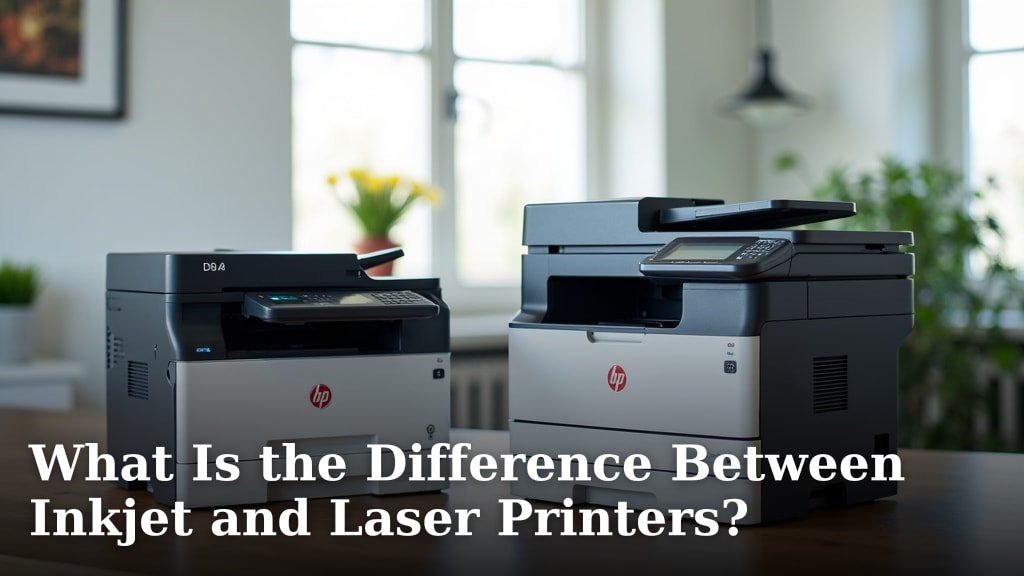
The main difference between Inkjet and Laser printers lies in their printing method: Inkjet printers use liquid ink sprayed through tiny nozzles, while Laser printers use toner powder and a heated fuser. Each technology has its own strengths and weaknesses.
Choosing between an Inkjet and Laser printer depends on your specific needs and budget. Do you print a lot of photos, or mostly text documents? Understanding these core differences helps you make a smarter buying decision.
TL;DR:
- Inkjet uses liquid ink; Laser uses toner powder.
- Inkjets are generally better for photos and color graphics.
- Lasers excel at fast, crisp text documents.
- Inkjets usually have a lower upfront cost.
- Lasers often have a lower cost per page for high-volume printing.
Let’s dive deeper into the details and help you figure out which type of printer is the perfect fit for your home or office.
Understanding Inkjet vs. Laser Printing Technologies
Let’s really dig into how these two printer types work. It all comes down to the fundamental science behind putting images and text on paper. One uses liquid, the other uses powder.
The Science Behind Inkjet Printers
Imagine tiny, microscopic nozzles smaller than a human hair. That’s essentially the heart of an inkjet printer. These printers create images by spraying microscopic droplets of liquid ink onto your paper. It’s a precise dance of technology, resulting in vibrant colors and smooth transitions.
How Liquid Ink Works
Inkjet cartridges contain liquid ink in various colors – typically cyan, magenta, yellow, and black. When you send a document to print, a print head moves across the page. As it moves, it receives electronic signals that tell it exactly where to squirt these tiny ink drops. Some inkjets use heat to create bubbles that force the ink out; others use piezoelectric crystals that vibrate rapidly (PCMag).
The paper then absorbs these ink droplets, and as they dry, your image or text appears. This method is fantastic for blending colors, which is why inkjets often excel at photo printing.
The Science Behind Laser Printers
Now, let’s switch gears to laser printers. Instead of liquid ink, these machines use a fine, powdery substance called toner. They rely on static electricity, light, and heat to bond this powder to the paper. Think of it like a very controlled, high-tech stamp.
How Toner Powder is Applied
The process starts with a laser beam “drawing” an image of your document onto a photosensitive drum inside the printer. This laser creates an electrostatic charge wherever the image should be. Tiny toner particles, which are also electrically charged, then stick to these charged areas on the drum.
Next, the paper rolls past the drum, attracting the toner powder from the drum onto itself. Finally, the paper passes through a fuser unit, which uses intense heat and pressure to melt the toner onto the paper. This heat-setting is what makes laser prints so durable and smudge-proof right out of the machine.
Comparing Performance and Output Quality
When you’re trying to decide between an inkjet and a laser printer, it’s really important to think about what you print most often. Are you a photo enthusiast, or do you churn out reports and spreadsheets?
Photo and Color Printing Quality
For printing beautiful, vibrant photographs with smooth color gradients, inkjet printers are generally the champions. The way liquid ink blends and soaks into specialized photo paper allows for a wider color gamut and more realistic photo reproduction. If your main goal is to print family photos, art projects, or marketing materials with rich graphics, an inkjet will likely make you happier.
Text Document Printing Quality
If crisp, sharp text is your priority, especially for documents like resumes, contracts, or school papers, then laser printers typically take the lead. The toner powder creates very precise edges for characters, making text appear darker and clearer, even at small font sizes. This makes laser prints look incredibly professional, and they often print faster too.
Speed and Volume Considerations
When it comes to speed, laser printers usually have an advantage, especially for black-and-white documents. They can often print pages per minute at a much higher rate than most inkjets. If you need to print hundreds of pages quickly for your business or classroom, a laser printer will save you a lot of time.
For high-volume printing (think thousands of pages a month), laser printers are also built to handle the workload. Their toner cartridges last longer, and they’re designed for consistent, heavy use. Inkjets, while capable, often have smaller ink reservoirs and may not be as robust for constant, large print jobs.
Cost and Maintenance: What to Expect
The initial price tag for a printer is just one part of the financial picture. You also need to consider the ongoing costs of ink or toner, paper, and any potential repairs. Let’s break down the true cost of ownership.
Upfront Purchase Price
Generally speaking, inkjet printers tend to have a lower initial purchase price. You can find basic inkjet models for very budget-friendly prices, making them an attractive option for casual home users. Laser printers, especially color laser models, usually come with a higher upfront cost. It’s an investment, but sometimes that investment pays off in the long run.
Ink vs. Toner Cartridge Costs
Here’s where the comparison gets really interesting. While inkjet printers are cheaper to buy, their ink cartridges can be quite expensive, especially if you print frequently. Many users find themselves replacing cartridges often, which can add up significantly over time. Some newer inkjet models, however, offer “tank” systems that you refill with bottles of ink, which can drastically lower the cost per page (Consumer Reports).
Toner cartridges for laser printers typically have a higher individual price. However, they also yield a much higher number of pages per cartridge. This often translates to a lower cost per page for laser printers, particularly for black and white printing. If you print in high volumes, this cost efficiency can save you money in the long run.
Durability and Maintenance
Laser printers are often considered more robust and durable, built for heavier use cycles. Their toner-based system means less risk of dried-up ink heads, a common frustration for occasional inkjet users. If an inkjet sits unused for too long, the liquid ink can dry in the nozzles, leading to clogged print heads and potentially requiring cleaning cycles or even replacement.
Maintaining a laser printer usually involves replacing toner cartridges and occasionally a drum unit. Inkjets require more frequent cartridge changes and can sometimes need print head cleaning, which uses up more ink. Your usage pattern really dictates which system will be less hassle.
Which Printer is Right for You? A Quick Guide
We’ve covered a lot of ground, from tiny ink droplets to static electricity and heated toner. Now, let’s bring it all together to help you make a confident decision. Think about your daily or weekly printing habits.
Consider this checklist to guide your choice:
- Do you primarily print high-quality photos?
- Is your budget for the printer very limited?
- Do you print infrequently, maybe once a week or less?
- Do you need to print a wide variety of color documents?
- Are you okay with potentially higher ink costs?
If you answered “yes” to most of these, an inkjet printer is likely your best bet.
Conversely, ask yourself these questions:
- Do you mostly print text documents?
- Do you need fast print speeds?
- Do you print in high volumes regularly?
- Is print clarity and crispness essential for text?
- Do you want a lower cost per page in the long run?
If these resonate with you, a laser printer might be the smarter choice.
To help visualize the differences, here’s a handy comparison table:
| Feature | Inkjet Printer | Laser Printer |
|---|---|---|
| Printing Method | Liquid ink spray | Toner powder, laser, heat |
| Best For | Photos, color graphics | Text documents, high volume |
| Print Quality (Photos) | Excellent | Good to Fair |
| Print Quality (Text) | Good | Excellent (crisp) |
| Upfront Cost | Lower | Higher |
| Cost Per Page | Often higher | Often lower |
| Speed | Slower | Faster, especially for text |
| Cartridge Type | Ink cartridges (liquid) | Toner cartridges (powder) |
Ultimately, your ideal printer is one that fits your unique printing needs and budget. There’s no single “best” printer type, just the best one for you.
Conclusion
Choosing between an inkjet and a laser printer really boils down to your unique printing habits. We’ve seen that inkjets shine for photos and vivid colors, offering a lower initial cost. On the other hand, laser printers excel with crisp text and high-volume output, proving more economical per page over time. Consider your primary print jobs and frequency. By understanding these core differences, you’re now equipped to confidently select the printer that best suits your home or office needs, ensuring you get the most value and satisfaction from your purchase.
Frequently Asked Questions
Are inkjet printers messy to refill or maintain?
Modern inkjet printers, especially those with ink tank systems, are designed to be much cleaner than older models. Refilling typically involves pouring ink from bottles into designated tanks, which minimizes spills. Regular maintenance mainly involves occasional print head cleaning, often an automated process.
Can I print photos on a laser printer?
Yes, you can print photos on a color laser printer, but the quality typically won’t match a dedicated inkjet photo printer. Laser printers use toner, which melts onto the paper surface, resulting in a less vibrant, sometimes glossy finish compared to the absorbed liquid ink of inkjets on photo paper.
Do laser printers dry out if not used frequently?
No, laser printers use toner powder, which does not dry out like liquid ink. This makes them an excellent choice for users who print infrequently, as you won’t have to worry about clogged print heads or dried-up cartridges after periods of inactivity.
Which type of printer is better for a small home office?
For a small home office, the “better” printer depends on what you print most. If it’s mostly text documents, invoices, or reports, a monochrome laser printer offers speed and a low cost per page. If you need color graphics, marketing materials, or occasional photos, a color inkjet might be more suitable.
Is there a hybrid printer that does both jobs well?
While no printer does everything perfectly, some high-end inkjet models have significantly improved text quality, and some color laser printers can produce decent color graphics. Look for all-in-one (AIO) models that offer a balance of features, but understand there’s usually a trade-off in specialized quality.
