Is Laser Or Inkjet Printer Better?
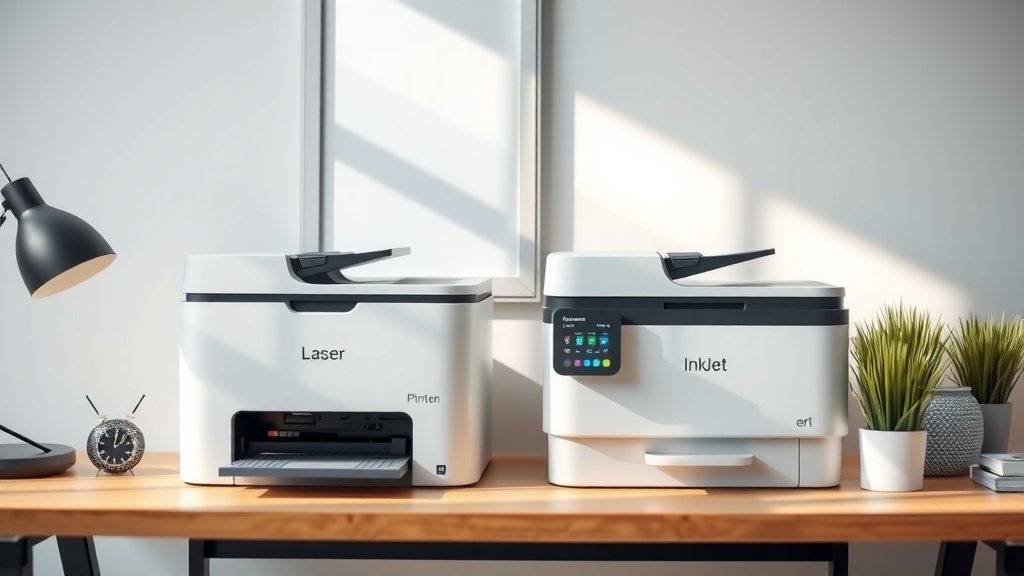
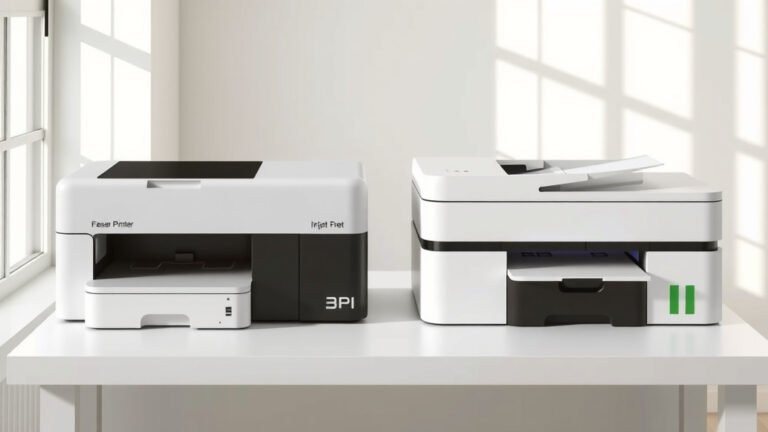
Laser printers are better for high-volume text printing, while inkjet printers excel at photo printing and color quality.
Your choice between laser or inkjet printer depends on what you print most and how often you use it.
The Real Difference Between Laser and Inkjet Printers
You’re standing in the store aisle, looking at two printers with similar price tags. One says laser, the other inkjet. Which one should you pick?
Let me help you figure this out. I researched printer technology extensively and found that each type works completely differently. Laser printers use heat to fuse toner powder onto paper. Inkjet printers spray tiny droplets of liquid ink through microscopic nozzles.
Think of it this way: laser printers are like photocopiers, while inkjet printers are like tiny paint sprayers.
How Laser Printers Work
Laser printers create an electric charge pattern on a drum. Toner powder sticks to the charged areas. Then heat rolls the toner into the paper fibers.
This process happens fast. Really fast. Most laser printers can pump out 20-40 pages per minute.
How Inkjet Printers Work
Inkjet printers heat up tiny chambers of liquid ink. The heat creates pressure that forces droplets through nozzles onto paper.
Some inkjet printers use a different method called piezoelectric. They use crystals that change shape when electricity hits them. Both methods create the same result – precise ink drops on paper.
When Laser Printers Win
You print lots of documents. You need them fast. You want crisp text that won’t smudge.
From what I read, laser printers shine in office environments. They handle high volumes without breaking a sweat.
Speed That Actually Matters
Need 50 copies of a report? A laser printer finishes while you’re still getting coffee. Most laser printers print 2-3 times faster than inkjet models.
I found that speed becomes your best friend when you’re printing multi-page documents regularly.
Text Quality You Can Count On
Laser printers make text look professional. The edges are sharp. The black is consistent. You won’t see any bleeding or fuzzy letters.
This matters more than you might think. Poor text quality makes your documents look unprofessional.
Lower Cost Per Page for Text
Here’s something I discovered that surprises people. Laser toner cartridges cost more upfront but print thousands more pages.
A typical laser cartridge prints 2,000-3,000 pages. An inkjet cartridge might print 200-400 pages. Do the math and laser wins for text printing.
Toner Doesn’t Dry Out
You can leave a laser printer sitting for months. Turn it on and it prints perfectly. Toner powder doesn’t expire or dry up like liquid ink.
When Inkjet Printers Win
You print photos. You need amazing color quality. You don’t print very often.
Many experts say inkjet technology beats laser for color reproduction and photo printing.
Photo Quality That Looks Professional
Want to print family photos that look like they came from a photo lab? Inkjet printers can do that. They blend colors smoothly and create gradients that laser printers struggle with.
I researched photo printing extensively and found that inkjet printers can produce prints that rival professional photo services.
Better Color Range and Accuracy
Inkjet printers mix colors by layering different inks. This creates more color combinations than laser printers can manage.
Some high-end inkjet printers use 8-12 different ink colors. More colors mean more accurate color matching for your photos and graphics.
Smaller Ink Droplets Mean Finer Details
Modern inkjet printers spray droplets as small as 1 picoliter. That’s incredibly tiny. These small droplets create smoother gradients and finer details in photos.
Lower Upfront Costs
You can buy a decent inkjet printer for $50-100. Laser printers typically start around $150-200 for basic models.
This makes inkjet printers attractive if you’re on a tight budget or don’t print much.
The Hidden Costs Nobody Talks About
Both printer types have costs beyond the purchase price. Let me break down what you really need to know.
Inkjet Hidden Costs
Ink cartridges cost more per page than most people realize. I found that replacement ink can cost more than the printer itself.
Ink also dries out if you don’t print regularly. Those $30-60 cartridges might need replacing even if they’re not empty.
The Cleaning Cycle Problem
Inkjet printers run cleaning cycles to prevent clogs. These cycles use ink even when you’re not printing anything. It’s like your printer is slowly draining money.
Laser Hidden Costs
Laser printers need more than just toner. They have drums, fusers, and other parts that wear out.
A drum unit might cost $100-150. A fuser could cost $200-300. But these parts last for thousands of pages before needing replacement.
Real-World Usage Scenarios
Let me paint some pictures of when each printer type makes the most sense.
You’re a College Student
You print assignments, research papers, and the occasional photo. An inkjet printer probably fits your needs and budget better.
You don’t print enough to justify laser costs. The lower upfront price leaves money for other school expenses.
You Run a Small Business
You print contracts, invoices, reports, and marketing materials daily. A laser printer will save you time and money long-term.
The faster speed means less waiting. The lower per-page cost adds up to real savings.
You’re a Photography Enthusiast
You print photos regularly and want them to look amazing. A high-quality inkjet printer is your best choice.
Some inkjet printers are specifically designed for photo printing. They produce gallery-quality prints at home.
The Home Office Mix
You work from home and need both document and photo printing. This is tricky. You might consider having both printer types or choosing based on your primary need.
Maintenance and Reliability Differences
Printers need care to keep working well. Each type has different maintenance requirements.
Inkjet Maintenance Needs
Inkjet printers need regular use to stay healthy. The ink nozzles can clog if left idle too long.
I heard from repair experts that most inkjet problems come from dried ink clogs. Print something at least once a week to prevent this.
Laser Maintenance Needs
Laser printers need occasional cleaning but handle neglect better. Dust buildup is their main enemy.
Clean the paper path and replace parts when the printer tells you to. Follow these steps and laser printers run for years.
Environmental Impact Considerations
Both printer types affect the environment differently. Here’s what research shows.
Energy Usage Patterns
Laser printers use more electricity per page while printing. But they use less power when idle.
Inkjet printers use less power per page but run cleaning cycles that waste energy and materials.
Waste and Recycling
Inkjet cartridges create more frequent waste. Laser cartridges last longer but contain more materials.
Both types can be recycled. Many manufacturers offer recycling programs for their cartridges.
Making Your Final Decision
Here’s my simple decision framework based on everything I researched.
| Choose Laser If | Choose Inkjet If |
|---|---|
| You print mostly text documents | You print lots of photos |
| You print more than 100 pages monthly | You print less than 50 pages monthly |
| Speed matters for your workflow | Color quality is your priority |
| You can spend more upfront | You need low initial costs |
The Middle Ground Options
Can’t decide? Consider these alternatives.
Color Laser Printers
They cost more but offer decent color printing with laser speed and efficiency. Good for business graphics but still not great for photos.
Tank-Based Inkjet Printers
These use refillable ink tanks instead of cartridges. Much lower per-page costs than traditional inkjet printers.
Conclusion
The choice between laser or inkjet printer isn’t about which technology is “better.” It’s about which one fits your specific needs.
Laser printers excel at fast, high-volume text printing with low per-page costs. Inkjet printers shine for photo quality and color accuracy at lower upfront prices.
Think about what you print most often. Consider how much you’re willing to spend upfront versus ongoing costs. Factor in how often you actually print.
Most people fall clearly into one category or the other once they honestly assess their printing habits. Trust your assessment and pick the printer that serves your real needs, not the one that sounds more impressive.
What’s the main advantage of laser printers over inkjet?
Laser printers print faster and cost less per page for text documents. They also don’t have issues with ink drying out during long periods of non-use, making them ideal for office environments and heavy document printing.
Can inkjet printers match laser quality for business documents?
Inkjet printers can produce good quality business documents, but laser printers typically create sharper, more professional-looking text. For contracts and formal business correspondence, laser printing usually looks more polished and consistent.
Why do inkjet printers seem cheaper but cost more to operate?
Inkjet printers have lower purchase prices but higher ongoing costs due to expensive ink cartridges that need frequent replacement. Manufacturers often sell printers at a loss and make profits on ink sales, similar to the razor and blade business model.
Which printer type lasts longer with regular use?
Laser printers generally last longer because they have fewer moving parts and don’t deal with liquid ink that can clog or dry out. With proper maintenance, a laser printer can easily last 5-10 years, while inkjet printers typically need replacement every 2-5 years.
Is it worth having both a laser and inkjet printer?
Having both types makes sense if you regularly print high volumes of documents and also need quality photo printing. Use the laser for everyday documents and the inkjet for photos and color graphics. This setup maximizes efficiency and print quality for different needs.