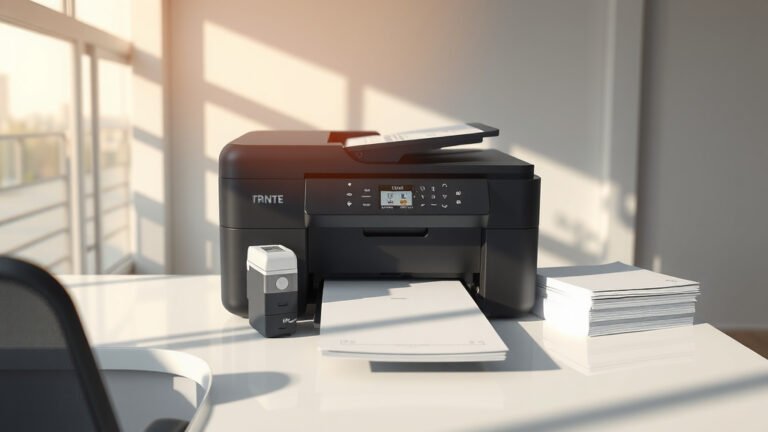
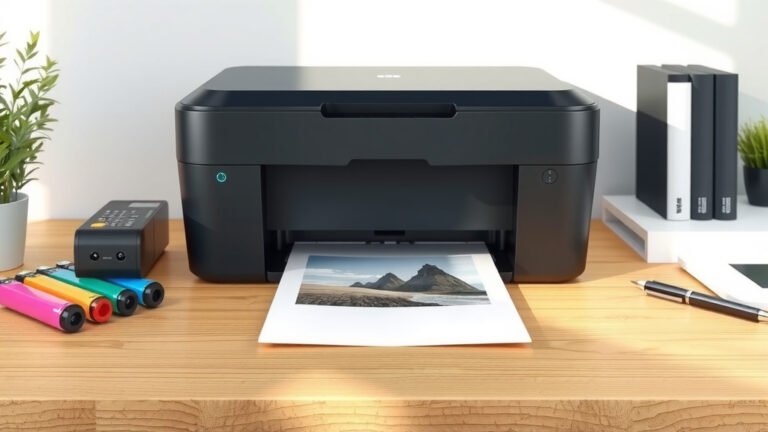
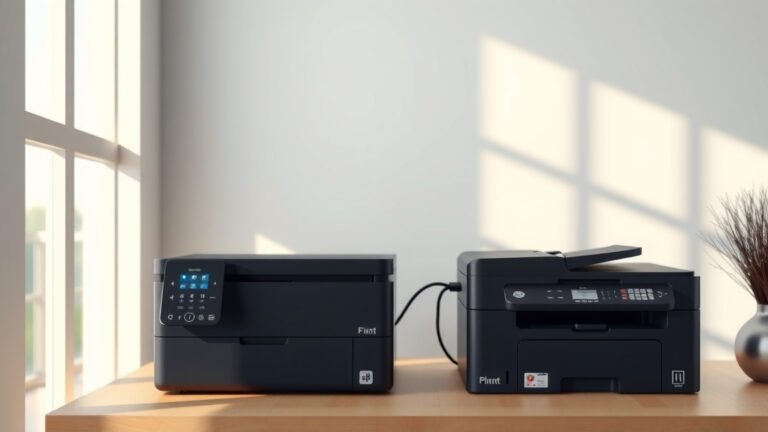
Is Laser Printer Better Than Inkjet?
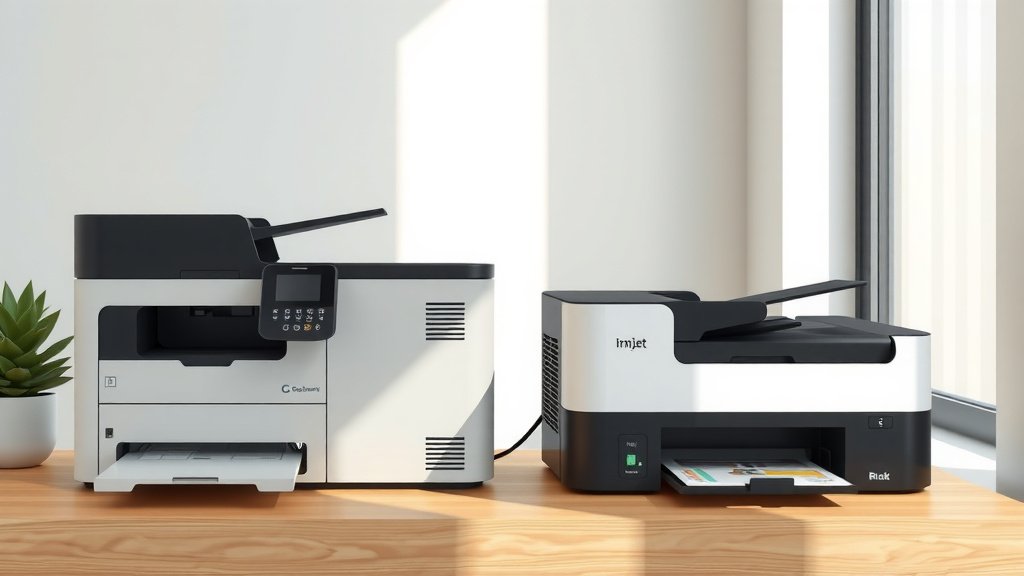
Laser printers are better than inkjet for high-volume text printing and offices, while inkjet printers excel at photo printing and have lower upfront costs.
Your choice between laser printer and inkjet depends on whether you prioritize speed and text quality or photo printing and initial budget.
Which Printer Type Costs Less to Buy?
Inkjet printers win the upfront cost battle hands down. You can grab a decent inkjet for $50 to $150. Basic laser printers start around $150 and go up from there.
But here’s the twist: cheaper upfront doesn’t always mean cheaper long-term. Think of it like buying a car with great sticker price but terrible gas mileage.
Inkjet Initial Investment
Entry-level inkjet printers are budget-friendly. You’ll find solid options for home use under $100. Even all-in-one models with scanning and copying stay reasonable.
Photo-focused inkjets cost more, ranging from $200 to $500. Professional models can hit $1000 or more.
Laser Printer Startup Costs
Monochrome laser printers start around $150 for basic models. Color lasers jump to $300 minimum, often reaching $600 to $1000 for quality options.
Business-grade lasers with fast speeds and large paper trays can cost $2000 or more. But they’re built for heavy daily use.
The Real Cost: Ink vs Toner Over Time
Here’s where things get interesting. Inkjet cartridges seem cheap but run out fast. Laser toner costs more upfront but lasts much longer.
I found research showing inkjet ink can cost $2000 to $5000 per gallon when you break it down. That’s more expensive than fancy champagne!
Inkjet Ink Replacement Costs
Standard inkjet cartridges cost $15 to $50 each. You need separate cartridges for black, cyan, magenta, and yellow. That’s $60 to $200 for a full set.
Most cartridges print 200 to 500 pages. If you print 100 pages monthly, you’ll replace cartridges every few months.
High-Yield vs Standard Cartridges
High-yield cartridges cost more but print more pages. They offer better value per page. Standard cartridges work fine for light printing.
Some manufacturers offer subscription services. You pay monthly and get cartridges delivered when needed.
Laser Toner Economics
Laser toner cartridges cost $50 to $200 each. Color lasers need four separate toners. That’s $200 to $800 for replacements.
But toner lasts much longer. Standard cartridges print 1500 to 3000 pages. High-yield versions can do 5000 to 10000 pages.
Cost Per Page Breakdown
Inkjet printing typically costs 5 to 15 cents per page for color, 3 to 8 cents for black and white. Laser printing runs 2 to 5 cents per color page, 1 to 3 cents for black text.
Over thousands of pages, laser printers save serious money. If you print 200+ pages monthly, laser makes financial sense.
Print Quality: Where Each Technology Shines
Both printer types produce good results, but they excel in different areas. Your printing needs should guide your choice.
Text and Document Quality
Laser printers create crisp, sharp text that looks professional. The toner bonds to paper through heat, creating precise edges and consistent darkness.
Inkjet text quality has improved dramatically. Modern inkjets produce readable documents, but laser still edges ahead for pure text clarity.
Small Font Performance
Laser printers handle tiny fonts better. Legal documents, contracts, and technical manuals look cleaner on laser prints.
Inkjet small text can look slightly fuzzy, especially on plain paper. Premium inkjet paper helps but adds cost.
Photo and Image Printing
Inkjet printers dominate photo printing. They blend colors smoothly and handle color gradients beautifully. Professional photo inkjets rival traditional darkroom prints.
Laser printers print photos, but they look more like magazine illustrations than true photographs. The dot pattern is visible up close.
Color Accuracy and Range
Photo inkjets often use 6 to 12 different ink colors. This wide palette creates accurate skin tones and subtle color variations.
Laser printers use just four colors (CMYK). They reproduce graphics and charts well but can’t match inkjet photo quality.
Speed and Volume: When Time Matters
Laser printers print much faster than inkjets. If you print lots of documents, this difference adds up quickly.
Entry-level lasers print 20 to 30 pages per minute. Fast models reach 50+ pages per minute. Office workers love this speed.
Inkjet Printing Speed
Basic inkjets print 5 to 10 pages per minute for text. Photo printing takes much longer – often 2 to 5 minutes per 8×10 photo.
Higher-end inkjets reach 15 to 20 pages per minute. But they still can’t match laser speed for text documents.
Monthly Volume Capacity
Laser printers handle high monthly volumes better. Many are rated for 1000 to 5000+ pages per month. Business models go even higher.
Inkjets work best for 100 to 500 pages monthly. Push them harder and you’ll face more maintenance issues and shorter lifespan.
Warm-Up Time Differences
Laser printers need 30 to 60 seconds to warm up from sleep mode. Once ready, they print continuously at full speed.
Inkjets start printing immediately but may run cleaning cycles that slow things down. They work better for occasional printing.
Reliability and Maintenance Needs
Both printer types need some care, but their maintenance requirements differ significantly.
Laser Printer Maintenance
Laser printers are generally more reliable for daily use. The toner doesn’t dry out like ink, so occasional printing isn’t a problem.
Main maintenance involves replacing the drum unit every 20000 to 50000 pages. Some models combine drum and toner in one cartridge.
Common Laser Issues
Paper jams happen but are usually easy to clear. Fuser units may need replacement after 100000+ pages in high-volume situations.
Toner can get messy if cartridges leak, but this is rare with quality cartridges.
Inkjet Maintenance Requirements
Inkjets need more frequent maintenance. Ink can dry in the print heads if you don’t print regularly. Weekly printing helps prevent clogs.
Most inkjets run automatic cleaning cycles that use ink. This maintains quality but increases ink consumption.
Ink Drying and Clog Issues
If you don’t print for weeks, ink may dry in the nozzles. Cleaning cycles usually fix this, but severe clogs may require manual cleaning or professional service.
Some users buy continuous ink systems to reduce costs, but these require more maintenance attention.
Environmental Impact Comparison
Both printer types affect the environment, but in different ways. Your usage pattern influences which is greener.
Energy Consumption
Laser printers use more energy while printing because they heat the fuser. But they sleep efficiently between jobs.
Inkjets use less power during printing but may run cleaning cycles that waste energy and ink.
Cartridge Waste and Recycling
Inkjet cartridges are smaller and replaced more often, creating more plastic waste. Many stores accept empty cartridges for recycling.
Laser toner cartridges are larger but last longer. Most manufacturers offer recycling programs for empty toner cartridges.
Which Printer Type Fits Your Needs?
| Your Situation | Better Choice | Why |
|---|---|---|
| Home office, mostly text | Laser | Lower cost per page, faster |
| Family photos and school projects | Inkjet | Better photo quality, lower upfront cost |
| Small business, 500+ pages monthly | Laser | Speed, reliability, cost efficiency |
| Occasional printing, tight budget | Inkjet | Cheap to start, good for light use |
| Professional photography | Photo Inkjet | Superior color accuracy and quality |
Budget-Based Decision Making
If you have under $150 to spend, inkjet is your main option. Focus on models with reasonable ink costs and good reviews.
With $200 to $400, you can choose between a premium inkjet or entry-level laser. Think about your monthly printing volume.
Long-Term Cost Planning
Calculate your expected monthly pages and multiply by cost per page. Add this to the printer price to compare true costs over two years.
Don’t forget to factor in your time. If you print a lot, laser speed saves hours over inkjet.
Making the Right Choice for 2024
The printer market keeps improving. Modern inkjets are faster and more reliable than older models. New laser printers offer better color quality than before.
I found that many experts recommend laser for offices and text-heavy users. Inkjet still rules for photo enthusiasts and occasional home printing.
Future Technology Trends
Tank-based inkjets are gaining popularity. You refill ink tanks instead of replacing cartridges. This cuts operating costs significantly.
Laser printers are adding wireless features and mobile printing capabilities. Some models now rival inkjets for ease of setup.
Conclusion
Choosing between laser and inkjet printers comes down to your specific needs and budget. Laser printers win for speed, text quality, and high-volume printing. They cost more upfront but save money long-term if you print regularly.
Inkjet printers excel at photos, cost less to buy, and work well for light printing. They’re perfect for families and users who print occasionally. Consider a tank-style inkjet if you want inkjet quality with lower operating costs.
Think about what you print most, how often you print, and your budget for both the printer and ongoing supplies. Either technology can serve you well when matched to your actual needs.
What’s the main advantage of laser printers over inkjet?
Laser printers print text documents much faster and at lower cost per page than inkjets. They’re also more reliable for high-volume printing and don’t have issues with ink drying out during periods of non-use.
Can laser printers print good quality photos?
Laser printers can print photos, but the quality doesn’t match inkjet printers. Laser photo prints look more like magazine illustrations with visible dot patterns, while inkjets produce smooth, realistic photo prints with better color blending.
How long do ink cartridges last compared to toner?
Ink cartridges typically print 200-500 pages before needing replacement, while laser toner cartridges print 1500-3000 pages for standard cartridges and up to 10000 pages for high-yield versions. This makes laser printing much more cost-effective for frequent users.
Which printer type is better for someone who prints rarely?
Inkjet printers are generally better for occasional printing because they have lower upfront costs and start printing immediately. But if you print very rarely, laser might be better since toner doesn’t dry out like ink does in unused cartridges.
Do laser printers use more electricity than inkjets?
Laser printers use more power while actively printing due to the heating process, but they’re more efficient in sleep mode. Inkjets use less power during printing but may waste energy running automatic cleaning cycles, especially if used infrequently.