
What Is the Cheapest Printer to Own Long Term?
The cheapest printer to own long term is often a monochrome laser printer, especially for those who primarily print text documents. We found that these printers typically have a higher upfront cost but offer significantly lower cost per page for toner than inkjet cartridges.
You might be surprised by how much money you can save over time. We found that many people overlook the ongoing cost of ink and toner when buying a printer. Thinking about total cost of ownership is key to finding a truly economical option.
TL;DR:
- Monochrome laser printers usually cost less over time.
- Inkjet printers can be expensive due to cartridge costs.
- Look at the “cost per page” when comparing printers.
- Cheaper upfront doesn’t mean cheaper long-term.
- Your printing habits determine the best choice.
Let’s walk through exactly how to figure out which printer will save you the most money in the long run, tailored to your specific needs.
Figuring Out Your Printer’s True Cost
The real cost of a printer goes far beyond its initial purchase price. You need to consider all the little expenses that add up over time. Thinking about the total cost of ownership (TCO) is like looking at a car’s price; you don’t just pay for the car, but also for gas, oil changes, and maintenance. Printers are similar. We found that most people only look at the sticker price.
Understanding Cost Per Page (CPP)
This is the most important number when it comes to long-term savings. The cost per page (CPP) tells you how much each printed sheet will cost you. It’s calculated by dividing the cost of the ink or toner cartridge by the estimated number of pages it can print. A low CPP means more savings over time.
Calculating Your Printer’s CPP
To figure this out, you’ll need two pieces of information: the cartridge price and its page yield. You can usually find the page yield on the cartridge packaging or the printer manufacturer’s website. For example, if a toner cartridge costs $60 and prints 2,000 pages, your CPP is $0.03 per page. That’s three cents a page!
Inkjet vs. Laser: The Fundamental Difference
The core difference between these two printer types lies in how they apply color to paper. Inkjet printers spray tiny drops of liquid ink. Laser printers use toner, which is a fine powder, and a heated fuser to bond it to the page. This difference has huge implications for your wallet. To understand the implications for your wallet, it helps to know the fundamental difference between laser printer and inkjet technologies.
We found that for most home users, especially those printing primarily text, the cost disparity becomes quite clear over time. It’s like comparing a super-efficient electric car to a gas guzzler. Both get you there, but one costs less per mile.
Why Inkjets Often Cost More
Inkjet printers usually have a lower upfront price. This is a common marketing strategy. However, the cartridges can be surprisingly expensive. Many inkjet printers use several small cartridges (black, cyan, magenta, yellow). When one runs out, you have to replace it. We found that these cartridges also tend to dry out if not used regularly.
- Smaller page yield: Inkjet cartridges generally print fewer pages than toner cartridges.
- Higher ink cost per milliliter: Ounce for ounce, inkjet ink is often more expensive than some luxury perfumes (Consumer Reports).
- Drying out: If you don’t print often, inkjet cartridges can dry up, forcing you to buy new ones even if they’re not empty.
- Cleaning cycles: Inkjets perform self-cleaning cycles that use up ink, even when you’re not printing.
Why Laser Printers Can Save You Money
Monochrome laser printers, specifically, are kings of efficiency for text documents. They use toner, which doesn’t dry out. Toner cartridges also have a much higher page yield. This means you replace them less often and get more prints per cartridge. While the printer itself might cost a bit more upfront, the ongoing savings are significant.
Consider this: a laser printer toner cartridge might cost $70 but print 3,000 pages, while an inkjet cartridge costs $30 but only prints 300 pages. The laser printer’s CPP is around $0.023, while the inkjet’s is $0.10. That’s a huge difference over thousands of pages!
Your Printing Habits Matter Most
The “cheapest” printer for your neighbor might not be the cheapest for you. Your specific printing needs are the biggest factor in determining long-term costs. It’s like choosing a car; a commuter needs something different than someone who hauls lumber every day.
Occasional vs. Frequent Printing
Do you print once a month or several times a week? If you print only a few pages now and then, an inkjet might seem appealing due to its low initial price. However, as we mentioned, inkjet cartridges can dry out, leading to waste and frustration. A laser printer, even for occasional use, avoids this problem since toner is powder and doesn’t dry.
Text vs. Photos and Color
What are you primarily printing? This is a critical question. If 90% of your prints are black-and-white documents, then a monochrome laser printer is almost always the most economical choice. You’re not paying for color ink you don’t use. If you need vibrant, high-quality photos, then an inkjet is usually necessary, but be prepared for higher running costs.
Consider Your Volume
How many pages do you print in a month or a year? Small home users might print 20-50 pages a month. A home office might print 200-500 pages. Larger volumes tip the scales even more heavily in favor of laser printers due to their superior CPP. Think about it like buying in bulk; the more you “buy” (print), the more you save with the right option.
Smart Printer Buying Checklist
Before you commit to a new printer, run through this quick checklist. It will help ensure you’re making a truly economical choice for the long haul.
- Research cartridge prices and page yields: Don’t just look at the printer’s price. What do the replacement cartridges cost?
- Calculate CPP for black and color (if needed): Do the math! Divide cartridge cost by page yield.
- Consider toner tank or ink tank printers: These often have a higher upfront cost but incredibly low CPP.
- Check for generic/compatible cartridges: Are reliable third-party options available? (Be cautious with very cheap options, as they can sometimes damage printers.)
- Read reviews about reliability and maintenance: A cheap printer that breaks often isn’t cheap at all.
- Match printer type to your primary printing needs: Text = laser. Photos = inkjet. Mix = potentially color laser or an ink tank.
The Rise of Ink Tank Printers
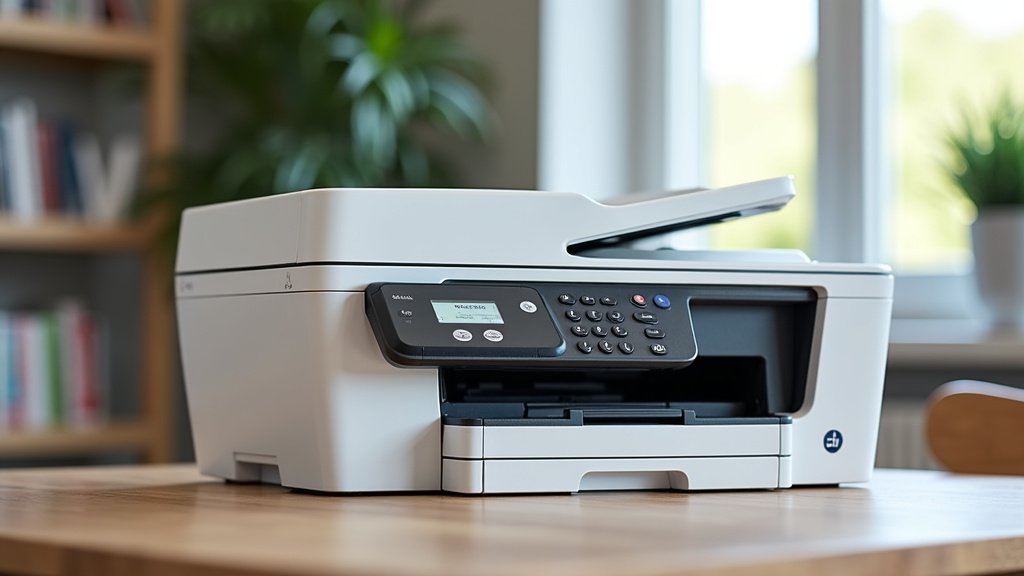
Traditional inkjet printers use small, disposable cartridges. But in recent years, a new type of inkjet has gained popularity: the ink tank printer (sometimes called “EcoTank” or “MegaTank”). These printers have large, refillable ink tanks instead of cartridges. You pour ink from bottles directly into the tanks. We’ve found these to be a fantastic hybrid solution for many users.
How Ink Tank Printers Save You Money
The upfront cost for an ink tank printer is usually higher than a traditional inkjet. However, the cost of refill ink bottles is dramatically lower per page. A single set of ink bottles might cost $40-$60 but can print thousands of pages, bringing the CPP down to fractions of a cent. This makes them competitive with laser printers in terms of ongoing costs, especially if you need color.
Imagine filling up your car with gas that costs ten times less per gallon. That’s the kind of savings ink tank printers offer for color printing. They combine the ability to print color photos with extremely low running costs.
| Printer Type | Typical Upfront Cost | Typical CPP (Black) | Best For… |
|---|---|---|---|
| Traditional Inkjet | Low ($50-$150) | High ($0.10-$0.25+) | Very occasional, light color printing |
| Monochrome Laser | Medium ($100-$300) | Very Low ($0.02-$0.05) | High volume, black & white text |
| Color Laser | High ($200-$500+) | Low ($0.03-$0.08) | High volume, color text/graphics (not photos) |
| Ink Tank (EcoTank, MegaTank) | Medium-High ($200-$500+) | Extremely Low ($0.002-$0.01) | Moderate-high volume, color and photos |
As you can see, the sweet spot for the cheapest printer long-term often comes down to balancing your needs with the technology’s inherent costs. For pure text, monochrome laser usually wins. For mixed use with a lot of color, ink tank printers are a strong contender.
Conclusion
Choosing the cheapest printer long term isn’t about the lowest price tag today; it’s about understanding the total cost of ownership. You’ve learned that your printing habits, whether text-heavy or color-dependent, dictate the most economical choice. For most black-and-white printing, a monochrome laser printer offers unbeatable value. If you need color, especially frequently, an ink tank printer provides fantastic savings.
Armed with knowledge about Cost Per Page and printer types, you can now make a genuinely smart decision that saves you money for years to come. Do your homework, match a printer to your needs, and enjoy printing without the hidden costs!
Frequently Asked Questions
Is it always cheaper to buy a laser printer over an inkjet?
Not always upfront, but often over time, especially for black-and-white documents. Laser printers have a higher initial cost but much lower cost per page (CPP) for toner. Inkjet printers have cheaper upfront prices but can become very expensive due to high ink costs.
Can I use third-party ink or toner to save money?
You can, and it often does save money. However, we found that reliability can vary greatly with generic cartridges. Some may work perfectly, while others can cause issues or provide lower print quality. Research specific brands and read reviews carefully before purchasing.
How do I know how many pages I print per month?
Estimate your usage by looking at past paper purchases or reviewing documents you typically print. Think about school assignments, work reports, or personal documents. If you have an old printer, some models track page counts in their settings or software.
Do printers use ink even if I don’t print often?
Traditional inkjet printers do. They perform automatic cleaning cycles to prevent printhead clogs, which uses a small amount of ink. This is a common reason why inkjets can seem to run out of ink even with infrequent use. Laser printers, using toner powder, do not have this issue.
Are refurbished printers a good way to save on long-term costs?
Refurbished printers can offer significant upfront savings. We recommend buying from reputable sellers who offer a warranty. This way, you get the benefits of a potentially more expensive model at a lower price point, contributing to better long-term value if the printer is reliable.
