How to Print Custom Labels for Soap Products?
On this page (7 sections)
Printing custom labels for your soap products is totally doable and essential for a professional look. You can print them right at home using your regular printer and some special label paper, or you can order them from a professional printing service. Either way, it’s a key step to making your handmade soaps stand out.
Getting your soap labels just right helps you share important information and build your brand. Think about the look, feel, and information you want on each bar. Good labeling can turn a simple soap into a memorable product that customers will love and remember.
- Choose between DIY home printing or professional services.
- Select the right label paper for your needs.
- Design eye-catching and informative labels.
- Consider soap ingredients, warnings, and branding.
- Ensure labels are durable and water-resistant.
Ready to make your soaps look amazing? Let’s walk through exactly how to get those perfect custom labels onto your beautiful soap creations.
Creating Your Soap Product Labels: A Step-by-Step Guide
Getting your handmade soaps to look as good as they smell is an exciting part of the crafting process. Custom labels are more than just pretty pictures. If you also make candles, see our guide to printing custom candle labels. They tell your story, build trust, and make your soap easy to identify. Let’s dive into making your soap labels shine.
Choosing Your Printing Path: DIY vs. Professional
You have two main roads to travel when it comes to printing your custom soap labels. Each has its own perks and considerations. Think about your budget, the volume of soaps you’re making, and the look you’re going for.
The DIY Printing Route: Printing at Home
Printing your own labels at home offers flexibility and control. You can print a few labels at a time, perfect for small batches or testing new designs. This method is often the most budget-friendly for beginners.
What You’ll Need for Home Printing
To get started with DIY printing, you’ll need a few key items. A good quality inkjet or laser printer is essential. Make sure it’s in good working order for crisp prints. You’ll also need label paper specifically designed for your printer type. You’ll also need label paper specifically designed for your printer type, such as sticker paper.
- Inkjet or laser printer
- Specialty label paper (waterproof or water-resistant recommended)
- Label design software or templates
- Scissors or a cutting machine
Selecting the Right Label Paper
The type of paper you choose makes a big difference. Your soap will likely come into contact with water. Therefore, selecting water-resistant or waterproof label paper is a smart move. This prevents your beautiful designs from smudging or peeling off.
Many brands offer printable sticker paper in various finishes. You can find matte, glossy, or even textured options. For soap, a durable, water-resistant finish is often best. Look for papers that can withstand moisture without losing their print quality. Some people find that vinyl-based labels hold up very well.
Designing Your Soap Labels at Home
This is where your creativity can really flow! You can use design software like Adobe Photoshop or Illustrator. Many free or affordable online tools are also available, such as Canva. These platforms often have templates to get you started.
When designing, think about your brand’s personality. Is it rustic, modern, or whimsical? Your label should reflect that. Include your brand name and logo prominently. Clear, easy-to-read fonts are important for product details. Consider the size of your soap bar when designing. You don’t want text that’s too small to read or a design that overwhelms the product.
Printing and Applying Your Labels
Once your design is ready, it’s time to print. Always do a test print on regular paper first. This lets you check colors and layout before committing to your special label paper. Make sure your printer settings are correct for the paper type you’re using.
After printing, carefully cut out your labels. If you have a cutting machine, this can ensure perfectly straight edges. When applying, make sure your soap bar is completely dry. Clean, dry surfaces help the adhesive stick properly. Apply the label smoothly to avoid bubbles or wrinkles. Aim for the center of the soap bar or a consistent placement each time.
The Professional Printing Route: Ordering Custom Labels
If you’re producing soaps in larger quantities or want a truly professional finish, ordering custom labels from a printing service is an excellent option. These services offer high-quality printing and a wider range of materials.
Benefits of Professional Printing
Professional printers have specialized equipment. This allows them to produce labels with exceptional clarity and durability. They can often print on materials that are far more resilient than standard home-use paper. Many offer waterproof inks and adhesives that are perfect for bath products.
Ordering in bulk can also lower your per-label cost. This is a big plus as your business grows. You’ll also save time by having professionals handle the printing. This lets you focus more on making your amazing soaps.
Choosing a Printing Service
There are many online printing companies that specialize in custom labels. Research a few options to compare pricing, turnaround times, and material choices. Look for companies that have good reviews and experience printing for small businesses or cosmetic products.
When selecting a service, pay attention to the types of label materials they offer. For soap, consider materials like BOPP (Biaxially-Oriented Polypropylene) or vinyl. These are known for their water resistance and durability (U.S. Food & Drug Administration). When selecting a service, consider professional label printers that offer durable materials.
What to Provide to the Printer
You’ll typically need to provide your label design as a high-resolution digital file. This is often a PDF, AI, or EPS file. Make sure your design includes bleed areas if required by the printer. Check their specific file requirements carefully.
You’ll also need to specify the label size, shape, and quantity. Most professional printers will have templates or guidelines to help you set up your artwork correctly. Don’t hesitate to ask their customer service team for help if you’re unsure about any specifications.
Key Information Every Soap Label Needs
Beyond looking good, your soap labels are legally required to provide certain information. Ensuring all necessary details are present builds consumer confidence and complies with regulations. Many countries have specific labeling requirements for cosmetics (Health Canada).
Essential Labeling Components
Here’s a checklist of what most soap labels should include:
- Product Name: Clearly state what the product is (e.g., “Lavender Oatmeal Soap Bar”).
- Net Weight: The weight of the soap bar (e.g., “Net Wt. 5 oz / 140 g”).
- Ingredient List: List all ingredients in descending order by weight. Use common chemical names.
- Company Name & Address: Your business name and location.
- Warnings/Precautions: Any necessary safety information. For example, “For external use only. Avoid contact with eyes.”
- Country of Origin: Where the product was made.
Understanding Ingredient Transparency
Listing ingredients accurately is a big part of being transparent with your customers. For soaps, this means naming the oils, butters, lye (sodium hydroxide), and any additives like fragrances, colorants, or exfoliants. Many consumers appreciate knowing exactly what they are putting on their skin.
For example, instead of just “fragrance,” you might need to specify “parfum” if that’s the ingredient used. If you’re using essential oils, list them by name (e.g., “Lavandula Angustifolia (Lavender) Oil”). This detailed approach helps customers with sensitivities or preferences make informed choices.
Safety and Allergen Information
It’s vital to include any potential allergens. Common allergens in soaps can include nut oils (like almond or shea butter) or certain botanical extracts. If your soap contains any of these, it’s wise to note them. This is especially important for customer safety and to avoid potential allergic reactions.
Consider a general “may contain traces of nuts” if there’s a risk of cross-contamination in your workspace. Standard warnings like “discontinue use if irritation occurs” are also good practice. Always err on the side of caution when it comes to health and safety information.
Designing for Durability and Appeal
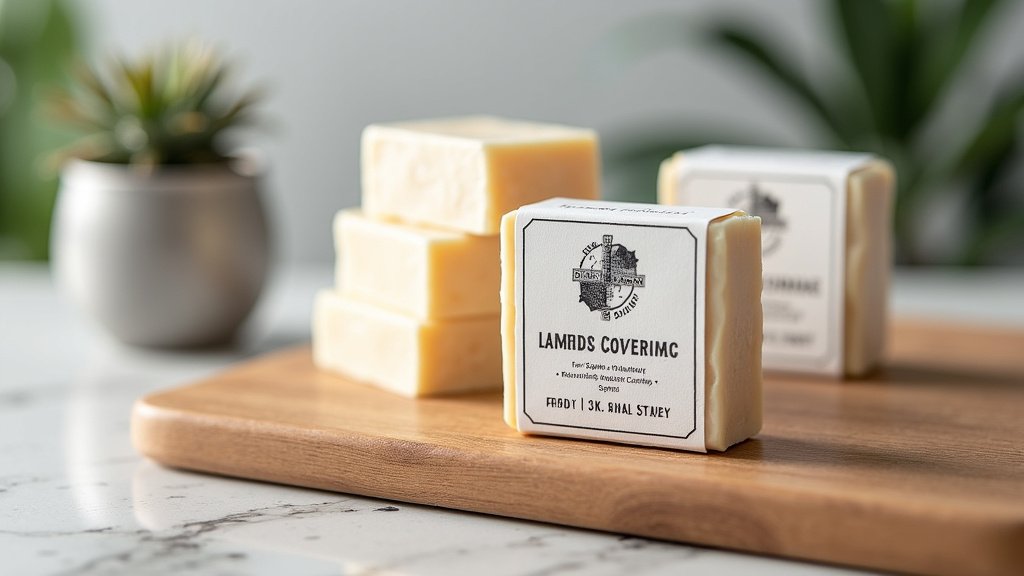
Your label’s design needs to be both attractive and built to last. Soap can be a wet environment, so your labels must hold up. Think about how the label interacts with the soap and its intended use.
Choosing the Right Shape and Size
The shape and size of your label should complement the shape of your soap bar. A rectangular label might work well on a classic bar. A more unique shape could suit a specialty molded soap. Measure your soap bar carefully to ensure your label fits perfectly without looking cramped or too small.
Consider how the label will wrap around the soap. Will it cover the entire surface, or just a portion? Ensure that any critical information remains visible and doesn’t get lost on a curved edge. Sometimes, a simple wrap-around label that leaves a small overlap is the most practical and durable.
The Importance of Water-Resistant Materials
We’ve touched on this, but it bears repeating: water resistance is key for soap labels. Regular paper labels can easily tear, smudge, or disintegrate in the shower. This can make your product look unprofessional and unappealing very quickly.
Materials like BOPP, vinyl, or synthetic papers are excellent choices. They resist moisture, oils, and general wear and tear. Many are also resistant to UV light, so colors won’t fade easily if displayed in a bright environment. This ensures your branding stays intact from the shelf to the sink.
Visual Appeal and Brand Consistency
Your label is often the first impression a customer has of your soap. It needs to grab attention and communicate your brand’s essence. Use high-quality graphics and a color palette that aligns with your brand identity.
Ensure consistency across all your product labels. If you have different soap scents, you can use variations of the same design. This helps customers recognize your brand even when trying a new product. A well-designed, consistent label builds brand loyalty and trust.
A Quick Checklist for Your Custom Soap Labels
Before you finalize your design and send it off to print, give this a quick check:
- Design is finalized and high-resolution
- All required information is included
- Label size and shape are appropriate
- Material choice is water-resistant
- Brand colors and fonts are consistent
- Proofread for any typos or errors
Conclusion
You’ve learned that creating custom soap labels is totally within your reach! Whether you decide to print at home for flexibility or use a professional service for high volume and polish, the key is thoughtful design and durable materials. Remember to always include essential product information and warnings to build customer trust. Your soap deserves labels that are as carefully crafted as the bars themselves. Now, take that final design, choose your printing method, and get ready to present your soaps professionally to the world!
Frequently Asked Questions
What’s the biggest difference between home printing and professional printing for soap labels?
Home printing offers you maximum control and is budget-friendly for small batches, letting you print as needed. Professional printing provides higher quality materials, finishes, and scalability, which is ideal for larger production runs and a more polished brand image.
Can I use regular paper for my soap labels if I seal them?
It’s strongly recommended not to use regular paper, even with sealing. Regular paper can degrade quickly when exposed to moisture common in bathrooms. Water-resistant or waterproof label materials are specifically designed to withstand humidity and direct water contact, ensuring your labels last.
How do I know if my label design is high-resolution enough for a professional printer?
Professional printers usually require designs in formats like PDF, AI, or EPS at 300 DPI (dots per inch) or higher. Check the specific printer’s guidelines, as they often provide templates or detailed specifications to ensure your artwork is sharp and clear.
What happens if my soap labels are not water-resistant?
If your soap labels aren’t water-resistant, they can easily smudge, peel, or even disintegrate from moisture exposure in the shower or sink. This makes your product look unprofessional and can lead to important information becoming unreadable.
Do I need to list every single chemical name for my soap ingredients?
Yes, you should list all ingredients in descending order by weight, using their common or INCI (International Nomenclature Cosmetic Ingredient) names. This ensures transparency and compliance with labeling regulations, helping consumers with sensitivities make informed choices.