Fellowes Spectra 95 Laminator Review: Worth It? (November 2026)
The Fellowes Spectra 95 suits small documents and light home workloads with 9.5 in width, 3 and 5 mil heat settings and a 4 minute warm-up. Pick it for letter-size pouches and occasional use, or a two-roller alternative if you laminate more often.
On this page (9 sections)
- Fellowes Spectra 95 at a glance
- Fellowes Spectra 95 laminator reviews: size and everyday fit
- Heat settings and pouch types that matter
- Warm-up, feed and the release lever
- Setup in a small home office
- Care and cleaning for light workloads
- Trade-offs versus two-roller alternatives
- Alternatives here for Fellowes Spectra 95 laminator reviews
- Verdict: pick the Spectra 95 for light letter-size work
The Fellowes Spectra 95 is a compact choice for smaller documents and light workloads. Fellowes Spectra 95 laminator reviews point to the same fit: home and home office use with letter-size pouches.
You get 9.5 in width, 3 and 5 mil heat settings and a 4 minute warm-up. Width controls pouch size, while heat settings control the finish of each item.
That mix suits certificates, photos, cards, recipe cards, signs and short handouts. It is less suited to wide sheets or long daily runs.
Advanced temperature control helps keep results consistent across pouches. Once you match the setting to the pouch, there is less guesswork.
A release lever lets you disengage a pouch for re-centering or removal. That small control can save a pouch when it starts to skew at the entry.
Auto shut-off helps prevent overheating during a session. You should still stay nearby while it runs.
The included ImageLast starter kit has ten 3-mil letter-sized pouches. That gives you enough to test the machine before you buy more.
At 3 pounds, the machine is easy to move between a desk and storage. Its silver and black case fits a home office without looking out of place.
If your jobs are mostly letter-size and occasional, this balance is hard to beat. Compare other laminators for home use if your workload differs.
If your jobs are wider or more frequent, the limits above are the reason to look elsewhere.
Fellowes Spectra 95 at a glance
The Spectra 95 offers simple hot lamination for home use with one roller and basic controls. Fellowes positions it for the home or home office, not for a busy print room.
Fellowes FEL5738201: Best for small home documents

- 9.5 in wide documents
- 3 and 5 mil heat settings
- 4 minute warm-up
- Auto shut-off
- Release lever
- 10 starter pouches included
A compact home laminator for letter-size documents, photos and cards in 3 and 5 mil pouches. Its release lever and auto shut-off help with light, occasional jobs.
Pros
- Fits letter-size pouches with room to spare
- Four minute warm-up
- Release lever helps re-centre a pouch
- Auto shut-off helps prevent overheating
- Starter kit included
Cons
- One roller, so feed slowly and straight
- 9.5 in width limits larger sheets
- Best suited to light workloads
Its silver and black case measures 14.56 by 7 by 3.06 inches and weighs 3 pounds. That size fits a desk or a closet shelf, but you still need a clear feed path in front and behind it.
Who the Spectra 95 suits best
Buy it if you laminate a few letter-size items each week. Home users who store photos, recipes, signs and certificates will use most of its width.
Skip it if you need to laminate wide legal sheets in a pouch wider than 9.5 inches. Also skip it if you want a faster feed for a full class set.
Fellowes Spectra 95 laminator reviews: size and everyday fit
Use the 9.5 in width for letter-size pouches with a small margin. That margin matters because the pouch seal needs room around the paper edge.
Measure the pouch, not just the paper, before you feed it through. A sheet that fits the paper size can still fail if the pouch is too wide.
The 14.56 inch length gives the machine a stable footprint. It is longer than the Amazon Basics model, so check your desk depth before you buy.
You also need clear space in front for feeding and behind for exit. A pouch that bends against a wall can emerge with a poor seal.
At 3 pounds, it is easy to move between a desk and storage. You can also place it near a printer so documents do not travel far after printing.
That short travel helps keep paper clean before lamination. Dust or fingerprints picked up on the way can become part of the finished piece.
For a first laminator machine for paper, this size range covers most home jobs. It handles cards, photos and letter sheets without forcing you to trim items down.
The 7 inch width and 3.06 inch height keep it low on a desk. That profile helps it sit under a shelf or in a cabinet when it is not in use.
Its single roller means you should feed slowly and straight. A pouch that enters at an angle has less help to correct itself than it would with two rollers.
Keep the entry path clear of other papers and clips. A curled sheet or a clip left on the desk can push a pouch off line at the start.
If your work is mostly small documents, the footprint is a benefit. If you regularly handle larger sheets, the same footprint becomes the limit.
Heat settings and pouch types that matter
The Spectra 95 has heat settings for 3 mil and 5 mil pouches. Use 3 mil for normal paper and photos where you want a thinner finish.
Mil refers to thickness, so 3 mil feels lighter and less stiff in the hand. That thinner finish is often enough for certificates, photos and short handouts.
Use 5 mil when you want a stiffer cover for items that will be handled often. Thicker pouches need full heat, so do not rush the warm-up.
A stiffer cover can help with signs, cards and items that go into a binder or folder. It also gives a more solid feel for pieces that get passed around.
Match the setting to the pouch thickness every time. Starting a 5 mil pouch on a 3 mil setting can leave the seal weak, while extra heat on a thin pouch can cause problems.
It also works with self-adhesive cold-lamination pouches. That option helps if you need a quick cover without waiting for heat.
Cold pouches suit small, one-off items where speed matters more than a bonded seal. They also avoid the warm-up wait entirely, which can be useful for a single card.
If you are unsure which route fits your project, our cold vs hot laminator guide explains the trade-offs. Hot pouches give a bonded seal, while cold pouches act more like a clear cover.
For home use, hot lamination usually gives the cleaner, more durable result. Cold lamination is simpler, but the finish and seal depend more on careful alignment by hand.
The starter kit includes ten 3-mil letter-sized pouches. That is a good way to learn the 3 mil setting before you move to thicker stock.
When you buy more pouches, check that they match the thickness you plan to use. Keeping one thickness in stock for a session also reduces setting errors.
Let finished hot pouches cool flat before stacking them. That short pause helps the seal set and keeps edges from curling.
Warm-up, feed and the release lever
Warm-up takes 4 minutes before the first pouch. That wait is short for a home machine, but it still shapes how you plan a session.
Feed one pouch at a time with the sealed edge first. Keep the pouch straight so one roller can pull it evenly.
The release lever helps if a pouch starts to skew. You can disengage it, re-centre the pouch and try again instead of forcing it through.
Auto shut-off helps prevent overheating during longer sessions. It does not replace your attention, since a skewed pouch can still jam or seal unevenly.
For step-by-step basics, see how to use the fellowes laminating machine. That guide pairs well with the controls on this model.
Setup in a small home office
Set the Spectra 95 on a flat, heat-safe surface with room to feed. You need space for the pouch to exit without bending against a wall.
Plug it in, switch it on and let it warm for 4 minutes. Select the setting that matches your pouch thickness before you insert anything.
Place a clean sheet or tray behind the exit side. That catch area keeps finished items flat while you prepare the next pouch.
Keep the cord where it cannot pull the machine off the desk. A short pull during feeding can skew a pouch and waste it.
Love it or not, you should also read about best self adhesive laminating sheets if you plan to use the cold-pouch option. Pouch size and film type affect how the finished item feels and lasts.
Care and cleaning for light workloads
Clean the rollers only when the machine is cool and unplugged. A carrier sheet or a cleaning sheet can pick up glue residue after a session.
Our guide on how to use laminator cleaning sheet shows the routine. Run it after a jam or when you see residue on finished pouches.
Let the machine cool fully before storage. Keep dust off the feed path, since grit can mark a hot pouch as it passes through.
Store it upright or flat only as Fellowes directs in the manual. Avoid stacking heavy items on top of the case.
Do not use sharp tools to clear a jam. Use the release lever first, then follow the manual for the safe way to remove a stuck pouch.
Trade-offs versus two-roller alternatives
The Spectra 95 uses one roller, while both alternatives here use two. Two rollers can guide a pouch more evenly, especially on 5 mil pouches.
The Spectra 95 also has a 4 minute warm-up, which beats the stated 5 to 6 minutes for the Scotch model. That edge helps for a single photo or a small handful of sheets.
Its 9.5 inch width beats the 9 inch width of both alternatives. The gain is small, but it can help with some letter pouches that sit near the limit.
The trade-off is pace. The Scotch model states 15 inches per minute, while the Spectra 95 has no stated speed in the data we checked.
If you laminate class sets, that stated speed matters more than a half inch of width.
Alternatives here for Fellowes Spectra 95 laminator reviews
Amazon Basics 9-Inch Thermal Laminator Machine
This model measures 13.9 by 4.4 by 2.6 inches and weighs 2.5 pounds. It is the smallest and lightest of the three.
It warms in 3 to 5 minutes and includes two 3 mil pouches. That starter count is lower than the Spectra 95 kit.
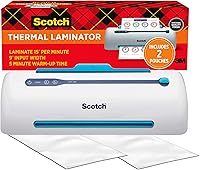
Scotch PRO TL906 thermal laminator machine
This model warms in 5 to 6 minutes and includes two 8.5 by 11 inch pouches. Its LED signal helps you start at the right time.
It also has a foldable input tray and built-in cord storage. Those details help in a classroom or office where desk space is tight.
For brand context, see best fellowes laminating machine and gbc pouch laminator reviews. Those pages help you compare pouch systems before you commit to one brand.
Verdict: pick the Spectra 95 for light letter-size work
Pick the Spectra 95 if you want 9.5 in width, a 4 minute warm-up and a simple home setup. It suits small documents, photos and occasional handouts.
That choice fits a home or home office routine. You set it up, wait four minutes, and laminate a small batch without much fuss.
Pick the Amazon Basics model if you want two rollers and the smallest footprint. Its two rollers can guide a pouch more evenly on straightforward jobs.
Pick the Scotch PRO TL906 if you laminate often and want a stated speed. Its stated 15 inches per minute matters more when you face repeated batches.
For most home users in these Fellowes Spectra 95 laminator reviews, the Spectra 95 remains the balanced pick. Its extra half inch of width and shorter warm-up help for letter-size work.
That balance comes with a trade-off on guidance. With one roller, you should feed each pouch slowly, straight and one at a time.
Use the release lever if a pouch starts to skew. Re-centering early is better than forcing a pouch through and wasting it.
Auto shut-off adds a safety margin for longer sessions. It helps prevent overheating, but it does not replace your attention at the feed.
Start with the included starter pouches, then buy extra pouches in the size you use most. Ten 3-mil letter-sized pouches let you learn the machine before you spend more.
If your work grows into daily handouts, rethink the choice. A two-roller model with a stated speed will suit that pace better.
If your work stays light and letter-size, the Spectra 95 covers it well. That is the user it was designed for, and that is where it makes sense to buy it.
Frequently asked questions
What size documents fit the Fellowes Spectra 95?
The Spectra 95 accepts documents up to 9.5 inches wide. Letter-size pouches fit comfortably, and you can laminate smaller items such as photos, cards and recipe cards.
Measure the pouch, not just the paper, before you feed it through.
Does the Spectra 95 use 3 mil or 5 mil pouches?
It has heat settings for 3 mil and 5 mil hot-lamination pouches. It also works with self-adhesive cold-lamination pouches.
Match the heat setting to the pouch thickness, and let the machine finish warming before you start.
How long does the Spectra 95 take to warm up?
Fellowes states a 4 minute warm-up time. Wait for the ready signal before feeding a pouch.
Starting early can leave the seal uneven, especially with thicker 5 mil pouches.
Is the Spectra 95 good for a classroom?
It suits light classroom use for small items and occasional handouts. Teachers who laminate long batches each day may prefer a two-roller model with a stated speed.
For the Spectra 95, feed one pouch at a time and keep the pace slow.