Cricut Maker vs Joy: Which Fits Your Projects? (November 2026)
Pick Cricut Joy for compact everyday crafting and Cricut Maker for wider material range. In cricut maker vs cricut joy, the Maker cuts 300+ materials and thicker stock, while Joy is smaller, lighter and made for quick vinyl, iron-on and card projects.
On this page (11 sections)
- Cricut Maker vs Cricut Joy: the quick verdict
- Side by side: size, weight and cutting range
- Material range: 50+ versus 300+
- Workspace needs and portability
- Tools, blades and what you can add
- Design Space, content and printer use
- Price tier, bundles and included items
- Who should buy Cricut Joy
- Who should buy Cricut Maker
- Setup, care and daily use
- Verdict: cricut maker vs cricut joy
Choose Cricut Joy for small, portable, everyday projects and Cricut Maker for thick and specialty materials. For another machine in this category, see the Silhouette Cameo 5 Alpha review.
In cricut maker vs cricut joy, Joy cuts 50+ materials in a compact body, and Maker works with 300+ materials for leather, wood and more.
We compared the specs, included items and stated material ranges for both machines. Joy is 8.5 inches wide and 3.9 lb.
Maker 4 is 22.1 inches wide, and Maker 5 keeps 12 inch cutting performance.
Our score weighs specs, features and buyer feedback against what you are shopping for. That is why the compact Joy and the wider Maker both score well, for different jobs.
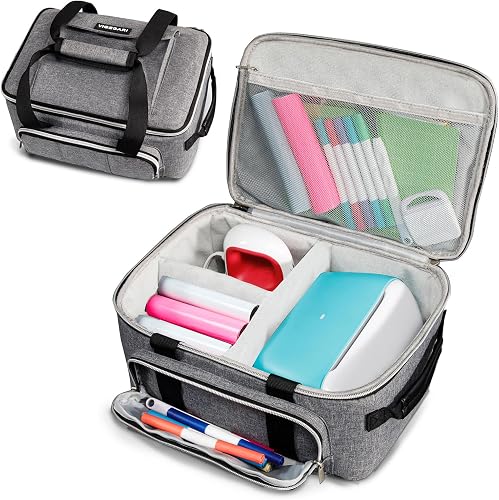 Best for Joy owners on the move
VIGEGARI Carrying Case for Cricutt Joy

Cricut Maker vs Cricut Joy: the quick verdict
Joy wins on size and portability. Maker wins on material range and tools.
Pick Joy for decals, labels, cards and iron-on.
Pick Maker for fabric, leather, wood and engraving style work.
Joy draws and writes and cuts shapes in popular materials. Cricut says it can make single cuts up to 4 ft long and repeated cuts up to 20 ft with Smart Materials.
Maker 4 cuts, draws, foils, scores, engraves, debosses and perforates, with tools sold separately for some jobs. Maker 5 works with 13 tools and cuts thicker materials up to 3 mm.
If your projects stay with vinyl, cardstock and iron-on, Joy covers the list. If you want to expand later, Maker saves a second machine purchase.
The quick test is to list the materials you will cut in the first month. Joy needs vinyl, cardstock, iron-on or labels.
Maker makes sense when thick stock or fabric shows up on that same list.
Side by side: size, weight and cutting range
Joy takes about one third the width of Maker and weighs far less. That difference shapes where each machine lives and how you store it.
Joy measures 5.5 x 8.5 x 4.25 inches and weighs 3.9 lb. It fits a cubby or a small desk corner and moves room to room.
Maker 4 measures 7.1 x 22.1 x 6.2 inches. Maker 5 is described as 30% more compact than previous models, but it still keeps 12 inch cutting performance.
Compare an earlier upgrade path in Cricut Maker vs Maker 3.
Joy active surface area is 12 x 48 inches for long matless cuts. For wider projects, compare Cricut Maker vs Venture.
Maker uses a wider working area for larger sheets and thicker stock.
Measure your desk depth too. Joy needs less front to back room for mats, while Maker needs space to load and unload wider materials.
The width gap also affects height clearance. A 22.1 inch Maker can clash with wall cabinets, while the 8.5 inch Joy can sit under most shelves without blocking the mat path.
Material range: 50+ versus 300+
The material gap is the main reason to choose Maker. Joy covers everyday craft materials.
Maker adds thick, specialty and fabric options.
Joy cuts cardstock, vinyl decal, iron-on and more with its included blade and StandardGrip mat. See replacement blades for Cricut Joy when you need a fresh blade.
Smart Materials allow matless cuts for longer designs.
Maker 4 works with 300+ materials, including leather, wood, vinyl, iron-on HTV, cardstock and stickers. Maker 5 precision cuts vinyl, iron-on, cardstock and fabric, plus thicker materials up to 3 mm.
Maker 5 engraves materials up to 3 mm, such as metal and acrylic, with the right tool. Joy does not offer that thick material range.
cricut maker vs cricut joy for fabric and thick stock
Maker is the choice for fabric, leather and foam core board. Joy is not built for that thicker list.
Maker 5 includes a Premium Fine Point Cutting Tool, Scoring Tool and Engraving Tool in the bundle. Those tools help you start scoring and engraving projects sooner.
Maker 4 bundle includes a materials sampler with Smart Vinyl, Matless Vinyl, Smart Iron-On, Matless Heat Transfer Vinyl, cardstock and transfer tape. That sampler shows how each type feeds and cuts.
If you only cut vinyl and cardstock today, do not pay for thickness you will not use. If thick projects are on your list, Maker is the safer pick.
Thickness is stated in millimetres on Maker 5 for a reason. A material up to 3 mm can behave very differently from thin vinyl, so the machine, blade and mat need to match that load.
Workspace needs and portability
Joy fits small desks, craft carts and on the go crafting. Maker needs a fixed spot with room to work.
Joy has Bluetooth connectivity and works with mobile phones and laptops through Design Space. You can set it up on a table, cut, then store it away.
Maker needs a stable surface and room for mats, tools and materials. Its 22.1 inch width means cabinets and shelves above the desk can block loading.
For travel, Joy pairs with a case. Our guide to craft cutting machines helps you match machine size to room size before you order.
Portability also changes clutter. Joy can be put away after a short run of labels, while a Maker is more likely to stay out because moving it interrupts your material setup.
Store Joy with a fitted case
A fitted case protects Joy and keeps tools in one place. The VIGEGARI case is made for Cricut Joy and Joy Xtra size.
It measures 13.5 x 5.5 x 10 inches and weighs 0.42 kg. It has 2 compartments, a front zip pocket and a top pocket.
The fabric is Nylon Polyester with thick padding and soft lining. A detachable divider separates the machine from tools and supplies.
Carry handles and a removable strap help with travel. Measure your Joy, pen and mats first, since large mats may not fit inside.
The case dimensions leave extra length beyond the 8.5 inch Joy body. That space is meant for the pen, blade housing and small tools, not for a full roll of material.
Tools, blades and what you can add
Maker takes more tools. Joy keeps the tool list short.
That trade off affects cost, storage and learning time.
Maker 5 works with 13 tools for cutting, engraving, writing, drawing, foiling, scoring and debossing. Specialty tools are sold separately, so check what each tool does before you add it.
Maker 4 includes a Fine-Point Blade, Fine Point Pen, Light Grip Mat, Weeder and a materials sampler. The bundle also includes 30 bonus images in Design Space.
Joy includes a blade and housing, fine point black pen, StandardGrip mat, welcome card and power adapter in the description of that bundle. It also includes digital content.
If you want to foil, deboss or engrave, Maker opens those paths. If you want simple cuts and writing, Joy avoids tool clutter.
Check tool costs before you order
Maker 5 has a new hassle free snap in pen holder, which changes how pen tools sit in the machine. That design detail matters only if you plan to write, draw or foil often.
Joy keeps writing and cutting in a simpler setup with its fine point pen and blade housing. You trade specialty options for fewer parts to store and fewer settings to learn.
Design Space, content and printer use
Both machines use Design Space, so your designs can move between them. The app is the shared starting point.
Design Space works on iOS, Android, Windows and Mac for Joy, and connects to all Cricut cutting machines per Cricut. Maker 4 also works with Design Space and inkjet printers.
Maker 4 supports Print then Cut for full color designs for stickers and more, compatible with most inkjet printers. Joy is aimed at cutting and writing simple designs.
For printed projects, our guide on What Printer Works Best with Cricut Projects? helps you check paper, print settings and cut registration before you commit to a material.
Maker 4 content includes 3,000+ free images and 100+ fonts, with more through a paid subscription. Maker 5 content library figures are higher with a subscription, and bundles include bonus images.
Joy bundle includes 30 images in Design Space. Digital content is tied to registration, so keep your account details in a safe place.
The app link matters for upgrades. If you start on Joy and later buy Maker, your saved designs and uploaded files can carry over through the same account.
Price tier, bundles and included items
Joy is the lower cost entry. Maker bundles add tools and materials.
Compare included items, not just the machine name.
Joy bundle includes the machine, digital bundle, blade and housing, pen, mat, welcome card and power adapter. That set covers basic vinyl, card and iron-on starts.
Maker 4 bundle includes the machine, blade, sampler, pen, mat and weeder, plus 30 bonus images. That sampler is useful if you are unsure which materials you like.
Maker 5 Essential Bundle includes supplies to make up to 65 projects, plus tools and popular materials. Cricut says average project size uses included materials in a set way, so read the bundle details before you count projects.
A case is a separate cost for Joy owners who travel. It is not included with the Joy bundle above, so add it only if you need portability.
Bundle value depends on what you will actually use. A sampler or project supplies help only when the included types match your next projects, so compare the included list to your project list item by item.
Who should buy Cricut Joy
Buy Joy if you want quick, compact, everyday crafting. It suits small spaces and simple project lists.
Joy fits crafters who make vinyl decals, labels, cards, banners and personalized items. It writes in any style and draws shapes with the pen.
It also suits renters, students and anyone with a small desk. At 3.9 lb, it moves without a second person.
Joy is a good second machine for events or travel, even if you own a larger cutter. Pair it with a case and mats that fit your bag.
Labels are a common Joy use. If you shop for label supplies, our post on Can You Print Labels without a Label Maker? explains when a printer or cutter fits the job.
Skip Joy if thick materials, fabric or engraving are your main goal. Those projects need Maker tools and power.
Who should buy Cricut Maker
Buy Maker if you want the widest material and tool range. It suits dedicated craft rooms and varied projects.
Maker fits small business owners, Etsy sellers and crafters who switch between paper, fabric, leather and wood. The 300+ material list supports that range.
Maker 5 suits buyers who want a bundle with tools and materials ready to use. Its 12 inch cutting performance handles larger designs than Joy.
If you are unsure between Maker and smaller models, our cricut maker vs explore comparison shows the next step down. The cricut maker vs explore 5 post covers another close choice.
Also check cricut maker vs cricut explore air 2 if you want to see how Maker compares with an older Explore Air 2 generation.
Skip Maker if desk space is tight and your projects are mostly small vinyl cuts. Joy will feel easier to use each day.
Setup, care and daily use
Keep blades, mats and tools clean, and store each machine dry. Good care protects cut quality on both machines.
Set up Joy with Bluetooth and Design Space on a phone or laptop. Cricut says Joy setup and use takes about 15 minutes for basic projects.
Maker needs a computer or mobile device with Bluetooth and high speed internet for Maker 5, per Cricut. Follow system requirements in Design Space before you register the machine.
Wipe mats with the method approved for that mat, and replace a dull blade when cuts drag or tear. Store pens capped and tools in a dry case or organizer.
If you cross shop other brands, our guide on how to use silhouette cameo 4 shows a different workflow. A vinyl cutter with arms may also fit sign work, but it is a different tool class from Joy and Maker.
Daily care should match frequency of use. A Joy used weekly for labels needs less mat rotation than a Maker used daily for fabric and leather work.
Verdict: cricut maker vs cricut joy
Pick Joy for compact everyday crafting. Pick Maker for 300+ materials and thicker stock.
That rule answers the cricut maker vs cricut joy choice for most buyers.
Joy wins for small desks, travel and quick vinyl, iron-on and card projects. Maker wins for fabric, leather, wood, engraving and a wider tool list.
Compare your next 10 projects, not your wish list for next year. If most are small and simple, Joy fits.
If thick materials appear often, Maker fits.
Both machines use Design Space, so skills transfer. Start with the machine that matches your space and your material list today.
Frequently asked questions
Is Cricut Maker or Joy better for beginners?
Choose Joy if you want compact, quick projects with vinyl, iron-on and cardstock, and choose Maker if you want thicker materials and more tools. Both use Design Space, so learning transfers.
Start with the material list you will use most often.
Can Cricut Joy cut as many materials as Maker?
No. Joy cuts 50+ materials, while Maker works with 300+ materials.
That gap includes thicker and specialty materials such as leather, wood and foam core board on Maker.
Match the machine to your project list, not just your first project.
Do I need a case for Cricut Joy?
A case helps if you store Joy in a cubby, carry it to events, or keep tools separate from the machine. The VIGEGARI case is 13.5 by 5.5 by 10 inches with padding.
Measure your machine and accessories before you buy any case.
Can Maker work with an inkjet printer?
Yes. Maker supports Print then Cut with most inkjet printers for full color stickers and similar projects.
You still need to check paper size, printer settings and material compatibility in Design Space before you print and cut a design.