Sublimation vs DTF Printers: Which Should You Choose? (November 2026)
Choose sublimation for light polyester and coated blanks; choose DTF for more fabric types and dark garments. A sublimation printer vs DTF printer comparison comes down to the materials you use, your transfer process and the care you can manage.
On this page (9 sections)
- Sublimation printer vs DTF printer: what is the main difference?
- Which fabrics work with sublimation and DTF?
- Does a DTF printer need white ink?
- Which process takes more equipment and space?
- Which printer is easier to care for?
- Which printer fits your project?
- What should you choose for a small shirt business?
- Is sublimation better than a regular inkjet for shirts?
- How should you make the final choice?
Choose sublimation for light polyester and coated blanks; choose DTF for more fabric types and dark garments. The sublimation printer vs DTF printer decision depends on what you plan to decorate, whether you need white ink and how much equipment care fits your routine.
Sublimation turns printed dye into gas under heat and pressure, bonding it with polyester or a suitable coating. DTF, or direct to film, prints a design onto transfer film for later application to fabric.
Both can make colorful custom goods, but they use different inks, materials and steps. The right choice is the one that matches your project materials and the transfer process you can manage.
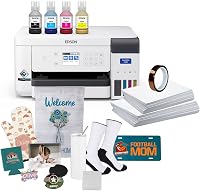
 Best for sublimation starter supplies
Johnson Plastics Plus Epson SureColor F170 Dye-Sublimation Printer.
 Best for a compact sublimation setup
Johnson Plastics Plus Epson SureColor F170 Dye-Sublimation Printer
Sublimation printer vs DTF printer: what is the main difference?
Sublimation bonds dye with polyester or a coated surface; DTF transfers a printed film layer onto fabric. That difference affects which blanks work and what supplies you need.
A sublimation printer puts dye onto sublimation paper. You position the print against a compatible blank and apply heat and pressure, following the paper, blank and press instructions.
A DTF printer prints onto special transfer film with color ink and white ink. The transfer process also uses adhesive powder and heat, so plan for those materials and the equipment needed to apply them.
This means the two methods don't use interchangeable consumables. A sublimation printer vs DTF printer comparison should start with your blank materials, then account for ink, transfer media and upkeep.
Which fabrics work with sublimation and DTF?
Sublimation suits polyester fabric and coated blanks; DTF is the more flexible choice for cotton, polyester and blends. For apparel, compare shirts for sublimation.
Check the exact blank and transfer instructions before you make a batch.
Sublimation works especially well on light-colored polyester because the dye becomes part of the material's surface. It can also decorate compatible coated items, such as certain mugs, mousepads and awards.
Plain cotton is a poor match for standard sublimation because the dye does not bond to it the same way. A polyester shirt or a cotton item with a suitable sublimation surface can change the result, so check what the blank is made of and how it is coated.
DTF transfers can be applied to a wider range of fabrics. The DXZ manufacturer says its printer is compatible with cotton, polyester and blends, while the Lancelot description also describes DTF as suitable for a wider range of materials than DTG.
Does sublimation work on dark shirts?
Sublimation is usually a better fit for white or light-colored polyester than dark shirts. Since these printers typically use cyan, magenta, yellow and black rather than white, the fabric color can show through the design.
DTF can include white ink beneath the colors to help a design stand out on dark fabric. That adds another ink channel and care task, but it can give you more color options across garment shades.
If you mainly plan to decorate light polyester shirts, browse our Best Sublimation Printer For T-Shirts guide. For help with shirt placement and pressing steps, see how to use a sublimation printer for shirts.
Does a DTF printer need white ink?
DTF commonly needs white ink for designs on dark fabric; sublimation generally doesn't use white ink. That changes both the print setup and the maintenance routine.
The Lancelot M1630 Pro includes cyan, magenta, yellow, black and white ink, along with a white ink circulation feature. The DXZ model also describes white ink circulation and purification as part of its ink management system.
White ink requires care because pigment can settle while the printer sits idle. Follow the manufacturer's circulation and cleaning directions, even when a printer offers automated upkeep.
The sublimation Epson SureColor F170 uses genuine Epson sublimation ink in black, cyan, magenta and yellow. Its closed 150-sheet tray and compact design support a more straightforward paper-based setup for compatible blanks.
Which process takes more equipment and space?
Sublimation usually has a simpler print-to-press workflow; DTF requires film handling and additional transfer materials. Compare the full workspace, not just the printer footprint.
For sublimation, you need the printer, sublimation ink, paper and a suitable heat press. If a Cricut is part of your setup, see using sublimation paper with Cricut.
You also need a blank that accepts the dye, plus heat-resistant tape or another way to keep the transfer in place when the project calls for it.
DTF adds transfer film and adhesive powder to the process. Depending on the setup, you'll also need a way to cure the powder before pressing the transfer onto the garment.
The F170 is described as compact and has a closed paper tray. The Lancelot M1630 Pro is a larger machine with film-feed support, and the DXZ weighs 151 pounds, so choose a stable location with room to operate and maintain it.
Is DTF on a sublimation printer possible?
A sublimation printer isn't a DTF printer simply because you can feed film through it. The ink, white underbase and film workflow need to work together.
Some people explore converting inkjet printers for DTF, but compatibility depends on the specific machine and setup. It can also affect printer care and support, so don't assume that a sublimation model will handle DTF ink or film safely.
If your main goal is a sublimation workflow, our guide to what a sublimation printer does explains how the process works. For a comparison with a cutting machine, read sublimation printer vs Cricut.
Which printer is easier to care for?
DTF asks for more attention to white ink and film handling, while sublimation avoids the white ink step. Both printers still need routine care from their own manuals.
DTF white ink circulation helps keep the ink moving through the system. The Lancelot M1630 Pro describes Holiday Mode auto-cleaning during downtime, and the DXZ describes automatic moisturizing, scheduled cleaning and white ink circulation.
Those features can reduce manual steps, but they don't remove the need to monitor the printer. Keep the work area clean, follow maintenance schedules and use the right inks and supplies for the machine.
Sublimation avoids white ink circulation in these F170 configurations, though ink bottles still need clean handling and the printer needs normal care. If choosing an inkjet for sublimation use, our guide to Best Inkjet Printer For Sublimation can help you compare the setup options.
Which printer fits your project?
Pick sublimation for light polyester apparel and coated keepsakes; pick DTF for varied fabrics and dark shirts. Your expected materials matter more than which method sounds more versatile.
The Epson SureColor F170 is a fit for buyers who want a purpose-built sublimation printer with genuine Epson dye-sub ink. One bundle adds sublimation paper, a starter kit and thermal tape.
A second F170 bundle includes genuine Epson sublimation ink and a 150-sheet paper tray in a compact printer format.
For DTF work, the Lancelot M1630 Pro supports film sheets and rolls and includes white ink circulation. Its bundle also includes a computer with drivers and software, and it supports Windows rather than Mac.
The DXZ DTF printer has a 14-inch print width and describes automatic white ink care. Its 151-pound weight makes it important to choose a permanent work area before setup.
What should you choose for a small shirt business?
Choose a process around the blanks you can source and sell consistently. A single method may be enough if your product range uses one kind of fabric.
A sublimation setup can suit a small shop focused on light polyester shirts, mugs and coated gifts. It avoids white ink, but your material choices remain tied to polyester or compatible coatings.
DTF can suit a shop offering cotton and dark garments alongside polyester. In return, you need space and time for film, powder and white ink maintenance.
Start with a short list of your planned products. If most are light polyester, lean toward sublimation; if you need cotton and dark shirts, DTF may better fit your catalog.
Is sublimation better than a regular inkjet for shirts?
A dedicated sublimation printer is the direct choice for sublimation transfers; a regular inkjet uses different ink and isn't automatically suitable. See sublimation ink versus regular ink before choosing supplies.
Printer type, ink and shirt material all need to match.
A regular inkjet can be converted in some cases, but compatibility and ongoing support depend on the specific printer. Don't fill a printer with sublimation ink unless the model and setup are intended for that use.
Our guide answers whether a sublimation printer is better than a regular inkjet for shirts in more detail. It can help you decide whether to buy a dedicated printer or explore a compatible inkjet setup.
How should you make the final choice?
Pick sublimation if your work centers on light polyester and coated blanks; pick DTF if you need broader fabric choices and white ink. Then confirm the printer fits your workspace and maintenance routine.
Sublimation keeps the process focused on compatible blanks, paper and heat. DTF opens up more garment choices but adds film, powder and white ink care.
Choose the material first, then the printer. That simple order can save you from buying a capable machine that doesn't suit the products you want to make.
Frequently asked questions
Can a sublimation printer use DTF ink?
Don't put DTF ink in a sublimation printer unless the printer maker confirms that setup is compatible. These processes use different ink and transfer methods, and changing ink can require equipment changes.
For DTF transfers, use a printer designed for DTF and follow its ink and maintenance instructions.
Can you print DTF transfers with a sublimation printer?
A standard sublimation printer doesn't print DTF transfers just by loading DTF film. DTF uses its own ink set, including white ink for many dark-fabric designs, and a film-based workflow.
Choose a DTF printer built for that process instead of assuming a sublimation model can be converted.
Does sublimation work on cotton shirts?
Sublimation works best on polyester or items with a suitable sublimation coating. It generally isn't the right direct method for a plain cotton shirt because the dye needs compatible material to bond.
DTF transfers offer a route to decorate cotton, polyester and blends, subject to the printer and transfer materials.
Why do DTF printers use white ink?
White ink can form an opaque base beneath colors in a DTF transfer, helping a design show on dark fabric. A sublimation setup typically uses cyan, magenta, yellow and black ink instead, so it doesn't print that same white underlayer.
DTF white ink needs regular circulation and care.
Which printer needs more maintenance, sublimation or DTF?
The routine depends on the exact printer, but DTF needs attention to white ink and its film workflow. Some DTF models include circulation or scheduled cleaning features.
Sublimation printers still need proper ink handling and care, so follow the manual for the exact model rather than assuming either process is maintenance-free.