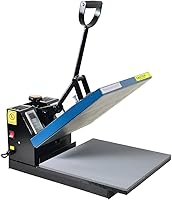
How to Choose a 16x20 Auto Open Heat Press
Choose a 16x20 heat press auto open model when you need broad platen coverage and timed opening for repeated transfers. Compare the opening trigger, pressure adjustment, controls, workspace and safety features before buying.
On this page (7 sections)
- What should you compare in a 16x20 heat press auto open model?
- Which products help explain the trade-offs?
- How should you evaluate timed opening for repeated transfers?
- What size projects benefit from a 16x20 platen?
- What safety and care features should you check?
- Should you choose a dual station instead?
- What is the best buying rule for a 16x20 heat press auto open?
A 16x20 heat press auto open model suits larger garments and repeated transfers because its broad work area can reduce repositioning, while the timed opening helps separate one pressing cycle from the next. The right choice depends on how the machine opens, how you set pressure and how much room your workspace allows.
For some buyers, the main benefit is coverage. A wider platen can handle a large design in one position, so you spend less time lifting, shifting and re-centering a garment.
That matters more for broad prints than for a small logo placed on the chest.
Timed opening adds a different kind of help. When the cycle ends, the press releases or raises on its own, so your hands are not needed to force the platen away from the project.
This can make a repeated workflow feel more predictable, especially when you are pressing several items in sequence.
Still, a larger press is not automatically the best press. Measure your work surface, check the full machine footprint and decide whether your projects need the extra coverage of a 16x20 platen.
Think about where the machine will live, not only where it will press. A large press needs space for the closed machine, the open position, the garment and your hands.
It may also need clearance for a tray to slide in or out, depending on the design.
Also consider what you press most often. If your regular designs are small and your garments are standard sizes, a smaller press may be easier to place and store.
A 16x20 format earns its place when wide designs, larger garments or fewer repositioning steps are part of your normal work.
For a wider overview of platen sizes, controls and materials, see our heat press machine buying guide. If automatic operation is your main goal, our best automatic heat press guide covers the broader category.
Use those guides to compare formats before you focus on one model. That order helps you judge whether you need broad coverage, automatic opening, portability or a mix of those features.
What should you compare in a 16x20 heat press auto open model?
Compare opening timing, pressure control, usable platen space and workflow first. These features affect how easily you can load garments, repeat transfers and avoid disturbing a hot project.
How does the auto open mechanism work?
An auto open press should make the end of the timed cycle predictable. Some designs raise the heating area automatically, while others release the material after a control button starts the process.
Look for a clear start sequence and a visible timer. If the press opens only after the tray is fully inserted or a specific button is pressed, that action should fit naturally into your workflow.
The opening time matters during repeated transfers. A press that releases at the end of the countdown can reduce the need to stand over the machine, but you still need to position each garment carefully and follow the temperature and time requirements for the transfer material.
Our guide to an automatic heat press 16x20 explains how a larger automatic format compares with smaller machines.
Why does pressure adjustment matter?
Pressure adjustment helps you match the press to different project thicknesses. A fixed setting may be simple, but adjustable pressure gives you more control when working with garments or transfer materials that need different force.
Do not assume that a higher pressure setting is always better. Use the setting recommended for your transfer method, keep the garment flat and make sure seams, buttons or thick areas do not interfere with the heating surface.
How much space does a large press need?
A 16x20 press needs room for the machine, the garment and your hands. You also need clearance for a sliding or pull-out tray if the design uses one.
Measure the complete workspace before buying. Leave room to place garments squarely, move transfer materials and keep cables away from hot surfaces.
A large machine can improve coverage while making storage harder. If your projects are smaller, compare the footprint and handling needs with a more compact auto open model.
Which products help explain the trade-offs?
The following products show three different approaches to heat pressing. They are not 16x20 machines, but their controls, coverage and automatic features help clarify what to look for when comparing a larger press.
HTVRONT Auto Heat Press Machine for T
The HTVRONT Auto Heat Press Machine for T uses a 15 x 15 in work area, automatic pressing and automatic release. It can adjust to project thicknesses up to 1 in, and its temperature reaches 410°F.
The machine uses a drawer-style placement plate and has an auto-off feature after 15 minutes without operation. HTVRONT gives it a 110-volt electrical power source and a 1-year warranty period.
This model may suit someone who wants hands-free pressing but does not need a full 16x20 surface. Its 15 x 15 in area is smaller than the target format, so measure your largest design before choosing it for broad garments.
Cricut EasyPress® SE
The Cricut EasyPress® SE is a 12 x 10 in handheld heat press with a ceramic-coated heat plate and controlled temperatures up to 400°F. It is designed for bags, pillows and T-shirts, and Cricut describes it as compatible with iron-on, Infusible Ink and sublimation products.
Its handle supports manual placement and pressure, so it does not provide the same auto open workflow as an automatic press. The smaller surface can work well for compact designs, but larger garments may require more than one placement.
This is the clearest example of a portability trade-off. A handheld press can be easier to store, while a 16x20 auto open press is aimed at broader coverage and repeatable timed cycles.
HTVRONT Auto Heat Press
The HTVRONT Auto Heat Press has a 15 x 15 in work area, adjustable pressure up to 170 lb and a pressing height up to 1.77 in. It reaches 410°F within its stated temperature range and uses a 1,500-watt electrical system at 120 volts.
The machine automatically releases the material after the timed cycle and has an auto-off feature after 15 minutes without operation. Its body uses alloy steel and aluminum.
This model is useful for comparing pressure and clearance features against a basic auto open design. It still has less platen coverage than a 16x20 press, so check whether your largest garment or transfer fits without repositioning.
For a closer look at HTVRONT automatic models, read our HTVRONT auto heat press reviews.
How should you evaluate timed opening for repeated transfers?
Evaluate timed opening by following the full cycle from loading to release. The best mechanism is the one that fits your repeat process without adding an extra step or making the hot platen hard to manage.
Check these points before buying:
- Confirm how the cycle starts.
- Check whether the tray must be pushed fully into the machine.
- Confirm that the timer controls both pressing time and opening behavior.
- See whether the machine releases the project automatically or only raises the platen.
- Check whether the press alerts you when the cycle ends.
- Make sure the open position leaves enough room to remove the garment safely.
- Confirm that the opening motion will not strike nearby shelves or cabinets.
A timed opening feature does not replace careful loading. Keep the garment flat, center the transfer and use the recommended settings for the material you are pressing.
What size projects benefit from a 16x20 platen?
A 16x20 platen benefits projects that need broad coverage in one pressing position. Larger shirts, sweatshirts and wide designs may need fewer repositioning steps than they would on a smaller surface.
The benefit is easiest to see with width. A design that stretches across the chest, wraps around a sleeve area or sits low on a garment can use more of the heated zone at once.
That can reduce the chance that one edge is pressed at a different time from another edge.
The exact usable area depends on the press design and the way the heating element covers the platen. Check the machine's stated pressing area rather than assuming the outside dimensions equal the heated area.
This distinction matters in daily use. A frame or housing may measure larger than the part that delivers even heat.
Your transfer should sit within the heated zone, not near an edge where coverage may be less consistent.
A larger platen also increases the importance of alignment. Use the garment seams and design placement as reference points, and keep the transfer within the heated zone.
Take time to center the garment before the cycle starts. On a larger surface, a slight angle can be more noticeable because the design has more room to drift from the intended position.
Lay the garment flat, smooth the fabric and check the placement before pressing.
Project thickness also matters. Thick seams, layered fabric or bulky areas can affect how the platen meets the surface.
Keep those areas in mind when you set pressure and when you check whether the garment and transfer are positioned flat.
If you are choosing between automatic formats, compare the opening style and coverage together. A smaller automatic press may be easier to place, while a larger press may better suit broad transfers.
Do not judge size by the headline number alone. Compare the stated pressing area, the machine footprint and the space needed when the press is open.
A model that fits your largest design and your room will be more useful than one that only looks large on paper.
What safety and care features should you check?
Choose a press with a clear operating sequence, stable controls and a suitable automatic shutoff. Safety features help reduce unattended heating risk, but they do not make it safe to leave a hot press without supervision.
Start with the basics of placement. Keep the pressing surface clear and place the machine on a stable, heat-resistant work area.
Avoid touching the heating surface, and allow the press to cool before storage or cleaning.
Give the machine room to breathe. Keep cables away from hot surfaces, and make sure nearby items cannot fall onto the platen or block the opening motion.
A clear area around the press also makes it easier to remove a garment without reaching over heat.
Check whether the model has an auto-off timer, heat insulation or a handle that keeps your hand away from hot areas. These features appear on some automatic designs, but they do not replace the instructions for the specific machine.
Read the instructions for your exact model before first use. They will cover the start sequence, the timer, pressure or thickness settings and how the press opens or releases.
Following that sequence matters more than general habits from another machine.
For care, let the press cool fully before cleaning or storing it. Wipe only as the instructions allow, and keep the surface free of stray material that could affect the next transfer.
Store it where it cannot be knocked, tipped or reached by children.
For setup help, see how to use a fancierstudio heat press and our guide to how do you use heat press mat.
Should you choose a dual station instead?
Choose a dual station when your workflow needs two pressing areas and you can support the added footprint. A single 16x20 auto open press is simpler when you want one large work area and one set of controls.
A dual station can help separate loading and pressing tasks. While one area is pressing, the other can be used to prepare the next garment or transfer.
That separation may suit a steady flow of repeated work, but only if you have the space and electrical capacity for it.
A single large press keeps the routine more direct. You load, press, release and repeat in one place, with one set of settings to manage.
For many buyers, that simplicity is easier to learn and easier to store.
A dual station can help separate loading and pressing tasks, but it also adds more equipment to manage. Compare its electrical needs, workspace and opening sequence with your actual transfer volume.
Think about your normal pace. If you press one garment at a time and pause between projects, a second station may sit unused.
If you move through a series of similar items, the extra area may help you stay organized.
Also compare footprint and storage. Two stations usually need more bench space, more clearance and more care when moving or storing the machine.
A 16x20 press takes room too, but it concentrates the work in one area.
Read automatic dual heat press options if you are deciding between one large station and a two-station setup.
Make the choice based on workflow first, not on the idea that more stations must be better. One large area suits broad coverage, while two areas suit separated loading and pressing.
What is the best buying rule for a 16x20 heat press auto open?
Pick a 16x20 heat press auto open model when your largest regular transfers need broad coverage and your workflow benefits from automatic release after a timed cycle. Prioritize the opening mechanism, tray movement, pressure control and workspace before choosing extra controls.
Start with the cycle. The press should make it clear how pressing begins, how the timer runs and how opening or release happens.
If a tray must be pushed fully in, that step should feel natural and should not add confusion to each repeat.
Then check pressure and thickness handling. Different garments and transfer materials may need different settings, so adjustable control can be more useful than a fixed setting.
Use the settings recommended for your material and keep the garment flat.
Choose a smaller automatic model if your designs fit its platen and you value a more compact footprint. Choose a handheld press if portability matters more than automatic opening.
Consider who the press suits in practical terms. A larger auto open press fits buyers who press broad designs often and want a timed release.
A compact automatic press fits smaller designs and tighter rooms. A handheld press fits buyers who need to move the tool or store it away easily.
The final check is practical: measure the machine, the open position and the space around the platen. A press that fits your projects and your room will be easier to use consistently than one selected by platen size alone.
Before you buy, confirm the stated pressing area, the opening style and the care instructions. That final pass helps you avoid a model that looks right in a headline but fits poorly in your daily workflow.
Frequently asked questions
What does auto open mean on a heat press?
Auto open means the press releases or raises the heating area when the timed pressing cycle ends. Check how the opening starts, whether the tray must be pushed fully in, and whether pressure or thickness settings need manual adjustment before choosing a machine.
Is a 16x20 heat press better for shirts?
A 16x20 heat press gives you more platen coverage for larger garments and broad designs, but it also needs more workspace than a smaller press. Choose it when your regular projects benefit from fewer repositioning steps, then confirm the machine's footprint and operating clearance.
What should I check in an auto open heat press?
Check the opening mechanism, timer controls, pressure adjustment, heating range, platen coverage, tray movement and safety shutoff. For repeated transfers, the press should make the end of each cycle clear without requiring you to watch it continuously.