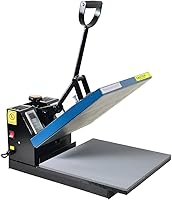
How to Choose an Automatic 16x20 Heat Press
Choose an automatic 16x20 heat press when you need broad coverage for larger garments and repeatable pressing. Check the closing method, pressure adjustment, clearance, controls and workspace before buying.
On this page (11 sections)
- What makes an automatic 16x20 heat press useful?
- How should you assess automatic closing and release?
- Why do pressure controls matter on a 16x20 machine?
- How much workspace does a 16x20 heat press need?
- Which temperature and timer controls should you choose?
- Which automatic press suits different projects?
- Should you choose a single-station or dual-station press?
- What should you check before buying an automatic 16x20 heat press?
- Do automatic heat presses work with thicker garments?
- What other automatic equipment can you compare?
- Is a 16x20 automatic heat press right for you?
Choose an automatic heat press 16x20 by matching its platen coverage and automatic cycle to the work you do most often. The important checks are automatic closing and release, pressure control, temperature and timer settings, loading space, and the room needed around the machine.
A 16x20 platen can cover more of a shirt or sweatshirt in one cycle than smaller presses. That can reduce repositioning, but the larger machine also needs a stronger work surface and more space for loading.
If you are still comparing press types, start with our heat press machine buying guide. It explains the basic controls and materials before you narrow your search to an automatic model.
What makes an automatic 16x20 heat press useful?
An automatic 16x20 heat press is useful when you want broad coverage and a repeatable cycle with less manual holding. The machine should make it easy to load the garment, set the time and temperature, start the press, and remove the finished item safely.
The 16x20 size describes the working area. It does not tell you how large the full cabinet is, how much room the tray needs, or whether the machine accepts thicker items.
Automatic operation can mean several different things:
- The platen closes after you press a start button.
- The machine adjusts pressure for the loaded item.
- The timer ends the cycle and releases the platen.
- The press rises automatically while you prepare the next item.
- A preset or automatic mode stores common settings.
Read those functions separately. A press that closes automatically may still require manual pressure adjustment or manual release.
For more options, compare our guide to the best automatic heat presses. It is useful when your main goal is hands-free pressing rather than a particular platen size.
How should you assess automatic closing and release?
Look for a complete automatic cycle that closes, presses for the set time, and releases when the cycle ends. Automatic release matters because it reduces the chance that a transfer remains under heat after the timer finishes.
A useful control sequence is simple:
- Place the garment and transfer on the lower surface.
- Set the temperature and pressing time.
- Start the cycle.
- Let the machine apply pressure and heat.
- Remove the item after the press rises or releases.
Check whether the tray slides out far enough for easy placement. A drawer-style tray can help keep your hands away from the heated area while you position a shirt.
Also check how the press signals the end of a cycle. A visible display, sound or automatic rise can make batch work easier, especially when you are preparing another garment at the same time.
An automatic press is not automatically easier if the loading area is cramped. Measure the clearance in front of the machine and make sure you can place a large garment flat without pulling the fabric into the hot zone.
If automatic opening is your main priority, read how to choose a 16x20 auto open heat press. Auto open and automatic pressing overlap, but they are not always the same feature.
Why do pressure controls matter on a 16x20 machine?
Pressure controls matter because different garments and transfer projects may need different force. A larger platen also makes even pressure more important, since a weak or uneven area can affect part of a broad design.
Check whether the machine offers:
- A manual pressure adjustment.
- A stated pressure range.
- A way to set pressure for thicker items.
- A consistent closing action across the platen.
- Enough clearance for the items you plan to press.
Do not judge pressure by the platen size alone. A 16x20 heat press can have broad coverage while still giving you limited control over the force applied.
A machine with adjustable pressure gives you more flexibility for different project types. It can also help when you move between thin shirts, sweatshirts and thicker garments, but you should still follow the transfer material's instructions.
For a DTF project, see how to heat press DTF transfers.
The height range matters as much as the pressure range. If the press accepts only thin items, check that before choosing it for hoodies or layered garments.
What pressure range does an automatic heat press 16x20 need?
An automatic heat press 16x20 should have pressure controls that are easy to adjust and repeat. If the machine publishes a maximum pressure or item height, use those figures to confirm that it fits your normal materials.
Avoid assuming that a higher pressure number is always better. The useful setting depends on the transfer, fabric and instructions for the project.
The HTVRONT Auto Heat Press 2 includes adjustable pressure up to 80 kg or 170 lb and accepts items up to 4.5 cm, or 1.77 in, in height. Those controls may suit buyers who expect to press thicker garments or use different pressure settings.
How much workspace does a 16x20 heat press need?
A 16x20 heat press needs more than a 16x20 in working area. Plan for the machine cabinet, the loading path, ventilation space, the power connection and room to stand safely in front of the press.
Before buying, measure:
- The table or stand where the press will sit.
- The front clearance needed to pull out a tray or position a garment.
- The height of the machine and any open position.
- Side and rear space for ventilation.
- The route from delivery to the work area.
- Room for transfer paper, garments and tools.
A sturdy, level surface matters because a large press can be difficult to reposition once installed. Keep the work surface clear enough that fabric does not catch on nearby objects during loading.
The machine's outside dimensions can be much larger than its platen. For example, the HTVRONT 15x15 automatic model measures 19.68 in long, 15.74 in wide and 11.81 in high.
A 16x20 model may need a similar planning approach, even when the exact cabinet dimensions differ.
The Cricut EasyPress SE measures 13.7 in long, 4.7 in wide and 11.5 in high, with a 12 x 10 in heat area. Its smaller working area and handheld design suit a different setup from a full automatic press.
Which temperature and timer controls should you choose?
Choose controls that show the set temperature and time clearly and let you repeat common settings. The useful range depends on your transfer material, so follow the instructions for each project rather than using one setting for everything.
Look for:
- A clear temperature display.
- A timer that starts when the pressing cycle begins.
- Controls that are easy to reach before the press closes.
- Presets if you repeat the same projects.
- A stable temperature across the working area.
Even heating matters across a large platen. A broad design can cross several parts of the surface, so uneven heat may affect one section more than another.
The HTVRONT 15x15 automatic model reaches 320°F in about 4 minutes and has a stated upper temperature of 410°F. It also includes 4 fast modes and 2 custom-defined modes for repeated settings.
The HTVRONT Auto Heat Press 2 reaches 410°F within 5 minutes and 30 seconds and uses a display with 7 angle positions from 0 to 75 degrees. That adjustment can make the screen easier to read from different working positions.
The Cricut EasyPress SE reaches controlled temperatures up to 400°F. For setup steps, read Cricut EasyPress SE instructions.
Its ceramic-coated heat plate measures 12 x 10 in, so it is not a 16x20 press, but it can suit buyers who value a smaller handheld format.
Which automatic press suits different projects?
The best choice depends on whether you value hands-free pressing, pressure adjustment, portability or a larger working area. These three products show why you should compare the complete workflow instead of choosing by the word automatic alone.
HTVRONT Auto Heat Press Machine for T
The HTVRONT Auto Heat Press Machine for T is suited to buyers who want automatic pressing and release for HTV or sublimation projects. Its 15 x 15 in platen is smaller than 16x20, but it still offers a broad work area for many shirt designs.
After you set the temperature and time, the tray pushes into the machine and the R button starts the cycle. The press automatically lowers, adjusts to the project thickness up to 1 in, and rises when the timer ends.
Its 4 fast modes and 2 custom-defined modes can help when you repeat familiar projects. The automatic mode is aimed at batch work, while the drawer-style placement plate helps keep hands away from hot areas.
Choose this model when automatic adjustment and release matter more than having a full 16 x 20 in platen. Its 19.68 x 15.74 x 11.81 in dimensions still need a dedicated working area.
Cricut EasyPress® SE
The Cricut EasyPress® SE suits buyers who want a smaller handheld heat press for shirts, bags, pillows and similar projects. It has a 12 x 10 in heat area, so it is easier to compare with compact presses than with a full automatic 16x20 machine.
Its handle supports manual use, and the heat guide provides time and temperature instructions for supported projects. Cricut describes it as compatible with major brands of iron-on HTV, Infusible Ink and sublimation products.
Choose it when portability and a smaller setup are more important than automatic closing. A handheld press requires you to manage placement and pressure yourself, so it does not provide the same automatic cycle as the HTVRONT models here.
HTVRONT Auto Heat Press
The HTVRONT Auto Heat Press suits buyers who want automatic pressing with adjustable pressure and more height for thicker garments. Its 15 x 15 in work area is not 16x20, but the pressure and clearance controls make it relevant when material height is a key concern.
The machine automatically presses after you set the parameters and press the R button. It alerts you when the timer ends and releases the material automatically.
Its 7-level screen angle can help you read the controls from different positions. The stated upper temperature is 210°C, or 410°F, and the machine has a 120 V voltage rating.
Choose this model when adjustable pressure and extra height are more important than the extra coverage of a true 16 x 20 in machine. Its listed dimensions are 20.9 x 17.1 x 13 in, so plan a larger footprint than the smaller handheld option.
Should you choose a single-station or dual-station press?
Choose a single-station press when you want a simpler setup and one item at a time. Choose a dual-station design when keeping one garment in position while preparing another can improve your workflow.
A dual-station press may reduce idle time, but it can require more floor space and a clearer operating area. It also adds another workflow decision, since you need to manage two loading positions safely.
Read our guide to an automatic dual heat press if you expect regular batches. For occasional projects, a single automatic press may be easier to place and operate.
What should you check before buying an automatic 16x20 heat press?
Check the platen, automatic cycle, pressure range, clearance and cabinet size before comparing extra features. Those five points have the biggest effect on whether the machine fits your projects and workspace.
Use this checklist:
- Confirm the working area. A 16x20 platen covers broad designs with fewer repositioning steps.
- Separate close from release. Confirm whether the machine lowers automatically, rises automatically, or does both.
- Check pressure control. Adjustable pressure is useful when you change materials or work with thicker garments.
- Measure item clearance. Compare the stated height range with your thickest normal project.
- Review the controls. Look for readable temperature and timer settings, presets and clear cycle signals.
- Measure the footprint. Include front loading space, ventilation and access to the power connection.
- Consider the workflow. A single station may suit occasional work, while batch work may benefit from presets or a dual station.
- Plan safe handling. Keep hands, loose fabric and supplies away from the heated surface while loading.
If the machine is for a small business, estimate how many pressing cycles you complete in one session. Automatic release can free your hands, but it does not remove the need to load garments carefully and check each transfer.
Do automatic heat presses work with thicker garments?
Some automatic heat presses accept thicker garments, but the useful limit depends on the machine's stated height range and pressure controls. Check the maximum height before choosing a press for hoodies, layered items or other bulky projects.
The HTVRONT Auto Heat Press 2 accepts items up to 4.5 cm, or 1.77 in, and allows pressure adjustment up to 80 kg, or 170 lb. The other HTVRONT model automatically adjusts to project thickness up to 1 in.
Those figures are not interchangeable. A machine's height limit describes the space it can accept, while its pressure controls describe how force can be adjusted.
Lay the garment flat before loading. Seams, zippers and thick folds can change how the press contacts the transfer area, so arrange the item according to the transfer instructions.
What other automatic equipment can you compare?
Automatic operation is not limited to heat presses. If your workspace also includes document preparation, an automatic document feeder can move pages through a scanner or printer without placing each sheet by hand.
For printing transfer designs, you may also compare a best inkjet printer with automatic document feeder guide. The printer and press solve different steps, so check the required transfer material and instructions for the project.
A hat project needs a different pressing shape. If you plan to work with curved surfaces, read our guide to an automatic hat heat press instead of assuming a flat 16x20 platen will suit the job.
Is a 16x20 automatic heat press right for you?
A 16x20 automatic heat press is right for you if you make broad designs, want fewer repositioning steps and have enough room for a full-size machine. Automatic closing and release are especially useful when you repeat the same pressing cycle.
Choose a smaller automatic model if your work fits within 15 x 15 in and you value a more compact setup. Choose the HTVRONT Auto Heat Press Machine for T when automatic thickness adjustment and release are the priority.
Choose the HTVRONT Auto Heat Press when adjustable pressure and extra item height matter most. Choose the Cricut EasyPress SE when you want a portable handheld press and do not need a full automatic cycle.
The key decision is not only platen size. Match the working area, automatic release, pressure controls and machine footprint to your normal projects, then confirm the temperature and transfer instructions before starting.
Frequently asked questions
What should I look for in an automatic heat press 16x20?
Look for a platen that covers the designs you make, automatic closing and release, adjustable pressure, clear temperature and timer controls, suitable clearance, and a stable workspace. A 16x20 machine can cover larger garments, but its size also requires more room for loading, ventilation and safe handling.
Is a 16x20 heat press better than a 15x15 model?
A 16x20 heat press gives more coverage for large shirts, sweatshirts and other broad designs, while a 15x15 model can take less workspace and suit smaller transfers. Choose the larger platen when fewer repositioning steps matter more than cabinet size or portability.
What does automatic closing mean on a heat press?
Automatic closing means the machine lowers or applies pressure after you start the press cycle, instead of requiring you to hold the handle throughout the timer period. Check whether it also releases automatically, how pressure is adjusted, and how much clearance it accepts.
How much pressure does a heat press need?
The right pressure depends on the transfer material, garment and instructions for that project. Choose a machine with a clear pressure control when you expect to work with different materials, because a fixed setting gives you less control over repeat jobs and thicker items.