Heat Press Machines: The Complete Buying Guide
A heat press machine applies controlled heat, time and pressure to transfer designs onto flat items. Choose the press style, platen size, controls and accessories around the materials and production volume you expect.
On this page (11 sections)
- What does a heat press machine do?
- Which heat press style should you choose?
- Which heat press machine features matter most?
- Which products suit different buyers?
- What can you make with a heat press machine?
- How should a beginner choose a heat press?
- What supplies and accessories do you need?
- How do you use a heat press machine safely?
- What are the main heat press trade-offs?
- Explore heat presses by topic
- How do you decide which heat press machine to buy?
A heat press machine applies heat, time and pressure to move a prepared design onto a shirt, bag, sign, mug, hat or another compatible blank. For shirt projects, compare heat press vs screen printing.
The same cycle can suit a single handmade gift or a long run of matching items. The difference is usually how much repeatability you need and how much space you can give it on the table.
The best choice depends on your transfer method, work area, platen size, pressure needs and how often you will press. A clamshell that opens upward needs less side room, while a swing away or drawer model needs clearance for movement.
Platen size shapes the work before any other choice. A 15 x 15 in press fits many adult shirt designs, while a larger area helps with wide graphics and reduces repositioning.
Pressure helps the heated platen make even contact with the transfer and the blank underneath. Adjustable pressure lets you adapt to a thin fabric, a thicker garment or a rigid item without forcing the machine closed.
Temperature and time controls let you follow the instructions for each transfer type. Digital controls make a setting easier to repeat than a simple dial, especially when you press several items in a row.
A press is different from a printer. If you need background on the design stage, read How Does Inkjet Printing Work? and What Is Inkjet Printing? before choosing transfer paper or a sublimation workflow.
It helps to name your first few projects before you compare machines. That list will point you toward the right blank, transfer method and platen size in a practical way.
Automatic release can suit repeat work because the cycle ends on the timer without you holding the press. A manual press can suit occasional work and gives you direct control over opening and closing.
Setup also deserves a thought before ordering. The machine needs a stable heat safe surface, room for cords and enough space to load and remove items without reaching over a hot platen.
Care is simple when you build it into the routine. Let the platen cool before cleaning, keep residue off the surface and store the press where it will not be knocked or covered.
With those points in mind, the rest of this guide compares styles, sizes and features in the order you will use them. That order should make it easier to match a press to your space, your projects and the way you like to work.
What does a heat press machine do?
A heat press machine holds a transfer against a material while the heated platen applies controlled temperature and pressure for a set time. The transfer method determines which temperature, timing and blank are suitable.
The machine does not create every design by itself. You may first cut heat transfer vinyl, print sublimation artwork, or prepare another compatible transfer.
The press then applies that design to the surface.
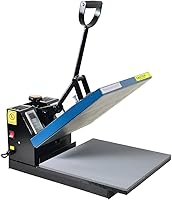
A basic press has:
- A heated upper platen
- A lower platen or base
- A handle or closing mechanism
- Temperature and time controls
- An adjustable pressure system
- A heat-resistant surface or pad
The platen is the heated area that contacts the transfer. A 15 x 15 in platen covers many shirt designs, while a larger platen helps with wide graphics and fewer repositioning steps.
Which heat press style should you choose?
Choose a clamshell press for a compact setup, a swing-away press when access around the lower platen matters, or an automatic press when you want a timed release and less manual holding.
Clamshell heat presses
A clamshell press opens upward from a hinge. The upper platen stays over the lower area as you place the garment, which can save side-to-side space.
This design suits a home craft area or a workbench where the machine must fit into a defined footprint. The trade-off is that the hot platen remains above the item while you position the transfer, so you need to work carefully.
Our guide to the best clamshell heat press compares this style for common flat projects. For a 15 x 15 in format, see the best 15x15 clamshell heat press options.
A 16 x 20 in clamshell gives more working area for broad designs. Compare the best 16x20 clamshell heat press choices if you regularly press large shirts, sweatshirts or other broad blanks.
Swing-away heat presses
A swing-away press moves the hot platen to the side before you place or remove the item. This can give you more open access to the lower platen and reduce the need to reach beneath a hot surface.
The trade-off is clearance. The machine needs room for the upper platen to swing, so measure the table and surrounding area before buying.
See the best swing away heat press options for a general comparison. If you need more room, our guide to a swing away heat press 16x24 explains what to measure and why a larger platen changes the setup.
For a 16 x 20 in format, compare the best 16x20 swing away heat press machines.
Slide-out drawer presses
A slide-out drawer brings the lower platen toward you for loading. This can make it easier to position a shirt or transfer without placing your hands directly beneath the upper platen.
The drawer also changes how much depth you need in front of the machine. Measure the drawer's travel area, not only the closed machine.
A 16 x 20 in drawer model can suit wide designs and larger garments. See the best 16x20 heat press with slide out drawer guide.
Smaller projects may fit the best 15x15 heat press with slide out drawer choices.
For a broader comparison, read about the best heat press with slide out drawer.
Automatic heat presses
An automatic press can close, hold the cycle and release when the timer ends. That feature may help when you press many similar items and want a repeatable routine.
Automatic controls do not remove the need to prepare the transfer correctly. You still need to set the right conditions for the blank and material, load the item flat and check the result.
Our best automatic heat press guide focuses on presses with automatic operation. If your priority is a smaller setup, compare the best portable heat press machine options.
Which heat press machine features matter most?
The most useful features are accurate temperature control, a clear timer, adjustable pressure and a platen size that fits your designs. Automatic release and a slide-out lower platen can also improve the daily workflow.
Platen size
A 15 x 15 in platen is a common starting point for shirts and other flat items. For smaller projects, see how to use Cricut EasyPress Mini.
It gives enough area for many adult shirt graphics without taking the floor space of a larger commercial press.
A 16 x 20 in platen gives more room for wide artwork. A larger press can reduce repositioning, but it also needs a larger work area and may be heavier to move.
The best 16x20 heat press machines suit buyers who already know they need a wider working surface. For even more room, compare the best large heat press choices.
Temperature range and control
Temperature control lets you set the heat for the transfer method and blank. A digital display can make the setting easier to repeat than a simple dial.
Do not assume that a higher maximum temperature makes a press better. The useful range is the range that matches your projects, and the transfer instructions still determine the working settings.
Timer
A timer helps you repeat the length of each press cycle. It can reduce guesswork when you make several items with the same transfer and blank.
A timer does not replace supervision. Keep the work area clear, follow the transfer instructions and avoid leaving a heated machine unattended.
Pressure adjustment
Pressure affects contact between the transfer, blank and platen. Adjustable pressure helps you adapt to different materials and item thicknesses.
Too much pressure can make loading difficult or affect a project. Too little pressure can prevent consistent contact.
Start with the transfer instructions, then make small adjustments when needed.
Controls and auto release
Automatic release can help if you press several items in a row. It may also reduce the chance of a cycle continuing after the timer ends.
Manual presses give you more direct control and may suit occasional projects. Automatic models can cost more and may take more space, so match the feature to your routine.
Which products suit different buyers?
These four products show different approaches to a 15 x 15 in heat press machine. We checked their stated controls, sizes, power, pressure features and intended uses.
The Fancierstudio Digital Heat Press 15 x is a practical fit for buyers who want a standard 15 x 15 in work area with direct digital controls. It has 110 V power and 1800 W, with a stated temperature range of 0–699°F and a time range of 0–999 seconds.
Its silicon-gel base board and adjustable pressure support projects that need a stable lower surface. The machine is an upward-opening model, which can help when side-to-side table space is limited.
Choose it for shirts, bags and mouse pads when you prefer manual control over an automatic cycle. Its 15 x 15 in platen is less suited to buyers who want to press very wide designs without repositioning.
The HTVRONT Auto Heat Press Machine for T is aimed at buyers who want a more automated workflow. It reaches 320°F within 4 minutes and 410°F faster than a stated comparison point, with NTC thermistor technology and a dual-tube heating engine.
Its 4 fast modes, 2 custom modes and automatic mode can help when you repeat similar projects. The slide design separates the ironing board from the heating plate, and the machine shuts off after 15 minutes without use.
The press is 20 x 12 x 16 in and weighs 40.3 lb. Choose it for shirts, totes, apparel, wood signs and ceramic coasters up to 1 in thick when automatic operation matters more than a compact manual design.
The HTVRONT Auto Heat Press suits buyers who want automatic pressing with more pressure adjustment. The machine can adjust pressure up to 80 kg, or 170 lb, and accepts items up to 4.5 cm, or 1.77 in, high.
It heats to 410°F within 5 minutes and 30 seconds, according to the stated product information. The automatic cycle releases the material when the timer ends, while the screen angle adjusts through 7 levels from 0° to 75°.
This model is a strong match for shirts, hoodies and DTF projects where pressure and item height affect the workflow. Its 1500 W power and 120 V voltage should be checked against the outlet and work area you plan to use.
The PowerPress Industrial-Quality Digital Sublimation Heat Press Machine suits buyers who want a straightforward 15 x 15 in press for a broad range of stated uses. For workspace guidance, see sublimation heat press ventilation.
It has 110 V power, 1400 W and a temperature range of 32–455°F.
The Teflon-coated heating plate and removable silicon mat make the lower surface easier to clean or replace. Its digital control board covers a time range of 0–999 seconds, and the bottom handle helps open the plate when it is hot.
PowerPress lists uses that include shirts, hats, mugs, cups, socks, mouse pads, bags, plates, caps, pillows, totes, ceramic tiles, puzzles, phone cases, coasters, keychains and fabric items. Choose it when the removable mat and wide stated use range matter more than automatic release.
What can you make with a heat press machine?
A heat press machine can apply designs to flat garments, bags, signs, mouse pads and other suitable blanks. Special attachments or separate machines may be needed for curved items such as hats, mugs and tumblers.
Shirts and flat garments
Shirts are a common starting point because the fabric can lie flat on the lower platen. Smooth the garment, place the transfer in the correct position and keep seams away from the main pressing area when possible.
Read how to heat press a tshirt for a step-by-step workflow. The best heat press for shirts and hats depends on whether you need a flat platen, a curved attachment or both, so compare the best heat press for shirts and hats options.
Hats
Hats have curved panels that do not sit flat on a standard platen. A hat press or suitable attachment can provide the shape needed for the transfer.
Read how to heat press hat before choosing equipment. Check whether the machine is designed for the hat style and transfer material you plan to use.
Mugs and tumblers
Mugs and tumblers need contact around a curved surface. A flat shirt press is not automatically suitable for these items.
For mugs, read how to use mug press machine. For insulated drinkware, compare the best tumbler heat press for sublimation options and check the supported diameter range before buying.
Sublimation projects
Sublimation uses a prepared transfer and a compatible surface. The process works best when the blank and transfer method are designed for sublimation.
Our guide to the best heat press for sublimation compares machines for this type of work. A press with a stable heated area, a timer and repeatable temperature control can help you follow the transfer instructions consistently.
Combo machines
A combo press can support more than one shape through interchangeable attachments. That may suit a buyer who wants shirts, mugs, hats and other projects without buying separate machines immediately.
The trade-off is that a combo machine can add setup steps and storage needs. Compare the best heat press 15x15 combo options against the projects you will actually make.
How should a beginner choose a heat press?
A beginner should choose a 15 x 15 in press with clear controls, adjustable pressure and enough room for the planned blanks. Pick an automatic model if repeatable cycles matter, or a manual model if you want a simpler starting setup.
Start with the transfer method. Heat transfer vinyl, sublimation and other transfer types can have different requirements, so choose the blank and press around the method rather than buying the largest machine first.
Next, measure the work area. Include the handle movement, drawer travel or swing-away clearance.
A machine that fits the tabletop may still be difficult to load if there is no room in front or beside it.
Then consider output. Home users may value a compact press and simple controls.
A small business may benefit from a larger platen, faster workflow or automatic release. See the best heat press for small business guide for that decision.
For a home craft area, compare the best heat press for home use options. A home setup needs enough working room, ventilation and safe storage around the hot machine.
What supplies and accessories do you need?
You need a compatible blank, prepared transfer and heat-safe work area before pressing. Protective paper, a pressing sheet and layout tools can make the process easier to manage.
Common supplies include:
- Shirts, bags or other suitable blanks
- Heat transfer vinyl or sublimation transfers
- Transfer paper or protective sheets
- Heat-resistant tape where appropriate
- A lint roller or fabric preparation tool
- A heat-resistant pressing surface
- A way to trim or cut the transfer
- Storage for finished items
The exact supply list depends on the transfer method. Compare the best heat press supplies for project materials, then review the best heat press accessories for tools that support loading, protection and cleanup.
Start with the blank because it sets the limits for everything else. A shirt, bag or other flat item needs to lie flat on the lower platen without folds under the design area.
The transfer should match the blank. Heat transfer vinyl, sublimation transfers and other prepared transfers can have different handling needs, so follow the instructions for that transfer.
Protective paper or a pressing sheet can guard the platen and the blank while you position the design. A clean sheet also makes cleanup easier after a session with several items.
Heat resistant tape can hold a transfer in place during loading. That helps when you need to open the press or adjust a shirt without the design shifting.
A lint roller helps with fabric blanks by removing lint and loose fibers. It also helps you spot wrinkles before the press closes and the design is committed.
Trimming tools matter before pressing, not during it. Cut away extra material, square the edges and check the orientation while the transfer is still on the table.
A heat resistant pressing surface should be stable enough that the blank does not creep as you load it. Keep cords and loose paper away from the hot area while you work.
Storage for finished items gives shirts, bags or signs a clean place to cool before handling. That also keeps the press area clear for the next item in a run.
For repeat work, keep supplies in a small kit near the press. Replenish sheets, tape and blanks before you start a session rather than mid run.
How do you use a heat press machine safely?
Use a heat press on a stable, heat-safe surface with enough clearance around moving parts. Keep hands away from the heated platen, follow the transfer instructions and supervise the machine during use.
Before pressing:
- Check that the blank is suitable for the transfer.
- Confirm the transfer orientation and placement.
- Remove lint, wrinkles and loose material from the pressing area.
- Set the temperature and time for the transfer method.
- Adjust pressure so the item sits correctly.
- Keep cords and loose materials away from the hot surface.
During pressing, avoid touching the platen and do not place your face or hands over the opening. Automatic release and auto-off features can add convenience, but they do not replace safe handling.
After pressing, follow the transfer's instructions for peeling and curing. Let the machine cool before cleaning or storing it, and keep the platen free from residue.
What are the main heat press trade-offs?
A larger platen gives more coverage, while a smaller machine takes less space. Automatic operation can reduce repeated manual steps, while a manual press may offer a simpler control path.
Clamshell models are often easier to fit in a narrow work area, but swing-away models provide more open access around the lower platen. Drawer presses can improve loading access but need room in front of the machine.
That layout choice affects daily use more than it first appears. A press that fits the table in a closed position may still need room to open, swing or slide.
Measure the full working footprint before you decide that a style suits your space. A clear work area makes loading and removing items calmer and safer.
Platen size brings a similar trade off. More coverage means fewer repositioning steps for wide designs and larger garments.
It also means a bigger work area, more weight to handle and more room needed for storage.
A smaller platen can be the better fit when your designs are modest and your table is limited. It keeps setup simple and still handles many shirts, bags and flat items well.
Higher power may support faster heating, but power alone does not determine the right press. Look at the stated temperature range, controls, pressure adjustment and intended materials together.
Controls shape repeatability in daily use. Clear temperature and time settings help you match the transfer instructions and repeat a cycle with less guesswork.
Automatic release can help with runs, while manual control can suit a slower and more hands on routine. Pressure adjustment helps the press adapt to different blanks and item thicknesses.
Too little pressure can reduce contact, while too much can make loading harder, so small and deliberate changes work best. A combo press can support more project types, but separate attachments may require more storage and setup.
Buy for your real project list, not every possible project. A press that matches the items you make each week will earn its space, and extra options only add value when they match real work you plan to do.
Explore heat presses by topic
- Best 15x15 Heat Presses
How do you decide which heat press machine to buy?
Choose a 15 x 15 in manual press for common flat projects and direct control. Choose an automatic 15 x 15 in model for repeat work, hands-free pressing and automatic release.
Choose a 16 x 20 in or larger machine when wide designs justify the extra space.
The Fancierstudio model fits buyers who want a 15 x 15 in digital press with adjustable pressure and 1800 W power. The PowerPress model suits buyers who value a removable silicon mat and a broad stated use range.
The HTVRONT Auto Heat Press Machine for T fits buyers who want automatic operation, thickness adjustment up to 1 in and multiple modes. The HTVRONT Auto Heat Press fits buyers who need pressure adjustment up to 170 lb and clearance up to 1.77 in.
Start with the blank, transfer method and largest design you expect to make. Then choose the press style, size and controls that fit your space and daily workflow.
Frequently asked questions
What is a heat press machine?
A heat press machine uses a heated platen, pressure and a timed cycle to apply a transfer to a suitable item. Common projects include shirts, bags, mouse pads, signs, mugs, hats and other blanks, depending on the press shape, platen and transfer material.
What size heat press machine should I buy?
A 15 x 15 in heat press suits many shirt and flat-item projects. Choose 16 x 20 in or larger when your designs are wide, you work on larger garments, or you want fewer repositioning steps.
Measure your work area before choosing a platen.
Is a clamshell or swing-away heat press better?
A clamshell press opens upward and usually needs less side-to-side room. A swing-away press moves the hot platen away from the lower platen, which can make item placement easier, but it needs more clearance around the machine.
Can a heat press machine print designs?
A heat press machine does not print the design itself. It applies a prepared transfer, such as heat transfer vinyl, sublimation paper or another compatible transfer, to the chosen blank.
What supplies do I need for a heat press?
You may need a suitable blank, transfer material, a way to create or print the design, protective paper or a pressing sheet, and a heat-resistant work surface. The correct supplies depend on the transfer method and material.