9 Best Flatbed Scanner for Artwork (November 2026)
The best flatbed scanners for artwork include the Epson FastFoto FF-680W High-Speed Duplex Photo for photo archives, the Canon Canoscan Lide 300 Scanner for simple artwork scanning, and the Canon CanoScan LiDE 400 Slim Scanner for fine detail.
On this page (3 sections)
The best flatbed scanner for artwork is the Canon CanoScan LiDE 400 for standard-size originals. Its 4800 x 4800 dpi resolution, color restoration and dust removal suit detailed art scans, while A3 models suit oversized work.
We compared resolution, sensor type, scan area, image tools and connectivity against artwork, print and photo use. A flatbed lets you place a single drawing on glass, align it and choose settings before capturing it.
Resolution matters most when you may crop or enlarge a detail later, since higher resolution preserves fine lines and texture but creates larger files. Scan area matters just as much, because no setting helps if the original will not fit.
Standard-size models suit letter and smaller work, while A3 models handle albums and larger drawings at the cost of desk space. Color depth, sensor type, restoration tools and OCR also shape daily results, especially for older images or art with notes.
If your main goal is digitizing family photos, start with our guide to the best scanner for pictures. For oversized paintings and albums, compare the best large format scanner.
In short, match the scanner to the size and type of original you scan most often. That approach makes the picks below easier to judge for artwork, photos and mixed paper work.
Our picks at a glance
-
1
 Best for photo archives
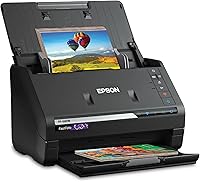
Epson FastFoto FF-680W High-Speed Duplex Photo
9.7/10 our score
See it on Amazon -
2

-
3

- 4
 Check it
Epson Workforce ES-50 Compact & Lightweight Mobile
Best for portable records - 5
 Check it
CZUR Aura Pro Book & Document Scanner
Best for books and mixed originals - 6
 Check it
Plustek ePhoto Z300 Photo Scanner
Best for fragile photos - 7
 Check it
Visioneer Xerox Duplex Combo Flatbed Scanner
Best for office artwork and documents - 8
 Best for A3 artwork on a budgetCheck it
- 9
 Best for large color originalsCheck it
The best flatbed scanners for artwork by use
The Canon CanoScan LiDE 400 is the best standard-size choice for fine detail, while the Plustek OS1180 and VIISAN VF3240 suit A3 originals. Photo-focused Epson and Plustek models are better for collections of prints than for artwork that must rest on flat glass.
Those choices cover most artwork setups, from a single standard page to a large album that needs a broad bed. The right pick depends on whether size, detail, portability or volume matters most in your daily workflow.
A standard flatbed suits careful one-by-one scanning and keeps storage simple on a desk. An A3 flatbed suits oversized work, but it needs a wider surface and a place to store a larger unit between sessions.
Feed-based photo scanners suit buyers with many prints to move through in batches. They are less suited to rigid, textured or delicate artwork that benefits from lying flat while you position it.
Document and office models suit mixed tasks where artwork is only part of the job. A feeder can handle repeated pages, while a flatbed section can handle photos, cards and books.
Book and overhead models suit curved pages and bulky originals that do not sit flat. They trade the control of a glass bed for a wider capture area and software flattening.
Use the guides below as a shortlist, then measure your largest originals before you decide. That simple check often narrows the field more than any single spec.
Epson FastFoto FF-680W High-Speed Duplex Photo: Best for photo archives
- Up to 36 photos per batch
- 300 dpi photo scans as fast as 1 photo per second
- Scans photos up to 8 x 10 in
- 600 dpi optical resolution
The Epson FastFoto FF-680W is built for large photo collections, with batch scanning, color restoration and duplex capture for handwritten notes on photo backs.
Pros
- Batch scans up to 36 photos
- Photo enhancement tools
- Wireless connectivity
Cons
- Designed around fed photos rather than a flatbed glass
- Photo scanning is limited to originals up to 8 x 10 in
The Epson FastFoto FF-680W suits buyers with a large photo archive alongside artwork scans. It can batch-scan up to 36 photos and scan 4 x 6 photos at 300 dpi as fast as 1 photo per second.
It handles Polaroid photos, panoramas, postcards and photos up to 8 x 10 in. The scanner also offers 600 dpi TIFF archiving and 1200 dpi enlargement settings, giving you more control over how much detail you keep.
Its image tools include auto enhancement, color restoration, red-eye reduction, de-skew, crop and rotate. Duplex scanning captures a photo and handwritten notes on its back in one scan.
The FF-680W connects by Wi-Fi and USB. Epson FastFoto and Epson ScanSmart software add photo sharing, backup and OCR workflows.
Choose it for photo-heavy work, but choose a glass flatbed when you need to position a single piece of artwork carefully. For oversized print-and-scan workflows, compare large-format printers with scanners.
Canon Canoscan Lide 300 Scanner: Best for simple artwork scanning
- 2400 x 2400 dpi optical resolution
- Auto Scan Mode
- 4 EZ buttons
- USB connection
The Canon CanoScan LiDE 300 offers a straightforward flatbed workflow for standard-size art, photos and paper originals, with automatic scan detection and image enhancements.
Pros
- Simple controls
- High optical resolution
- Compact 1.7 in height
Cons
- One-sheet capacity
- Lower resolution than the CanoScan LiDE 400
The Canon CanoScan LiDE 300 suits standard-size artwork, photographs and paper. Its 2400 x 2400 dpi optical resolution gives more detail than a basic document scanner, while Auto Scan Mode detects what you are scanning.
Four EZ buttons keep common tasks close at hand for repeated work. Fade correction and dust reduction can help with older photos, though you should keep an unedited master file before applying changes.
PDF scanning with OCR creates editable and searchable files for pages with text. Its 14.5 x 9.9 x 1.7 in body stores easily, and the USB connection suits a fixed workstation.
Its one-sheet capacity matches careful single-original scanning, since you can check alignment and settings before each capture. Pick this model for a straightforward flatbed for standard pages and art.
Choose the LiDE 400 below if you need higher resolution for tiny lines, textures or enlargements.
Canon CanoScan LiDE 400 Slim Scanner: Best for fine detail
- 4800 x 4800 dpi resolution
- 8-second scanning
- Color restore and dust removal
- USB Type-C cable and vertical stand
The Canon CanoScan LiDE 400 is the strongest standard-size choice for artwork where fine lines and image detail matter. Its slim body also suits a desk with limited storage.
Pros
- Highest resolution among the standard-size Canon models
- Dust removal and color restore
- Very slim design
Cons
- One-sheet capacity
- USB connection required
The Canon CanoScan LiDE 400 is the strongest match for fine artwork detail in a standard-size flatbed. Its 4800 x 4800 dpi resolution is the highest among the compact Canon picks here.
That resolution suits buyers who plan to crop details, enlarge sections or preserve fine lines in an archive. It also creates larger files, so a consistent naming and storage plan helps when you scan a collection over time.
Color restore and dust removal help with older photos and scanned images. Use those tools on copies after you keep a clean master scan.
Five EZ buttons and Auto Scan Mode keep repeated work simple. PDF buttons support multi-page searchable PDFs for work that includes notes or related pages.
The included USB Type-C cable carries data and power through one cable. That tidy setup suits a laptop desk and reduces the number of plugs you need to manage.
A vertical stand is included for storage when the scanner is not in use. The scanner measures 7.7 x 14.5 x 0.4 in, making it unusually slim for a desk setup.
It can sit flat for scanning and then stand upright to clear space for other work. The one-sheet capacity means you will position each original individually.
That is a good fit for careful artwork scanning, but not for high-volume stacks of loose documents.
Epson Workforce ES-50 Compact & Lightweight Mobile: Best for portable records
- Single-page scans as fast as 5.5 seconds
- Scans documents up to 8.5 x 72 in
- USB powered
- 1200 dpi resolution
The Epson WorkForce ES-50 is a portable sheet-fed option for receipts, documents and long paper originals. It is useful for mobile records, but it is not a flatbed for delicate artwork.
Pros
- Very light
- No external power supply required
- Windows and Mac compatibility
Cons
- Sheet-fed rather than flatbed
- Not designed for artwork placed on glass
The Epson WorkForce ES-50 is a portable document scanner rather than a flatbed artwork scanner. Its value is mobility: it weighs 9.44 oz, connects through USB 2.0 and needs no batteries or external power supply when connected to a computer.
That setup suits a bag, a drawer or a mobile workstation where space and power are limited. You can carry it to a desk, scan a page, and store it away without planning for a larger unit.
It scans one page in as quickly as 5.5 seconds and accepts documents up to 8.5 x 72 in. That long length helps with receipts, forms and other paper records that would not fit a standard flatbed area.
Receipts and ID cards also fit its intended workflow. The scanner is built around feeding sheets through a path, so paper handling matters more than glass placement.
Epson ScanSmart software supports review and saving in a simple flow. You can check the result before you keep the file, which helps when you scan records that need clear text.
Included OCR can create searchable PDFs and editable Word and Excel files. That is useful for accounting, bookkeeping and organizing paper into files you can search later.
The scanner works with Windows and Mac computers. That broad compatibility suits a home office or a small business setup that may change computers over time.
Automatic feeding mode helps combine multi-page scans into one file. You feed each sheet in turn, and the software keeps the set together for storage or sharing.
Choose it for paper records that travel with you. Do not choose it as your main art scanner when you need a glass surface for delicate or rigid originals.
CZUR Aura Pro Book & Document Scanner: Best for books and mixed originals
- Captures A3 and A4
- 2-second scanning speed
- Curved book page flattening
- 32 LED lights and 2 supplemental side lights
The CZUR Aura Pro fits books, documents and mixed materials that do not sit flat. Its curved-page technology and large capture area give it a different role from a conventional flatbed.
Pros
- Captures A3 and A4
- Curved-page flattening
- Foldable design
Cons
- Not a conventional flatbed
- Thai, Hebrew and Arabic are not supported for OCR
The CZUR Aura Pro is best for books, curved pages and mixed documents that are awkward on a conventional flatbed. It captures A3 and A4 material and scans at 2 seconds per page.
That overhead design suits originals that should not be pressed flat or forced into a lid. You can place a book under the camera, capture the page, and let software handle the curve.
Its three laser lines help flatten curved book pages in software. That tool can make the edges of a page easier to read, though the result still depends on how the book sits during capture.
The scanner also has a 2-inch preview screen, 32 LED lights and 2 supplemental side lights, with 4 color temperature settings for desk-lamp use. The preview helps you check framing before you save a page.
A black mat can improve automatic framing for smaller items. That simple setup step can help the software find the document edges when you scan cards, photos or loose pages.
The Aura Pro supports JPG, Word, PDF and searchable PDF output. Those formats cover image archives, editable text and portable documents, depending on what you plan to do with each scan.
OCR supports more than 180 languages, although Thai, Hebrew and Arabic are not supported. That wide support suits multilingual collections, but you should check language needs before you buy.
It folds 90 degrees, and the side light is detachable. That design makes storage easier and can help the unit travel between a desk and a shelf.
Choose it for books and unusual originals, or compare it with a best large format scanner for artwork when your priority is flat artwork on a broad glass surface.
Plustek ePhoto Z300 Photo Scanner: Best for fragile photos
- CCD sensor
- Scans 4 x 6 photos in 2 seconds
- Supports 3 x 5, 4 x 6, 5 x 7 and 8 x 10 photos
- 300 dpi and 600 dpi settings
The Plustek ePhoto Z300 is aimed at photos and supports common print sizes plus letter and A4 paper. Its CCD sensor and roller design suit buyers digitizing older photo collections.
Pros
- CCD sensor
- Fast 4 x 6 photo scanning
- Photo enhancement tools
Cons
- Simplex scanning
- USB connection required
The Plustek ePhoto Z300 is designed for photo scanning and supports 3 x 5, 4 x 6, 5 x 7 and 8 x 10 photos, along with letter and A4 paper. It uses a CCD sensor and offers 300 dpi and 600 dpi settings.
A 4 x 6 photo takes 2 seconds at the stated setting, while an 8 x 10 photo takes 5 seconds at 300 dpi. Those speeds help when a large collection would otherwise take many sessions on a flatbed.
The roller design is intended for older photos that may be fragile or sticky. A gentle feed path can reduce the risk of damage compared with a tighter document scanner path.
The software includes auto-crop, rotate and faded-color restoration tools. Keep original captures before you apply edits.
This is a simplex scanner, so it captures one side at a time. If a photo has notes on the back, you will need a separate scan and then file the images together.
It connects through USB, and the CCD sensor is presented as a benefit for color accuracy and depth of focus. Choose it for collections of prints and photographs.
For artwork that needs careful placement on glass, a Canon flatbed gives you a more direct workflow.
Visioneer Xerox Duplex Combo Flatbed Scanner: Best for office artwork and documents
- Flatbed and 35-sheet automatic document feeder
- Duplex scanning
- Scans up to 25 ppm/50 ipm at 300 dpi
- PC and Mac compatibility
The Visioneer Xerox Duplex Combo combines a flatbed for photos, cards, books and artwork with an automatic document feeder for office pages.
Pros
- Flatbed plus ADF
- Duplex scanning
- OCR and image enhancement software
Cons
- Larger than the slim Canon models
- Maximum ADF size is 8.5 x 118 in
The Visioneer Xerox Duplex Combo is the most flexible office pick because it combines a flatbed with a 35-sheet automatic document feeder. For a dedicated document-scanning model, compare Brother document scanners.
That combo suits a desk where artwork, photos and office pages all need scanning. The flatbed handles one-off items, while the feeder handles repeated document work without manual placement for each page.
The flatbed handles photos, cards, books and artwork. That makes it useful for a small office that scans a drawing in the morning and a stack of paperwork later in the day.
It scans up to 25 ppm/50 ipm at 300 dpi and supports duplex scanning. Duplex capture helps with two-sided documents, since both sides can be saved in one pass.
The ADF accepts paper from 3 x 5.9 in to 8.5 x 118 in. That range covers small cards through long sheets, though you should still check paper condition before you feed fragile items.
The unit measures 15.8 x 13 x 5.5 in and works with PC and Mac computers. Its larger body needs a clear desk area, but it can replace the need for separate flatbed and feeder units.
Its software bundle includes image enhancement, OCR, file organization and a business card reader. Those tools help turn scans into searchable files and keep mixed office work in one place.
Preset destinations can send scans to the locations you use most. That saves steps when you repeat the same task, such as saving a PDF to a folder or sending a file by email.
Choose it when artwork scanning is only one part of a larger office workflow. Its larger body takes more space than the compact Canon scanners.
Plustek OS1180: Best for A3 artwork on a budget
- A3 scan area
- 48-bit color and 16-bit grayscale
- 1200 dpi color resolution
- Removable lid
The Plustek OS1180 gives artwork owners an A3 flatbed area and a removable lid for larger or bulky originals. Its one-touch buttons also support OCR and PDF workflows.
Pros
- A3 scan area
- Removable lid
- No warm-up time with LED light
Cons
- Large footprint
- PC compatibility is specified
The Plustek OS1180 is the more direct A3 flatbed choice for oversized artwork, tabloid paper and large documents. Its maximum scan size is 11.7 x 17 in, and its color and grayscale scan modes reach 1200 dpi.
That scan area suits originals that would not fit a standard bed, including large drawings and albums. It also gives you room to place a piece with care and keep edges within the glass area.
A removable lid helps with large or bulky originals. That feature can make it easier to scan items that are thicker than a single sheet or awkward to close under a fixed lid.
Four one-touch buttons send scans to a folder or email, convert text and create PDFs. Those controls help when you repeat the same output task across a set of large pages.
The included OCR software supports Word, Excel and searchable PDF output. That is useful when large originals include text, labels or notes that you want to search later.
The LED light source needs no warm-up time. You can start a scan as soon as the unit is on, which helps when you work in short sessions.
The scanner also includes a PDF converter, thumbnail viewer application and OCR software. The thumbnail view can help you check pages before you save or share them.
Its 16.02 x 23.18 x 2.67 in dimensions require a wide work area. You should measure your desk and storage space before you choose it, since A3 size affects daily placement.
Pick it when A3 size matters more than compact storage, and compare it with our guide to the best large format flatbed scanner.
VIISAN VF3240 A3 Scanner: Best for large color originals
- A3 glass area
- 2400 x 2400 dpi maximum optical resolution
- 48-bit color
- Auto-scan when the lid closes
The VIISAN VF3240 is made for large flat materials such as painting albums, newspapers, blueprints and artwork. Its frameless glass and auto-scan feature support repeated A3 work.
Pros
- Large frameless scanning area
- 2400 dpi maximum resolution
- Windows and macOS support
Cons
- CIS sensor is intended for flat materials
- Large desk footprint
The VIISAN VF3240 is built for large flat materials, with a scan area up to 11.98 x 17 in. It suits painting albums, newspapers, magazines, blueprints and artwork that will not fit on a standard-size scanner.
Its maximum optical resolution is 2400 x 2400 dpi, with 48-bit color. The scanner can complete an A3 color scan in 4 seconds at 200 dpi under the stated conditions, while higher resolution and different document sizes can change scan time.
The frameless glass supports edge-to-edge work, and auto-scan starts when the lid closes. It works with Windows and macOS through listed imaging drivers and uses a USB connection.
The CIS sensor is intended for flat materials, not 3D objects, clothing, CDs or acrylic sleeves. Choose it for repeated large color originals, and read our guide to flatbed scanner legal size when your work is smaller than A3.
What should you look for in a flatbed scanner for artwork?
The best flatbed scanner for artwork should match your original size, detail level and daily workflow. Resolution matters, but scan area, color depth, sensor type and image software also shape the final file.
How much resolution does artwork need?
Choose higher resolution when you plan to crop, enlarge or preserve fine lines. The Canon CanoScan LiDE 400 reaches 4800 x 4800 dpi, while the LiDE 300 reaches 2400 x 2400 dpi.
Those figures help you judge detail for standard-size work. Higher resolution can keep small marks readable after cropping, though the files will be larger and need more storage.
A3 options vary. The VIISAN VF3240 reaches 2400 x 2400 dpi, while the Plustek OS1180 reaches 1200 dpi.
That difference matters most when you enlarge a section of a large original.
A larger scan area may matter more than maximum resolution when your artwork will not fit on a standard bed. A complete capture at a moderate setting is more useful than a detailed scan of only part of a piece.
Color depth shapes how finely tones and colors are recorded. Cleaning the glass before each session can prevent dust spots from appearing in fine work.
Save an unedited master scan before you crop, rotate or restore color. Match resolution to the final use instead of always choosing the highest setting.
Is a CCD or CIS sensor better for art?
A sensor type is one part of the choice. The Plustek ePhoto Z300 uses a CCD sensor, while the Canon LiDE 400, Plustek OS1180 and VIISAN VF3240 use CIS technology.
For flat artwork, compare the whole workflow: glass area, resolution, color depth, software and file handling. If your originals are not flat, the CZUR Aura Pro may fit better because it is designed to flatten curved book pages in software.
Do you need an A3 scanner?
You need an A3 scanner when your artwork or album is larger than the usable area of a standard-size flatbed. The Plustek OS1180 and VIISAN VF3240 both provide an A3-class scan area.
Measure the original before choosing. A larger scanner also needs more desk space, so compare the unit dimensions with your work surface and storage plan.
How should you prepare artwork for scanning?
Remove loose dust from the glass and the artwork with a gentle, dry method suited to the material. Place flat originals carefully, close the lid without pressing hard and keep the scan settings consistent across a collection.
Start with a moderate resolution for everyday copies, then use a higher setting for detailed archiving or enlargement. Save an unedited master file before applying crop, rotate, dust removal or color restoration.
Which scanner should you choose?
The Canon CanoScan LiDE 400 is the best flatbed scanner for artwork when you scan standard-size pieces and want fine detail. Choose the Canon LiDE 300 for simpler controls and lower resolution needs.
Those two Canon models suit buyers who want a clear glass workflow for one original at a time. The LiDE 400 favors detail and enlargements, while the LiDE 300 favors a simpler routine with fewer file-size concerns.
Pick the Plustek OS1180 or VIISAN VF3240 for A3 artwork. Those models give you a larger bed for albums, tabloid work and oversized drawings.
Choose the Epson FastFoto FF-680W or Plustek ePhoto Z300 for photo-heavy archives. Choose the Visioneer Xerox when artwork scanning must share a machine with high-volume documents.
Choose the Epson WorkForce ES-50 for portable paper records. It is light and USB powered, but it does not replace a flatbed for artwork that needs glass support.
Choose the CZUR Aura Pro for books and curved pages. Its overhead capture and page-flattening tools suit originals that are awkward to press flat.
Before you buy, measure your largest original and your available desk space. Also decide how you will store the files after scanning.
If your next project includes books or curved pages, the best large format scanner for artwork can help you compare larger capture options.
Our top 3 picks at a glance
-
1
Best for photo archives
Epson FastFoto FF-680W High-Speed Duplex Photo
9.7/10 our score
See it on Amazon -
2
-
3
Frequently asked questions
What is the best flatbed scanner for artwork?
The Canon CanoScan LiDE 400 is the best flatbed scanner for artwork among these standard-size picks because it combines 4800 x 4800 dpi resolution with color restoration and dust removal. Choose an A3 model when your originals are larger than standard paper, or a photo scanner for large print archives.
Is a flatbed scanner better for art?
A flatbed scanner can be a strong choice for flat artwork because the original rests on glass while the sensor captures it. Check the scan area first, then compare resolution, color depth, image tools and the size of your originals.
What resolution should artwork scanning use?
Use a resolution that matches the detail and the final output you need. The Canon CanoScan LiDE 400 reaches 4800 x 4800 dpi, while A3 models here reach up to 2400 dpi or 1200 dpi.
Higher settings can create larger files, so choose a consistent workflow for your archive.
Can an A3 scanner scan standard artwork?
Yes. An A3 scanner can scan standard-size artwork, but it takes more desk space than a slim letter-size model.
The larger glass helps when your work exceeds standard paper dimensions, while a Canon LiDE model is easier to store for smaller originals.