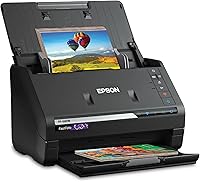
9 Best Flatbed Scanners for Photos (November 2026)
The best flatbed photo scanners include the Epson FastFoto FF-680W High-Speed Duplex Photo for large photo collections, the Epson Workforce ES-400 II High-Speed Color Duplex for photos and document stacks, and the Canon Canoscan Lide 300 Scanner for simple flatbed scanning.
On this page (13 sections)
- The best flatbed scanner for photos by use
- Epson FastFoto FF-680W: Best for large photo collections
- Epson WorkForce ES-400 II: Best for photos and document stacks
- Canon CanoScan LiDE 300: Best for simple flatbed scanning
- ScanSnap iX1300: Best for small flexible workspaces
- Canon CanoScan LiDE 400: Best for detailed flatbed photo scans
- HPPS100: Best for portable photo scans
- Epson WorkForce ES-50: Best for single-photo portability
- ScanSnap iX2500 Photo Edition: Best for high-volume photo feeding
- Plustek ePhoto Z300: Best for quick single-photo scanning
- How to choose a flatbed photo scanner
- Flatbed scanner for photos verdict
- For protecting finished paper projects after printing, see the Fellowes Spectra 95 laminator reviews.
The best flatbed scanner for photos is the Canon CanoScan LiDE 400 when you want detailed scans from a stationary glass bed.
Choose the Epson FastFoto FF-680W for large collections, the Plustek ePhoto Z300 for quick single-photo scans, or the HPPS100 for a very light portable option.
Flatbed scanning keeps a photo still while the sensor moves beneath the glass.
That stillness matters for prints that are curled, thin, or already showing wear along the edges.
It also gives you direct control over placement, so you can align a print, check the edges, and correct it before the scan starts.
A feeder scanner moves the print through a path instead, which can be faster but asks more of the paper.
For larger pieces of artwork, compare large format scanners for artwork.
If you scan mostly flat prints at home, a glass bed can make the process feel calmer and more deliberate.
You can place one photo, close the lid, preview the result, and decide whether the tone looks right.
That workflow suits family albums, school photos, and prints you plan to keep as digital copies for years.
It is less suited to a box of several hundred loose snapshots that need to be processed in a short session.
Feeder models handle that kind of volume better because they accept the next print without a full manual reset each time.
The trade-off is that a feed path can be less forgiving with sticky backs, bent corners, or brittle paper.
A carrier sheet helps in some feeder designs, but it does not make every old print safe to feed.
Think about your collection first, then match the scanner to the condition of the prints and the time you have.
If you need a broader explanation of photo scanner types, read our guide to the best scanner for pictures.
For the basic design, see what is a flatbed scanner on a printer.
A flatbed also supports documents, receipts, and cards, so it can cover more than photos alone.
That flexibility can be useful when a desk drawer holds mixed paper that all needs a digital copy.
Resolution, connection type, and size then decide which flatbed fits your space and your habits.
Our picks at a glance
-
1
 Best for large photo collections
Epson FastFoto FF-680W High-Speed Duplex Photo
9.7/10 our score
See it on Amazon -
2
 Best for photos and document stacks
Epson Workforce ES-400 II High-Speed Color Duplex
9.7/10 our score
See it on Amazon -
3

- 4
 Check it
ScanSnap iX1300 Wireless or USB Double-Sided Color
Best for small flexible workspaces - 5
 Check it
Canon CanoScan LiDE 400 Slim Scanner
Best for detailed flatbed photo scans - 6
 Check it
HP Small USB Document & Photo Scanner
Best for portable photo scans - 7
 Check it
Epson Workforce ES-50 Compact & Lightweight Mobile
Best for single-photo portability - 8
 Check it
ScanSnap iX2500 Photo Edition Wireless or USB
Best for high-volume photo feeding - 9
 Check it
Plustek ePhoto Z300 Photo Scanner
Best for quick single-photo scanning
The best flatbed scanner for photos by use
The best choice depends on whether you value a stationary glass bed, photo-batch speed, portability or document handling.
Our score weighs resolution, photo support, handling features and buyer feedback against the needs of someone scanning printed photos.
A stationary glass bed suits fragile prints and careful one at a time work.
Photo-batch speed suits large family collections that would take many sittings on a flatbed.
Portability suits occasional scans at home, at work, or while traveling with a laptop.
Document handling suits mixed stacks of letters, receipts, forms, and photos.
Resolution matters most when you want to enlarge a small print or keep fine detail for archiving.
Connection type matters for placement, since USB keeps the scanner near a computer while Wi-Fi allows more freedom.
Size and weight matter when desk depth is limited or storage space is tight.
Software matters too, because preview, crop, rotation, and file naming can save time after each scan.
Epson FastFoto FF-680W High-Speed Duplex Photo: Best for large photo collections
- Batch scans up to 36 photos
- Up to 1 photo per second at 300 dpi
- Wi-Fi and USB
- Scans photos up to 8 x 10 in
A high-speed photo and document scanner for digitizing large collections. It includes a carrier sheet and microfiber cloth for delicate photo handling.
Pros
- High photo batch capacity
- Duplex photo scanning
- Photo enhancement tools
Cons
- Larger than flatbed models
- Designed for Windows 7 minimum
Epson Workforce ES-400 II High-Speed Color Duplex: Best for photos and document stacks
- 50-sheet Auto Document Feeder
- Duplex scanning
- Epson ScanSmart software
- OCR for searchable PDFs
This desktop feeder scanner suits buyers who scan photos alongside large document stacks. Its software supports searchable PDFs and common cloud services.
Pros
- 50-sheet feeder
- Duplex document scanning
- Double-feed detection
Cons
- Document-focused design
- USB connection
Canon Canoscan Lide 300 Scanner: Best for simple flatbed scanning
- 2400 x 2400 dpi optical resolution
- USB connection
- Auto Scan Mode
- Document and photo scanning
A compact flatbed scanner for photos, receipts, business cards and paper. Auto Scan Mode detects what you are scanning and adjusts the process.
Pros
- High optical resolution
- Compact 1.7 in height
- Auto Scan Mode
Cons
- One sheet at a time
- USB connection
ScanSnap iX1300 Wireless or USB Double-Sided Color: Best for small flexible workspaces
- Wireless or USB connection
- Up to 30 ppm duplex scanning
- Handles photos, cards and thick items
- 20-sheet capacity
A compact color scanner for buyers who need photos and documents in a small workspace. It connects to computers, mobile devices and cloud services.
Pros
- Small footprint
- Wi-Fi and USB
- Automatic de-skew and blank-page removal
Cons
- Not a stationary glass-bed flatbed
- 20-sheet capacity
Canon CanoScan LiDE 400 Slim Scanner: Best for detailed flatbed photo scans
- 4800 x 4800 dpi resolution
- USB Type-C cable
- Color restore and dust removal
- Vertical stand included
A slim flatbed photo scanner with the highest stated resolution in this roundup. Its EZ buttons and Auto Scan Mode keep routine scanning simple.
Pros
- Highest stated resolution here
- Very slim body
- Image enhancement tools
Cons
- One sheet at a time
- USB connection
HP Small USB Document & Photo Scanner: Best for portable photo scans
- 3 ounces
- USB-powered
- 1200 dpi stated resolution
- Windows and Mac compatibility
A very light single-sheet scanner for photos, receipts and cards. Its USB power and small body suit occasional scans at home, work or while traveling.
Pros
- Extremely light
- USB powered
- HP WorkScan software
Cons
- Simplex scanning
- Sheetfed rather than flatbed
Epson Workforce ES-50 Compact & Lightweight Mobile: Best for single-photo portability
- 9.44 ounces
- USB powered
- Scans pages up to 8.5 x 72 in
- Windows and Mac compatible
A compact single-sheet scanner for buyers who need photos, receipts and documents away from a desk. Epson ScanSmart includes OCR and automatic feeding mode.
Pros
- Lightweight design
- No battery or external power supply
- Extra-long page support
Cons
- Single-sheet scanning
- Document-focused model
ScanSnap iX2500 Photo Edition Wireless or USB: Best for high-volume photo feeding
- Up to 100 photos per minute
- 100-document feeder capacity
- 36-photo capacity
- Three photo carrier sheets
A high-capacity wireless or USB scanner for buyers with substantial photo and document workloads. Its Photo Edition includes carrier sheets for delicate prints.
Pros
- Large feeder capacity
- Photo carrier sheets included
- Wi-Fi 6 and USB-C
Cons
- Heavier than compact models
- Higher capacity may be unnecessary for occasional scans
Plustek ePhoto Z300 Photo Scanner: Best for quick single-photo scanning
- Scans a 4 x 6 photo in 2 seconds
- CCD sensor
- 300 dpi and 600 dpi settings
- Supports 3 x 5 through 8 x 10 photos
A photo-focused USB scanner for quickly feeding individual prints. It supports common photo sizes and includes image enhancement tools for faded images.
Pros
- Fast 4 x 6 photo scans
- CCD sensor
- Supports up to 8 x 10 photos
Cons
- Simplex scanning
- USB connection
| Product | Best for | Photo batch capacity | Resolution | Connection | Our score |
|---|---|---|---|---|---|
| Epson FastFoto FF-680W High-Speed Duplex Photo | large photo collections | Up to 36 photos | 600 dpi | Wi-Fi | 9.7 |
| Epson Workforce ES-400 II High-Speed Color Duplex | photos and document stacks | USB | 9.7 | ||
| Canon Canoscan Lide 300 Scanner | simple flatbed scanning | 2400 x 2400 dpi optical | USB | 9.6 | |
| ScanSnap iX1300 Wireless or USB Double-Sided Color | small flexible workspaces | 600 dpi | USB, Wi-Fi | 9.6 | |
| Canon CanoScan LiDE 400 Slim Scanner | detailed flatbed photo scans | 4800 x 4800 dpi | USB | 9.5 | |
| HP Small USB Document & Photo Scanner | portable photo scans | 1200 dpi | 9.4 | ||
| Epson Workforce ES-50 Compact & Lightweight Mobile | single-photo portability | 1200 dpi | USB | 9.4 | |
| ScanSnap iX2500 Photo Edition Wireless or USB | high-volume photo feeding | USB, Wi-Fi | 9.3 | ||
| Plustek ePhoto Z300 Photo Scanner | quick single-photo scanning | 600 x 600 dpi or 300 x 300 dpi | USB | 9.2 |
Epson FastFoto FF-680W: Best for large photo collections
The Epson FastFoto FF-680W is the strongest choice for scanning thousands of prints because it can batch-scan up to 36 photos and scan as quickly as 1 photo per second at 300 dpi. It handles photos up to 8 x 10 in, including Polaroid photos, panoramas and postcards.
Its duplex function captures the image and handwritten notes on the back in one scan. That can preserve dates, names and family notes without requiring a second pass.
The scanner supports 300 dpi for sharing, 600 dpi TIFF for archiving and 1200 dpi for enlargements. Its auto enhancement tools include color restoration, red-eye reduction, de-skew, crop and rotate.
Wi-Fi and USB support give you placement choices. Epson FastFoto also includes a carrier sheet and microfiber cloth, which are useful when you are preparing delicate prints.
This is not a stationary glass-bed flatbed design. Choose it when throughput and batch handling matter more than placing one print on glass at a time.
Epson FastFoto FF-680W High-Speed Duplex Photo: Best for large photo collections
- Batch scans up to 36 photos
- Up to 1 photo per second at 300 dpi
- Wi-Fi and USB
- Scans photos up to 8 x 10 in
A high-speed photo and document scanner for digitizing large collections. It includes a carrier sheet and microfiber cloth for delicate photo handling.
Pros
- High photo batch capacity
- Duplex photo scanning
- Photo enhancement tools
Cons
- Larger than flatbed models
- Designed for Windows 7 minimum
Epson WorkForce ES-400 II: Best for photos and document stacks
The Epson WorkForce ES-400 II is better suited to buyers who scan documents as often as photos. For dedicated document models, see Brother document scanners.
Its 50-sheet Auto Document Feeder and duplex scanning help process a stack without placing each sheet on a glass bed.
Epson ScanSmart software supports previewing, email, cloud uploads and automatic file naming. OCR can create searchable PDFs and convert scans to editable Word or Excel files.
Automatic crop, blank-page removal and background removal reduce routine cleanup. Ultrasonic double-feed detection and dynamic skew correction help manage paper feeding.
The trade-off is clear: this is a document scanner, not a dedicated flatbed photo scanner. It has a USB connection, a 300 dpi resolution specification and a 50-sheet capacity.
Choose it if your photo project also includes invoices, letters and forms. For photo detail from a stationary glass bed, compare it with the best high resolution photo scanner.
Epson Workforce ES-400 II High-Speed Color Duplex: Best for photos and document stacks
- 50-sheet Auto Document Feeder
- Duplex scanning
- Epson ScanSmart software
- OCR for searchable PDFs
This desktop feeder scanner suits buyers who scan photos alongside large document stacks. Its software supports searchable PDFs and common cloud services.
Pros
- 50-sheet feeder
- Duplex document scanning
- Double-feed detection
Cons
- Document-focused design
- USB connection
Canon CanoScan LiDE 300: Best for simple flatbed scanning
The Canon CanoScan LiDE 300 is a practical choice for one-photo-at-a-time scanning from a glass bed.
Its 2400 x 2400 dpi optical resolution gives it enough detail for routine photo archiving and image digitizing.
That level of detail suits everyday prints and gives you room to crop without losing the main subject.
It also suits documents where small text needs to stay readable after scanning.
Auto Scan Mode detects what you are scanning, while the four EZ buttons provide direct controls for common tasks.
That design reduces the need to change settings by hand for each new item.
You can place a photo, let the scanner detect the type, and proceed with a sensible default.
The scanner also handles documents, receipts and business cards, which makes it useful beyond a photo-only project.
A receipt may need a different framing than a portrait, and auto detection helps with that switch.
Its body is 14.5 x 9.9 x 1.7 in and weighs 3.6 lb.
USB is the connection type, and the scanner holds one sheet at a time.
The low height helps it fit under a shelf or in a shallow desk area.
Its light weight makes it easier to move between a desk and a storage shelf.
One sheet at a time also means you can check each scan before moving to the next print.
That pace is slower for a large album, but it gives you more control over quality.
Canon includes image enhancements such as fade correction and dust reduction.
Those tools can help with older prints, but you should still clean the glass and photo surface carefully before scanning.
A clean glass bed prevents spots that software may not fully remove.
Dust on the print can also appear in the scan, so a gentle wipe before scanning is worthwhile.
Fade correction can improve the look of washed-out colors, though it cannot restore detail that has already faded away.
Set-up is simple because the scanner connects by USB and uses the included setup materials.
Care is mostly a matter of keeping the glass clean and closing the lid gently after each scan.
Avoid pressing on the print to flatten it, since that can crease older paper.
Choose this model if you want a straightforward flatbed scanner with strong optical resolution and a compact height.
It fits buyers who do not need wireless access or automatic batch feeding.
It suits a home user who scans a few prints each week and wants reliable detail without extra complexity.
Canon Canoscan Lide 300 Scanner: Best for simple flatbed scanning
- 2400 x 2400 dpi optical resolution
- USB connection
- Auto Scan Mode
- Document and photo scanning
A compact flatbed scanner for photos, receipts, business cards and paper. Auto Scan Mode detects what you are scanning and adjusts the process.
Pros
- High optical resolution
- Compact 1.7 in height
- Auto Scan Mode
Cons
- One sheet at a time
- USB connection
ScanSnap iX1300: Best for small flexible workspaces
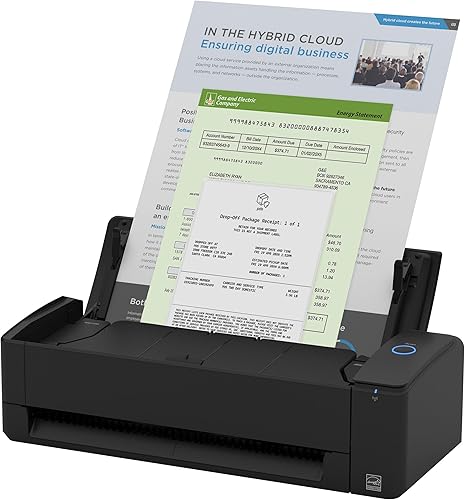
The ScanSnap iX1300 suits a small desk because its body measures 4.5 x 11.7 x 3.3 in. It scans photos, documents, cards and thick items, then connects through USB or Wi-Fi.
Its duplex scanning reaches up to 30 ppm, and the 20-sheet capacity suits short stacks. Automatic de-skew, color optimization and blank-page removal can reduce manual corrections.
ScanSnap Home helps manage, edit and use scanned data from photos, receipts, business cards and documents. The scanner can send files to computers, mobile devices and cloud services, and it can work without a computer.
This is a compact feeder scanner rather than a glass-bed flatbed. For delicate prints, use care with the feed path and choose a true flatbed when keeping the photo stationary is your main concern.
Choose the iX1300 when flexible connection options and a small footprint matter more than maximum flatbed resolution. It is also a useful alternative to the best epson photo scanner if you want wireless scanning in a compact body.
ScanSnap iX1300 Wireless or USB Double-Sided Color: Best for small flexible workspaces
- Wireless or USB connection
- Up to 30 ppm duplex scanning
- Handles photos, cards and thick items
- 20-sheet capacity
A compact color scanner for buyers who need photos and documents in a small workspace. It connects to computers, mobile devices and cloud services.
Pros
- Small footprint
- Wi-Fi and USB
- Automatic de-skew and blank-page removal
Cons
- Not a stationary glass-bed flatbed
- 20-sheet capacity
Canon CanoScan LiDE 400: Best for detailed flatbed photo scans
The Canon CanoScan LiDE 400 is the best match for buyers who want a detailed flatbed photo scanner. Its 4800 x 4800 dpi resolution is the highest stated resolution in this roundup.
The scanner includes color restoration and dust removal, which can help prepare older images for digital storage. Auto Scan Mode detects the item, while EZ buttons give you direct access to common scanning tasks.
It scans one sheet at a time and connects by USB. The body measures 7.7 x 0.4 x 14.5 in, and a vertical stand is included for storage when you are not using the flatbed.
The slim shape works well where desk depth or storage space is limited. Because each photo is placed individually, it is slower for a large collection than a feeder designed for batches.
Choose the LiDE 400 for high-resolution photo work, single-print control and a stationary glass bed. If you also need to print your scans, compare it with the best printer scanner combo for photos.
Canon CanoScan LiDE 400 Slim Scanner: Best for detailed flatbed photo scans
- 4800 x 4800 dpi resolution
- USB Type-C cable
- Color restore and dust removal
- Vertical stand included
A slim flatbed photo scanner with the highest stated resolution in this roundup. Its EZ buttons and Auto Scan Mode keep routine scanning simple.
Pros
- Highest stated resolution here
- Very slim body
- Image enhancement tools
Cons
- One sheet at a time
- USB connection
HPPS100: Best for portable photo scans
The HPPS100 is a lightweight option for occasional photo and document scanning. For more scanners designed to travel, compare portable photo scanners.
At 3 ounces, it is far lighter than every other model here, and USB 2.0 powers it without a separate external power supply.
This is a 1-sided sheetfed scanner with a stated 1200 dpi resolution. It handles photos, receipts, business cards and other paper, with supported sizes from 2 x 2.9 in to 8.5 x 14 in.
HP WorkScan software includes auto-scan and size detection, plus preview, zoom, crop, editing and background cleanup tools. The scanner works with Windows and Mac computers.
For more Mac-compatible options, see photo scanners for Mac.
Its 15 ppm speed suits small to medium batches rather than a large archive. It also does not provide the stationary glass bed that defines a traditional flatbed scanner.
Choose the HPPS100 when portability and USB power are more important than flatbed handling. For permanent photo storage, keep each scan flat and avoid feeding prints that are fragile, curled or sticky.
HP Small USB Document & Photo Scanner: Best for portable photo scans
- 3 ounces
- USB-powered
- 1200 dpi stated resolution
- Windows and Mac compatibility
A very light single-sheet scanner for photos, receipts and cards. Its USB power and small body suit occasional scans at home, work or while traveling.
Pros
- Extremely light
- USB powered
- HP WorkScan software
Cons
- Simplex scanning
- Sheetfed rather than flatbed
Epson WorkForce ES-50: Best for single-photo portability
The Epson WorkForce ES-50 is a compact single-sheet scanner for people who need to digitize photos and documents away from a full-size desk.
It weighs 9.44 ounces and connects through USB.
That light weight makes it easy to carry in a bag alongside a laptop and cables.
Its slim form also fits in a drawer, a shelf, or a small work area where a flatbed would take too much room.
Epson states a single-page scan time as fast as 5.5 seconds.
That speed suits a quick receipt, a note, or a single photo when you need a copy right away.
The scanner handles documents up to 8.5 x 72 in, along with receipts and ID cards.
Extra-long pages can be useful for forms, timelines, or papers that do not fit a standard sheet.
Receipts and ID cards benefit from a single-sheet path because you can position each item carefully.
It is USB-powered, so it needs no batteries or external power supply when connected to a computer.
That setup reduces the number of chargers you need to carry on the road.
It also means the scanner works wherever a computer with a USB port is available.
Epson ScanSmart supports scanning, review and saving, while Nuance OCR creates searchable PDFs and editable Word and Excel files.
Searchable PDFs make it easier to find a name or number later without reading every page again.
Editable files can help when you need to copy text into a spreadsheet or a report.
Automatic Feeding Mode combines multiple sheets into one file.
That feature helps when a small packet of papers belongs together as a single digital document.
The 1200 resolution specification is useful for portable work, but the single-sheet design is less suitable for a large photo collection.
Choose the ES-50 for lightweight document and photo work in more than one location.
Choose a glass-bed flatbed instead when protecting fragile prints is the main goal.
For occasional scans in different places, its portability and USB power are clear strengths.
Epson Workforce ES-50 Compact & Lightweight Mobile: Best for single-photo portability
- 9.44 ounces
- USB powered
- Scans pages up to 8.5 x 72 in
- Windows and Mac compatible
A compact single-sheet scanner for buyers who need photos, receipts and documents away from a desk. Epson ScanSmart includes OCR and automatic feeding mode.
Pros
- Lightweight design
- No battery or external power supply
- Extra-long page support
Cons
- Single-sheet scanning
- Document-focused model
ScanSnap iX2500 Photo Edition: Best for high-volume photo feeding
The ScanSnap iX2500 Photo Edition is built for large workloads.
It can scan up to 100 photos per minute, hold up to 100 documents or up to 36 photos, and connect through Wi-Fi or USB.
That capacity suits a household that has boxes of prints kept in drawers, albums, and envelopes.
It also suits a small office that mixes photos with receipts, cards, and paper records.
High throughput changes the feel of a large project because you spend less time waiting for each batch.
Three photo carrier sheets are included for delicate prints.
Carrier sheets give fragile items a steadier path and reduce direct contact with the feed mechanism.
They are especially helpful when a print is thin, curled, or has a delicate surface.
The touchscreen supports personalized profiles, while automatic optimization, naming and sorting can reduce the work after scanning.
Profiles can match repeat tasks, such as saving photos to a shared folder or sending documents to a cloud service.
Automatic naming helps you identify files later without renaming every scan by hand.
Sorting can also keep photos, documents, and receipts in separate groups from the start.
This model also handles documents, receipts and business cards.
That mix makes it useful when paper records and photos have been stored together for years.
Wi-Fi 6 and USB-C provide connection choices, and the scanner can send files to computers, mobile devices and cloud services.
Wi-Fi allows placement away from a computer, while USB-C gives a direct wired option.
Sending to a phone or cloud service can speed up sharing with family members.
Its body measures 6.26 x 11.5 x 6.34 in and weighs 7.7 lb.
The 600 dpi resolution suits photo archiving, while the large feeder makes it a stronger fit for collections than occasional scanning.
A larger body needs more desk space, so measure the area before you choose it for a small room.
Choose it when high throughput and carrier-sheet support matter.
If you only scan a few prints at a time, a slim Canon flatbed may be easier to store.
ScanSnap iX2500 Photo Edition Wireless or USB: Best for high-volume photo feeding
- Up to 100 photos per minute
- 100-document feeder capacity
- 36-photo capacity
- Three photo carrier sheets
A high-capacity wireless or USB scanner for buyers with substantial photo and document workloads. Its Photo Edition includes carrier sheets for delicate prints.
Pros
- Large feeder capacity
- Photo carrier sheets included
- Wi-Fi 6 and USB-C
Cons
- Heavier than compact models
- Higher capacity may be unnecessary for occasional scans
Plustek ePhoto Z300: Best for quick single-photo scanning
The Plustek ePhoto Z300 is a photo-focused USB scanner that can scan a 4 x 6 photo in 2 seconds at 300 dpi and an 8 x 10 photo in 5 seconds at 300 dpi. It supports 3 x 5, 4 x 6, 5 x 7 and 8 x 10 photos, plus letter and A4 paper.
Its CCD sensor and 600 dpi maximum optical resolution suit photo digitizing. The scanner also has 300 dpi and 600 dpi settings, so you can choose between quicker sharing files and more detailed archives.
Plustek includes auto-crop, rotate and faded-color restoration tools. The roller design is intended for photos, and the scanner can handle photo thicknesses below 0.76 mm.
The Z300 scans one photo at a time and does not scan both sides together. That makes it a poor match for notes on the back, but a useful choice for a collection of loose prints.
Choose it when you want fast individual photo feeding without placing every print on a glass bed. For negatives or slides, see our guide to a flatbed scanner for negatives and slides.
Plustek ePhoto Z300 Photo Scanner: Best for quick single-photo scanning
- Scans a 4 x 6 photo in 2 seconds
- CCD sensor
- 300 dpi and 600 dpi settings
- Supports 3 x 5 through 8 x 10 photos
A photo-focused USB scanner for quickly feeding individual prints. It supports common photo sizes and includes image enhancement tools for faded images.
Pros
- Fast 4 x 6 photo scans
- CCD sensor
- Supports up to 8 x 10 photos
Cons
- Simplex scanning
- USB connection
How to choose a flatbed photo scanner
The best flatbed scanner for photos should match your print condition, collection size and desired file quality. Start with the handling method, then compare resolution, connections and software.
A glass-bed model is useful when you want the print to remain stationary. It also lets you position one image carefully, which can help with old, thin or delicate prints.
A feeder scanner is faster for batches. The Epson FastFoto FF-680W and ScanSnap iX2500 Photo Edition are better fits when the main task is digitizing many photos, especially when carrier sheets are available.
For resolution, 300 dpi works for everyday sharing, while 600 dpi gives more room for archiving and later editing. A higher number does not replace careful placement, clean glass or a clean photo surface.
Check the connection before you buy. USB works well beside a computer, while Wi-Fi gives the ScanSnap and Epson wireless models more placement flexibility.
Keep the scanner glass free of dust and handle prints by their edges. Save original scans in a format suited to your archive, then create smaller copies for sharing.
Flatbed scanner for photos verdict
The Canon CanoScan LiDE 400 is the best flatbed scanner for photos when your priority is detailed, controlled scanning from a stationary glass bed.
Pick the Canon LiDE 300 for simpler flatbed work, the Epson FastFoto for large batches, or the Plustek Z300 for fast single-photo feeding.
Each choice fits a different pace of work.
The LiDE 400 suits careful archiving, the FastFoto suits volume, and the Z300 suits quick individual prints.
Portable models such as the HPPS100 and ES-50 suit occasional scans away from a desk.
Feeder models such as the ScanSnap iX1300 and iX2500 suit mixed stacks of photos and documents.
Match the handling method to the condition of your prints before you focus on extra features.
Fragile prints benefit from a stationary bed or a carrier sheet, while sturdy prints can move through a feeder more easily.
Match resolution to your next step, since sharing needs less detail than archiving or enlargement.
Check connection and size against your desk, because a scanner that fits your space will be used more often.
Keep the glass clean, handle prints by the edges, and save original scans before you create smaller sharing copies.
That routine protects quality and makes later editing easier.
If your next step is printing the restored images, read our guide to the best photo printer for photos.
For protecting finished paper projects after printing, see the Fellowes Spectra 95 laminator reviews.
Our top 3 picks at a glance
-
1
Best for large photo collections
Epson FastFoto FF-680W High-Speed Duplex Photo
9.7/10 our score
See it on Amazon -
2
Best for photos and document stacks
Epson Workforce ES-400 II High-Speed Color Duplex
9.7/10 our score
See it on Amazon -
3
Frequently asked questions
What is the best flatbed scanner for photos?
The Canon CanoScan LiDE 400 is the best flatbed scanner for photos when detailed capture from a stationary glass bed matters most. Its 4800 x 4800 dpi resolution, color restoration and dust removal suit photo archiving.
Choose Epson FastFoto instead when you need to process large batches quickly.
Are flatbed scanners better for fragile photos?
A flatbed scanner can be a careful choice for fragile photos because the print rests on a stationary glass bed instead of passing through a feeder. Place the photo gently, keep the glass clean and avoid pressing down on the print.
For feeder models, use a carrier sheet when one is included and follow the scanner's handling instructions.
What resolution should you use for scanning photos?
Use 300 dpi for convenient sharing, 600 dpi for archiving, and a higher setting when you plan to enlarge a small print. More resolution creates larger files, so choose the setting based on how you will use the scan.
The Epson FastFoto FF-680W supports 300 dpi, 600 dpi TIFF and 1200 dpi interpolated options.
Can a photo scanner scan documents too?
Yes, several photo scanners here also handle documents. The Canon CanoScan LiDE 300 and LiDE 400 scan documents and photos, while the Epson FastFoto FF-680W adds document scanning with OCR.
If documents are your main workload, a feeder model such as the Epson ES-400 II may suit you better.